
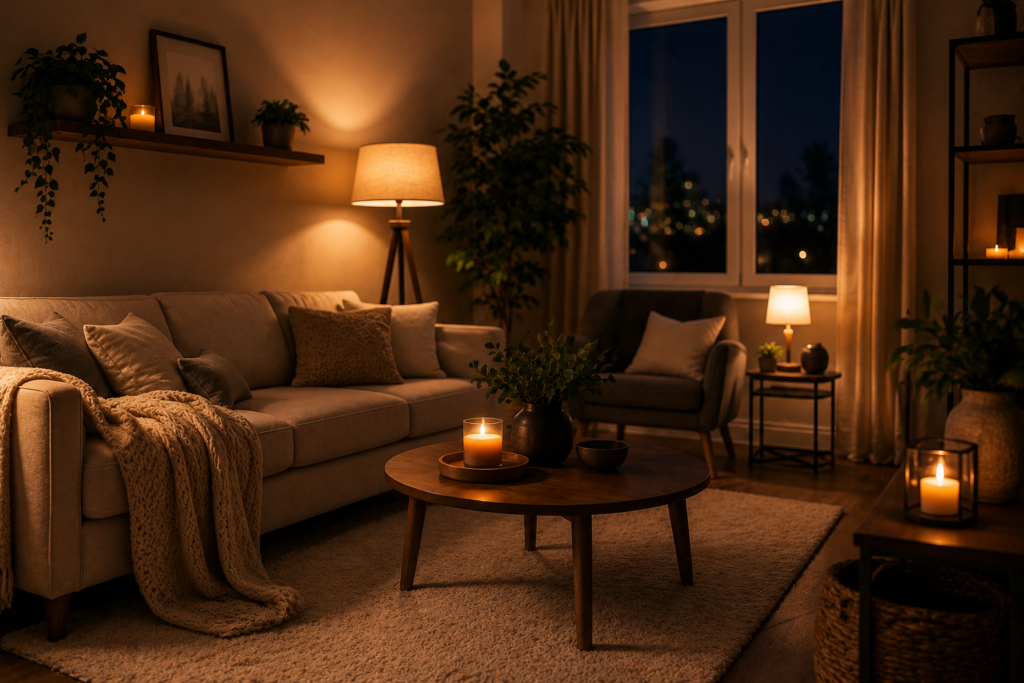
Two homes can look very similar during the day and feel completely different at night.
One feels calm.
The other feels restless.
One encourages people to slow down and unwind. The other somehow feels busy even when nothing is happening.
Most people assume this comes down to decoration or furniture.
In reality, the difference is usually much more subtle.
Homes that feel relaxing at night tend to share a collection of small characteristics that work together. Lighting, sound, routines, organization, and comfort all influence the way a space feels after the sun goes down.
The good news is that these qualities are usually easier to create than people think.
Nighttime Comfort Is Different From Daytime Comfort
A home that works well during the day does not automatically feel relaxing at night.
Daytime environments often support productivity, activity, and movement.
Nighttime environments should support recovery.
The problem is that many homes never make that transition.
The lighting stays the same. The noise stays the same. The visual clutter stays the same. The atmosphere remains active even though the day is ending.
This is one reason what modern home comfort looks like in 2026 has become such a relevant conversation.
Comfort is increasingly about creating environments that support different parts of the day.
Lighting Usually Makes The Biggest Difference
Lighting is often the first thing people notice when comparing relaxing homes to stressful homes.
Bright overhead lighting works well for cooking, cleaning, and tasks.
At night, it can feel harsh.
Homes that feel relaxing often use multiple light sources instead of relying entirely on ceiling fixtures.
Examples include:
- Table lamps.
- Floor lamps.
- Warm accent lighting.
- Indirect lighting.
- Dimmer switches.
The goal is not darkness.
The goal is softness.
That softer environment helps signal that the active part of the day is ending.
Visual Clutter Creates Mental Noise
A room does not need to be perfectly clean to feel relaxing.
It does help if visual clutter is under control.
Stacks of unopened mail, scattered cables, random items on counters, and overflowing surfaces can create a feeling of unfinished tasks.
That feeling follows people into the evening.
Homes that feel more relaxing usually have systems that keep everyday clutter manageable.
This connects naturally with the little things that make some homes feel easier to live in.
Ease and relaxation often come from the same small details.
Quick Comparison Table
| Relaxing Homes | Less Relaxing Homes |
|---|---|
| Warm lighting | Harsh lighting |
| Organized surfaces | Visible clutter |
| Calm evening routines | Constant interruptions |
| Comfortable seating | Functional-only spaces |
| Controlled noise | Random background noise |
| Intentional atmosphere | No transition between day and night |
Noise Has A Bigger Impact Than Most People Realize
Many people focus on what they can see.
What they hear matters too.
A home with constant television noise, notifications, traffic sounds, or random interruptions often feels more mentally active.
Homes that feel relaxing usually manage sound intentionally.
This does not mean complete silence.
It means reducing unnecessary noise and creating a more consistent environment.
Even small improvements can change how an evening feels.
Comfortable Seating Encourages Relaxation
One reason some homes feel calmer is because they provide places that encourage people to slow down.
Not every seat serves the same purpose.
A dining chair supports meals.
A desk chair supports work.
A comfortable reading chair, sofa, or quiet corner supports relaxation.
Homes that feel relaxing at night often include at least one area designed specifically for unwinding.
That distinction matters more than people expect.
The Best Evening Spaces Feel Separate From Work
One challenge of modern life is that work increasingly happens at home.
Many people answer emails from the sofa, work from the kitchen table, or continue thinking about work long after the workday ends.
Homes that feel relaxing often create boundaries.
The work area stays in one part of the home.
The relaxation area stays somewhere else.
Even small separations help the brain transition into a different mode.
Routines Shape Atmosphere More Than Decor
People often focus heavily on design.
Routines usually matter more.
A calming evening routine can make an ordinary room feel relaxing.
A stressful evening routine can make a beautiful room feel tense.
Common habits in relaxing homes include:
- Dimming lights.
- Reducing screen time.
- Tidying key surfaces.
- Preparing for the next day.
- Creating quiet time before bed.
The environment and the routine support each other.
Organization Reduces Evening Stress
Many nighttime frustrations come from poor organization.
People search for chargers.
They look for keys.
They hunt for paperwork.
They move clutter from one location to another.
These small interruptions create unnecessary mental activity.
Homes that feel calmer often eliminate these recurring annoyances through simple organization systems.
This is one reason how homes quietly became easier to manage resonates with so many people.
Bedrooms Matter More Than Living Rooms
When discussing relaxation, many people focus on living rooms.
Bedrooms often have a greater influence.
A relaxing bedroom supports sleep, recovery, and mental rest.
Several characteristics appear repeatedly in calming bedrooms:
- Comfortable bedding.
- Limited clutter.
- Softer lighting.
- Reduced noise.
- Cooler temperatures.
None of these features are dramatic individually.
Together they significantly influence how a room feels.
Calmer Homes Usually Require Fewer Decisions
Decision fatigue is real.
Throughout the day people make hundreds of choices.
Relaxing homes reduce some of that burden.
Daily items stay where they belong.
Routines become predictable.
Spaces support habits naturally.
The fewer unnecessary decisions required at night, the easier it becomes to unwind.
Small Comforts Have A Large Impact
Many people underestimate small comforts because they seem insignificant individually.
A blanket.
A lamp.
A reading corner.
A favorite chair.
A comfortable pillow.
A quiet room.
Each item may seem minor.
Together they create an environment that feels noticeably different.
This idea closely relates to home comfort details people notice more over time.
Technology Works Best When It Feels Invisible
Technology can either improve relaxation or interfere with it.
The difference usually comes down to implementation.
Helpful technology fades into the background.
Distracting technology constantly demands attention.
The most relaxing homes tend to use technology that quietly supports routines rather than interrupting them.
Good technology often becomes invisible.
That is exactly what makes it useful.
The Atmosphere Begins Long Before Bedtime
Many people think relaxation starts when they get into bed.
In reality, it begins much earlier.
The atmosphere created during the evening influences the quality of the entire night.
Lighting, noise, clutter, routines, and comfort all contribute to that process.
Homes that feel relaxing understand this transition and support it gradually.
Relaxing Homes Usually Feel Intentional
One pattern appears repeatedly when looking at calming homes.
They feel intentional.
Nothing necessarily looks expensive.
Nothing necessarily looks perfect.
The space simply feels considered.
The lighting feels appropriate.
The furniture placement makes sense.
The routines support the environment.
That intentionality creates a stronger impact than expensive upgrades.
What People Notice Most About Relaxing Homes
When people describe homes that feel relaxing, similar themes appear repeatedly.
They often mention:
- Calmness.
- Comfort.
- Warmth.
- Simplicity.
- Quietness.
- Ease.
Interestingly, they rarely mention square footage, luxury finishes, or expensive furniture.
The feeling comes from how the home functions rather than how much it costs.
Why Some Homes Feel Better At Night
The homes that feel most relaxing at night are rarely defined by one major feature.
Instead, they are shaped by dozens of small decisions.
Better lighting.
Less clutter.
More intentional routines.
Calmer sounds.
Comfortable spaces.
Reduced friction.
These details may seem minor individually, but together they create a noticeable difference.
That is why some homes feel relaxing almost immediately after sunset.
The atmosphere is not accidental.
It is the result of small choices quietly working together every evening.