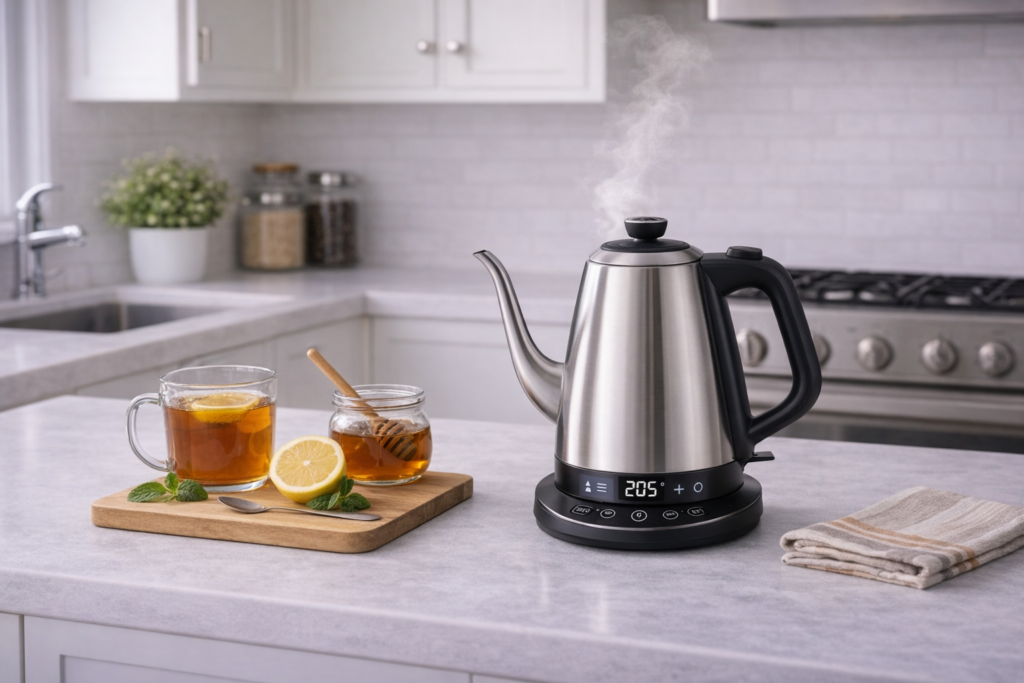
Choosing the right electric kettle seems straightforward at first, but once you start comparing options, the differences quickly add up.
Some kettles are built for speed. Others focus on precision. Some are designed to save space, while others prioritize capacity. The challenge is not finding a kettle. It’s finding the one that actually fits your daily routine.
This guide breaks down what matters so you can make a simple, confident decision without overthinking it.
Start With How You Use It
Before looking at features, think about how often you use a kettle.
• Occasional use
• Daily use
• Multiple times per day
If you only use it occasionally, a simple model will do the job. If you use it daily, small improvements in speed and usability start to matter more.
This is the same approach you’d take when evaluating other appliances, especially when comparing performance differences in something like electric kettles under $50.
Understand the Main Types
Most electric kettles fall into a few categories.
• Standard kettles for boiling water
• Temperature control kettles for precision
• Compact kettles for small spaces
Choosing the right type simplifies the decision process.
If you’re unsure which direction to go, it helps to look at how different options perform in real situations, like in electric kettles for small kitchens.
Size and Capacity Matter
Capacity affects how often you need to refill the kettle.
• Smaller kettles are easier to store
• Larger kettles are better for multiple users
If you live alone or have limited space, smaller models tend to be more practical. If you make multiple drinks at once, a larger capacity will save time.
Speed vs Precision
Some kettles are built for speed. Others focus on control.
• Fast boiling is better for convenience
• Temperature control is better for precision
You don’t need both unless you regularly make different types of drinks. If you care about temperature accuracy, it’s worth exploring options like those covered in electric kettles with temperature control.
Ease of Use Matters More Than Features
Many kettles come with extra features that sound useful but don’t improve daily use.
Focus on:
• Simple controls
• Easy pouring
• Comfortable handling
If a kettle feels complicated, you’re less likely to enjoy using it.
Build Quality and Materials
The material of the kettle affects durability and experience.
• Stainless steel feels more durable
• Glass allows visibility
• Plastic tends to be lighter
Each option has its advantages, but build quality matters more than the material itself.
What Most People Overlook
One of the most overlooked factors is how the kettle fits into your kitchen setup.
It’s not just about size. It’s about how it interacts with your space and routine.
This becomes especially clear when you compare how appliances perform over time, similar to what you’ll notice when looking at broader kitchen setups like in coffee makers under $150.
How to Make the Final Decision
At this point, the decision should be simple.
Focus on:
• Your usage habits
• Your available space
• Your preferred level of control
If a kettle aligns with those three things, it’s likely the right choice.