
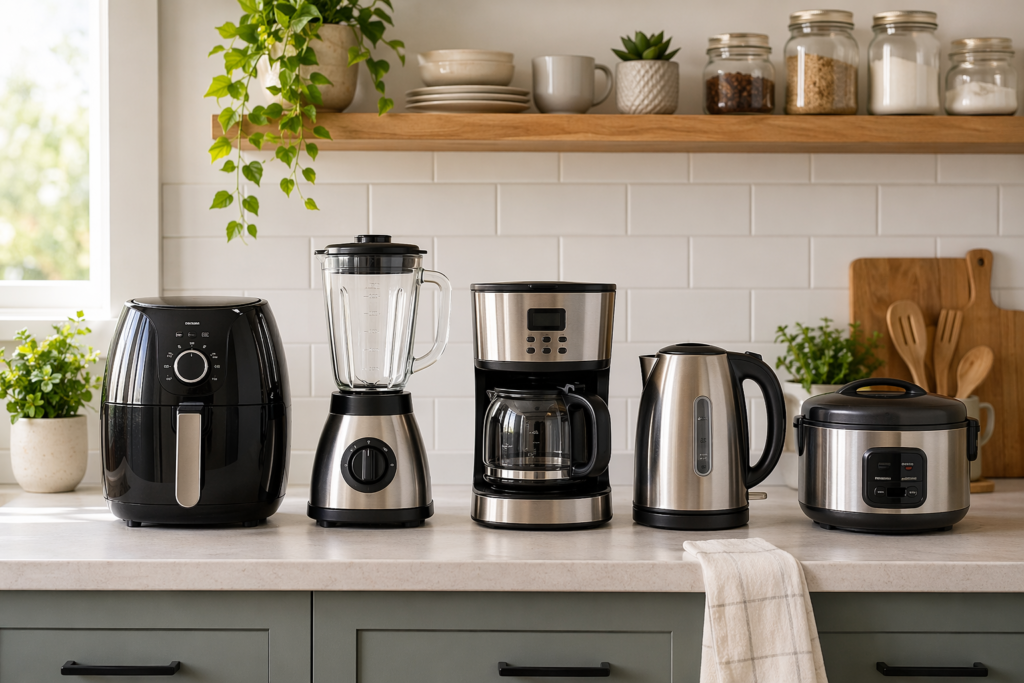
Most Kitchens Don’t Feel Small Because Of Size. They Feel Small Because Of What’s Sitting On The Counter.
You can have a decent-sized kitchen and still feel cramped if every appliance competes for space. This usually happens when appliances are chosen one by one without thinking about how they work together.
The real shift is simple. Instead of asking “is this a good appliance?”, the better question is “does this earn its space?”
Once you start thinking that way, your kitchen begins to feel more open without removing half your things.
Why Most Kitchens Feel Cluttered Without Realizing It
Clutter in a kitchen usually comes from overlap, not quantity.
A blender, smoothie maker, and food processor often end up doing similar jobs. A large coffee machine might take up permanent space for something used once a day. An oversized air fryer might dominate the counter when a smaller one would handle daily meals just fine.
This is where most people go wrong. They choose appliances based on features instead of how they fit into their actual routine.
If your kitchen feels crowded but nothing seems unnecessary, it’s worth understanding what’s really causing it in why your kitchen still feels messy and what actually fixes it.
Appliances That Actually Save Space
Some appliances genuinely reduce clutter because they simplify your setup instead of adding to it.
These tend to be:
• Compact air fryers that replace oven use for everyday cooking
• Versatile blenders that handle multiple prep tasks
• Rice cookers that double as meal prep tools
• Electric kettles that eliminate the need for stovetop heating
The key is choosing versions that match your kitchen size, not overwhelm it.
Many people overestimate how big their appliances need to be. In reality, smaller options are often more practical, especially if you’ve looked into best small air fryers for apartments, compact affordable.
Quick Comparison: Space-Saving Vs Space-Wasting Appliances
| Type | Space-Saving Choice | What to Avoid |
|---|---|---|
| Air Fryer | Compact 2–4 qt models | Oversized 8 qt units for small kitchens |
| Blender | Multi-use blender | Separate smoothie maker + processor |
| Coffee Maker | Simple or beginner models | Bulky machines with unused features |
| Rice Cooker | Mid-size multi-use | Large units for occasional cooking |
This is where small decisions start to add up. Choosing the right version of each appliance makes more difference than most people expect.
The Hidden Problem With “Bigger Is Better”
One of the fastest ways to lose counter space is going too big.
Large appliances sound like the safer option. More capacity, more flexibility, more features. But in reality, they often sit there unused most of the time.
This shows up a lot with:
• Large air fryers
• High-capacity blenders
• Full-size coffee machines
Unless you’re cooking for multiple people daily, these tend to create friction instead of helping.
If you’re unsure what size actually fits your needs, breaking it down properly helps, especially with guides like how to choose the right air fryer size.
When Space-Saving Appliances Actually Backfire
This is something most people don’t expect.
An appliance can be “compact” and still create clutter if it doesn’t fit your habits.
For example, a small blender that’s annoying to clean often ends up being avoided. Then you keep a second tool for convenience, which defeats the purpose. The same happens with air fryers that are too small for your typical portions. You end up cooking in batches or switching back to the oven.
This is where space-saving turns into time-wasting.
The real test isn’t size. It’s whether the appliance fits how you actually cook on a daily basis.
Appliances That Quietly Create Clutter Over Time
Some appliances don’t look like a problem at first. They slowly become one.
These are usually:
• Single-purpose gadgets used occasionally
• Appliances that are harder to clean than expected
• Tools that don’t fit into daily routines
They end up living on your counter because putting them away feels like a hassle.
This happens a lot with blending tools. Instead of choosing one solid option, people stack multiple devices. Understanding this early through something like blender buying guide features sizes and tips for every shopper prevents that buildup.
The Role Of Frequency In Choosing The Right Appliances
One of the simplest ways to reduce clutter is to base decisions on how often you use something.
Daily-use appliances deserve easy access. Weekly-use appliances should be easy to store. Rarely used appliances shouldn’t live on your counter at all.
This sounds obvious, but most kitchens are set up the opposite way. Large, rarely used appliances take up permanent space, while smaller everyday tools get pushed aside.
If you reorganize based on frequency alone, your kitchen instantly feels more functional without buying anything new.
How To Think About Appliances Differently
The goal isn’t fewer appliances. It’s better decisions.
A well-functioning kitchen usually follows a simple pattern:
• Each appliance has a clear purpose
• There’s minimal overlap between tools
• Daily-use items stay accessible
• Everything else is stored efficiently
When this is dialed in, even a small kitchen starts to feel manageable.
This is also where multi-use appliances can help, but only if you actually use their features.
The Tradeoff Most People Ignore
There’s always a balance between versatility and simplicity.
Multi-use appliances save space, but only if they replace multiple tools in your routine. Otherwise, they just become more complicated versions of something simple.
Single-purpose tools are easier to use, but they add up quickly if you’re not careful.
The right choice depends on how you use your kitchen.
If you’re keeping things simple, focused tools usually work better. That’s why many setups benefit from starting with something straightforward like best coffee makers for beginners.
A Simple Way To Audit Your Kitchen Setup
If you’re not sure where to start, a quick audit makes things clear fast.
Go through your appliances and ask:
• When was the last time I used this?
• Does something else already do this job?
• Is this easy enough to use regularly?
• Does it deserve counter space?
Most people find that 20–30% of their appliances don’t pass this test. That’s usually where the clutter is coming from.
What To Avoid If You Want More Space
If your goal is to make your kitchen feel bigger without changing anything physically, avoiding a few patterns makes a big difference.
• Buying appliances without knowing where they’ll go
• Choosing size based on “just in case” situations
• Keeping rarely used appliances on the counter
• Owning multiple tools that do the same job
These decisions don’t seem like a problem individually, but they build up fast.
The Real Goal Is A Kitchen That Works
A well-set-up kitchen doesn’t feel empty. It feels intentional.
Everything has a purpose. Everything earns its place. Nothing gets in your way.
Once you start thinking like that, your kitchen becomes easier to use, easier to clean, and noticeably less stressful to be in.