This article contains affiliate links. As an Amazon Associate, I earn from qualifying purchases at no extra cost to you.
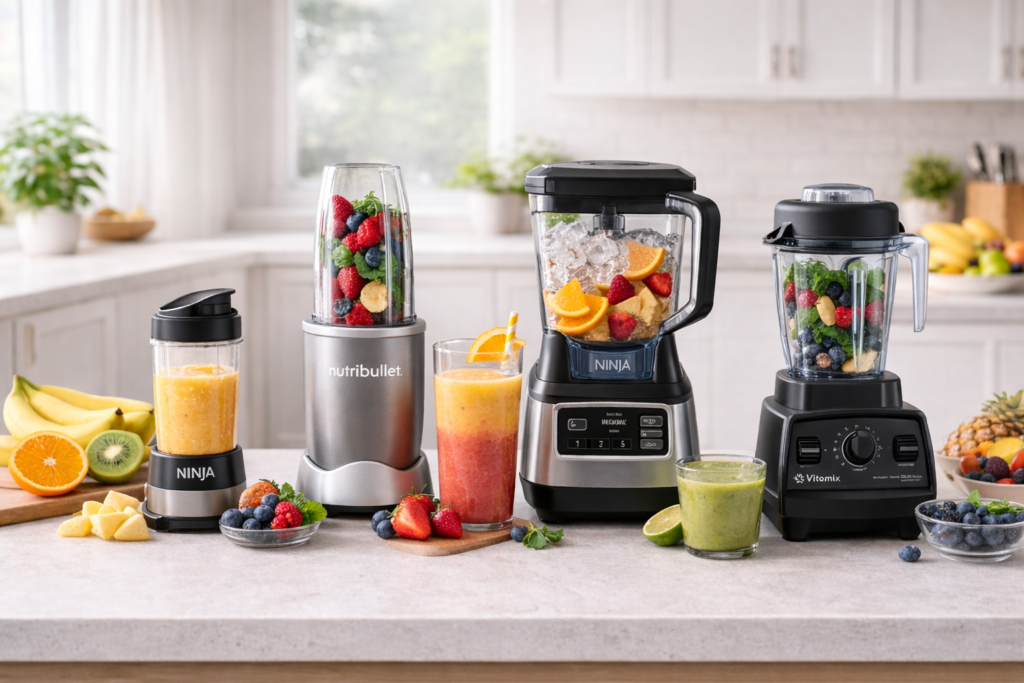
Choosing a blender seems simple until you realize how different they can be. Some are built for smoothies, others for heavy-duty blending, and many fall somewhere in between. The biggest mistake people make is choosing based on price or brand instead of how they actually plan to use it.
If you start with your use case instead of features, the decision becomes much easier.
Quick Recommendations (Start Here)
• Smoothies and light use: Ninja Fit compact blender
• Everyday home use: NutriBullet Pro 900 blender
• Families and larger batches: Ninja Professional 72 oz blender
• Heavy-duty blending: Vitamix E310 professional blender
If you want more comparisons, best blenders under 100 affordable and high performing and best compact blenders for small kitchens space saving powerful are good starting points.
Blender Types Comparison (Quick Overview)
| Type | Best For | Strength | Limitation |
|---|---|---|---|
| Personal | Smoothies, single servings | Compact, easy to use | Limited capacity |
| Standard | Everyday blending | Balanced performance | Not heavy-duty |
| High-Power | Tough ingredients | Strong motor, versatile | More expensive |
| Large | Families, batch prep | High capacity | Takes more space |
This helps you quickly narrow down the category that fits your needs.
Understanding Blender Power (What Actually Matters)
Blender power is usually measured in watts, but numbers alone don’t tell the full story.
Lower-powered blenders are fine for soft ingredients like fruits and protein shakes. They’re quick, simple, and often more affordable.
Mid-range blenders handle everyday use well. They can blend smoothies, sauces, and basic recipes without struggling.
High-powered blenders are designed for tougher tasks like crushing ice, blending frozen foods, and making thicker mixtures. If you plan to use your blender regularly, power becomes more important.
The key is matching power to usage. More power isn’t always better if you don’t actually need it.
Choosing The Right Size (Don’t Overlook This)
Size affects both convenience and usability.
• Small capacity – quick use, easy storage
• Medium capacity – best balance for most homes
• Large capacity – better for families or batch prep
If you’re working with limited space, something from best compact blenders for small kitchens space saving powerful is usually the better option.
For larger households, a bigger blender saves time by avoiding multiple batches. This becomes especially noticeable if you use it daily.
Best Picks By Use Case (Simple Breakdown)
Instead of comparing everything, match the blender to how you’ll use it.
• Quick smoothies and shakes
A compact option like Ninja Fit compact blender is simple and efficient
• Everyday kitchen use
A balanced model like NutriBullet Pro 900 blender handles most tasks well
• Family use and larger portions
A high-capacity option like Ninja Professional 72 oz blender works better for multiple servings
• Heavy-duty blending and long-term use
A premium model like Vitamix E310 professional blender handles tougher ingredients without struggle
Each one serves a different purpose, which is why choosing based on usage is more important than anything else.
Key Features That Actually Matter
Blenders often come with extra features, but only a few really impact daily use.
• Motor strength → affects blending performance
• Blade design → impacts consistency
• Jar size → determines how much you can make
• Controls → simple vs advanced settings
You don’t need the most advanced model. You need one that performs consistently for your specific needs.
Common Mistakes To Avoid
A lot of buyers focus on the wrong things when choosing a blender.
• Buying more power than needed
• Choosing too small for regular use
• Ignoring storage space
• Overpaying for features they won’t use
Most issues come from not matching the blender to actual usage.
How To Make The Right Final Choice
Choosing the right blender comes down to three things:
• What you’ll use it for
• How often you’ll use it
• How much you need to make at once
Once you answer those, the right option becomes obvious.
If you want a deeper breakdown before deciding, blender buying guide features sizes and tips for every shopper will help you narrow it down further.
Top Picks
Want the short version? These are the best blender picks for quick smoothies and everyday use.
A compact and fast personal blender that’s perfect for single-serve smoothies, shakes, and on-the-go use.
View price on AmazonA reliable everyday blender with enough power to handle smoothies, sauces, and basic food prep with ease.
View price on Amazon