
This article contains affiliate links. As an Amazon Associate, I earn from qualifying purchases at no extra cost to you.
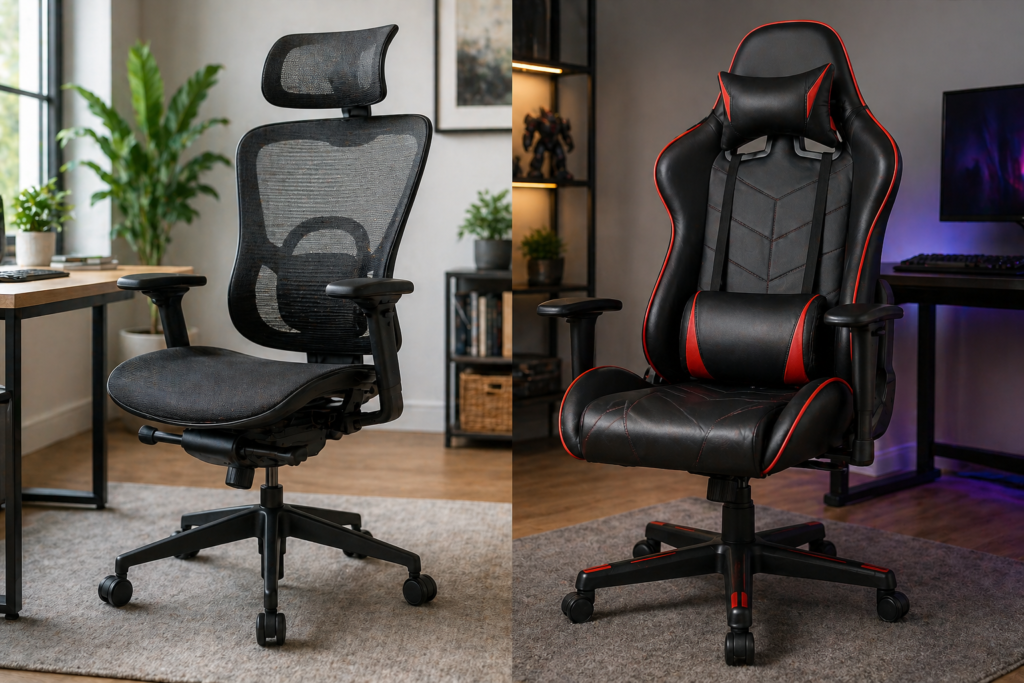
Ergonomic vs Gaming Chairs: The Real Difference
At first glance, gaming chairs and ergonomic chairs seem similar.
Both have high backs, armrests, and adjustable features. Both are marketed as comfortable for long sitting sessions. But once you actually use them for hours every day, the differences become obvious.
Gaming chairs are designed for appearance and short-term comfort. Ergonomic chairs are designed for posture and long-term support.
That difference matters more than people expect.
If you are sitting for one or two hours, either can feel fine. If you are sitting for six or eight hours, the wrong chair becomes a daily problem.
This is not just a style decision. It is a comfort and health decision.
If you are still unsure what to look for in general, this guide on how to choose the right office chair breaks down the features that actually matter.
Quick Comparison
| Feature | Ergonomic Chair | Gaming Chair |
|---|---|---|
| Best For | Long work hours | Short to medium sessions |
| Support | Built-in lumbar support | Cushion-based support |
| Comfort Over Time | Improves with use | Often declines with long use |
| Design | Minimal and functional | Bold and racing-style |
| Adjustability | Highly adjustable | Limited meaningful adjustment |
| Posture Support | Strong | Moderate |
| Best Buyer | Work-from-home or office users | Casual users and gamers |
Why Ergonomic Chairs Are Built For Long Hours
Ergonomic chairs are designed with one goal: to support your body over time.
They are built to keep your spine aligned, support your lower back, and reduce pressure on your hips and shoulders. This is not just about comfort in the moment. It is about how your body feels after hours of sitting.
The biggest difference is lumbar support.
If you want proper posture support for long work sessions, Hbada Ergonomic Office Chair is one of the most reliable options for maintaining comfort throughout the day.
Instead of relying on pillows, ergonomic chairs have built-in support that adjusts with your posture. This keeps your back in a healthier position without constant readjustment.
This is why people who switch to ergonomic chairs often notice less fatigue and less discomfort throughout the day.
If you spend long hours sitting, this guide to the best office chairs for long hours shows what actually holds up over time.
Where Gaming Chairs Feel Comfortable At First
Gaming chairs are designed to feel comfortable right away.
They usually have thick padding, soft cushions, and a reclined shape that feels relaxed. This makes them appealing when you first sit down.
The issue is that this comfort is not always supportive.
Instead of supporting your posture, gaming chairs often let your body sink into the seat. This can feel good for short sessions, but over time it can lead to poor posture and discomfort.
This is especially noticeable during longer sitting sessions where support matters more than softness.
If you prefer a softer, more relaxed feel for shorter sessions or casual use, Homall Gaming Chair is a popular choice that focuses more on comfort and style.
The Biggest Problem With Gaming Chairs
The biggest issue with gaming chairs is how they handle long hours.
They rely heavily on removable cushions for lumbar and neck support. These cushions can shift, feel inconsistent, and require constant adjustment.
Over time, this becomes frustrating.
Instead of maintaining posture automatically, you have to keep fixing your position. This leads to more movement, more strain, and less overall comfort.
For people who sit daily, this becomes a long-term problem rather than a small inconvenience.
If you are already dealing with discomfort, this breakdown of the best office chairs for back pain shows what actually helps instead of making things worse.
Where Ergonomic Chairs Can Feel Less Exciting
Ergonomic chairs are not perfect.
They are usually more expensive, and they do not have the bold design that gaming chairs offer. For some people, they look plain or less visually appealing.
They also tend to feel firmer at first.
This can be surprising if you are used to soft chairs. But that firmness is intentional. It provides support instead of letting your body sink.
This is one of those cases where what feels better at first is not always better over time.
Posture vs Relaxation: What You Actually Need
This is the key difference between the two.
Gaming chairs focus on relaxation. Ergonomic chairs focus on posture.
If your goal is to lean back, relax, and sit casually, a gaming chair can feel more comfortable in the moment. If your goal is to sit properly for hours without strain, an ergonomic chair is the better option.
Most people think they want comfort.
What they actually need is support.
This is why ergonomic chairs tend to win for work setups, while gaming chairs are more suited for shorter sessions.
What Happens After A Few Months Of Use
This is where real differences show up.
After a few months, gaming chairs often start to lose their initial comfort. The padding compresses, the cushions feel less effective, and posture issues become more noticeable.
Ergonomic chairs tend to feel the opposite.
They may not feel impressive on day one, but they remain consistent over time. The support stays stable, and the chair continues to do its job without needing constant adjustment.
This is why long-term satisfaction is usually higher with ergonomic chairs.
Which One Is Better For Work vs Gaming
For work, ergonomic chairs are clearly better.
They are designed for long hours, focused sitting, and maintaining posture throughout the day. This makes them ideal for remote work, office setups, and productivity.
For gaming, it depends.
Short gaming sessions can feel fine in either chair. Longer sessions benefit more from ergonomic support, even if gaming chairs are marketed for that purpose.
This is where expectations matter.
Gaming chairs are not bad. They are just not optimized for long-term sitting the way ergonomic chairs are.
The Real Cost Of Choosing The Wrong Chair
Choosing the wrong chair is not just about comfort.
It affects your daily routine.
A chair that does not support your body leads to constant adjustments, reduced focus, and physical discomfort. Over time, this becomes part of your day in a negative way.
This is why many people end up replacing gaming chairs with ergonomic ones after a year or two.
The initial decision feels cheaper or more exciting, but the long-term experience tells a different story.
If you are still deciding between budget and long-term comfort, this comparison of cheap vs expensive office chairs breaks down what people regret after using them daily.
Top Picks From This Article
Want the short version? These are the best picks for long hours based on support vs comfort style.
Designed for posture support and all-day comfort, making it the better choice for work and extended sitting.
View price on AmazonA more relaxed, cushioned option that works well for shorter sessions and style-focused setups.
View price on AmazonWhich One Should You Actually Buy
Choose an ergonomic chair if you sit for long hours, work from a desk, or care about posture and long-term comfort.
Choose a gaming chair if you sit occasionally, prefer a softer feel, or care more about style than support.
Most people who sit daily should choose ergonomic chairs.
Gaming chairs can work for shorter sessions, but they are not built for long-term comfort in the same way.
That is the clearest way to make the decision.