
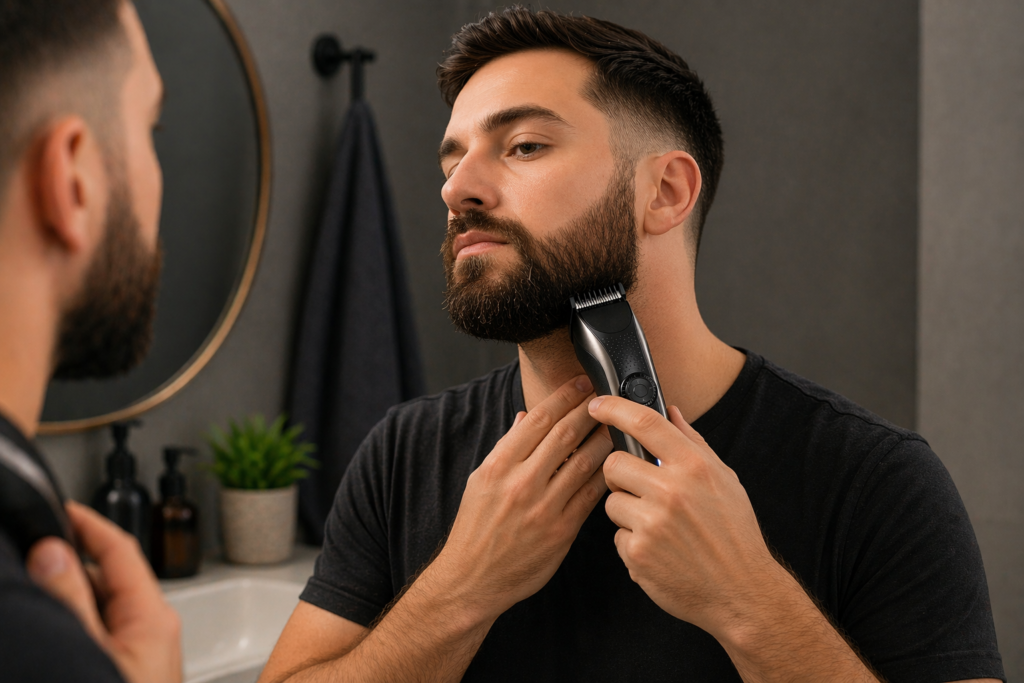
Trimming your beard seems simple, but most people get uneven results because they rush or use the wrong approach.
A good trim is not about cutting as much as possible. It is about control, consistency, and using the right technique.
Once you understand the process, you can maintain a clean, sharp look without needing a barber every week.
Start With a Clean and Dry Beard
Before trimming, your beard needs to be clean.
Wash it to remove dirt and oil, then dry it completely. Wet hair looks longer, which can lead to trimming too much by mistake.
Dry trimming gives you a more accurate result and helps you see the true shape of your beard.
Choose the Right Tool Before You Begin
Using the right tool makes everything easier.
A trimmer is best for shaping and maintaining length, while other tools are designed for different purposes.
If you are unsure which tool suits your needs, this guide on beard trimmer vs electric razor which one should you choose for better results explains the differences clearly.
Trim Longer First, Then Go Shorter
One of the biggest mistakes is starting too short.
Always begin with a longer guard. This allows you to reduce length gradually without risking uneven patches.
You can always go shorter, but you cannot fix over-trimming.
Working step by step gives you more control and a more even result.
Follow the Natural Shape of Your Beard
Your beard has a natural growth pattern.
Instead of forcing a shape, work with it. Trim evenly across the face and avoid cutting too aggressively in one area.
Consistency is more important than perfection.
This approach keeps your beard looking natural while still clean and defined.
Define Your Neckline Properly
A clean neckline makes a big difference.
A simple rule is to trim everything below the line just above your Adam’s apple.
Avoid trimming too high, as this creates an unnatural look.
Shape Your Cheek Line Carefully
The cheek line frames your face.
You can keep it natural or lightly clean it up, depending on your style.
Avoid going too low, as this removes fullness and can make your beard look thinner.
Small adjustments make a big difference here.
Use Slow and Controlled Movements
Speed is the enemy of a good trim.
Move slowly and evenly, especially when working on the sides and chin.
Rushing leads to uneven cuts and forces you to correct mistakes later.
Controlled movements give you a cleaner, more professional result.
How Your Face Shape Should Influence Your Beard Trim
One of the biggest upgrades you can make is trimming based on your face shape.
Different shapes benefit from different beard styles:
- Round faces look better with more length at the chin
- Square faces benefit from slightly softer edges
- Oval faces can handle most styles evenly
Instead of trimming randomly, shaping your beard to complement your face creates a more balanced look.
If you want more control over shaping, this guide on beard trimmer or clippers which one should you choose for the best results explains how tool choice impacts precision.
How Often You Should Trim Your Beard
Trimming frequency depends on your beard length and growth speed.
Short beards usually need trimming every few days, while longer beards can go a week or more between trims.
Keeping a consistent schedule helps maintain shape and prevents major corrections.
Blend the Sides for a Natural Look
Blending is what separates a basic trim from a clean one.
Use slightly shorter settings on the sides if needed to create a smooth transition from your beard to your hair.
Avoid harsh lines or sudden changes in length.
Blending keeps everything looking natural and balanced.
Pay Attention to the Mustache Area
The mustache area needs extra care.
Trim it slightly shorter if it overlaps your lip, but avoid cutting too much.
Use small, careful movements to keep it even.
This area is very noticeable, so precision matters more here.
Why Lighting and Mirror Setup Changes Your Results
Most people overlook their setup.
Bad lighting leads to uneven trimming because you cannot clearly see your beard lines.
Use bright, even lighting and a mirror positioned at eye level.
Better visibility leads to better precision and fewer mistakes.
Why Cheap Tools Lead to Bad Results
Your tool quality matters more than most people realize.
Low-quality trimmers often pull hair instead of cutting cleanly, leave uneven patches, and lose power quickly.
This makes trimming harder and less consistent.
If you are comparing better options, this guide on wahl vs philips vs braun which beard trimmer should you choose helps you choose something more reliable.
How to Fix an Uneven Beard Without Starting Over
Even experienced people make mistakes.
If your beard becomes uneven, avoid cutting everything shorter immediately.
Instead, identify the longer areas and gradually blend them down.
Small corrections lead to better overall results than aggressive trimming.
How Beard Density Changes Your Trimming Approach
Not all beards grow the same.
If your beard is thick and dense, you may need to trim in multiple passes to keep it even.
If your beard is patchy or lighter, aggressive trimming can make it look thinner.
Adjusting your approach based on density helps maintain a fuller and more balanced look.
Understanding this prevents over-trimming and improves long-term results.
How Direction of Trimming Affects the Outcome
The direction you trim matters more than most people think.
Trimming with the grain maintains length and creates a more natural look.
Trimming against the grain removes more bulk and creates a sharper finish.
Switching between both techniques strategically gives you better control over your final result.
This is one of the simplest ways to immediately improve your trimming quality.
Why Patience Is the Most Important Skill
Most trimming mistakes come from rushing.
Taking an extra few minutes allows you to check angles, adjust evenly, and avoid cutting too much.
Beard trimming is not about speed. It is about consistency.
The slower and more controlled you are, the better your results will look.
Common Trimming Mistakes to Avoid
Even small mistakes can affect your overall look.
Watch out for trimming too short too quickly, ignoring the neckline, rushing the process, or using the wrong guard size.
Avoiding these mistakes keeps your beard looking clean without constant corrections.
How to Maintain Your Beard Between Trims
Maintenance is what keeps your beard looking good daily.
Brush regularly, keep it clean, and do light touch-ups instead of full trims.
If pulling or irritation is an issue, this guide on beard trimmers that don’t pull hair helps improve comfort and consistency.
The Difference Between a Good Trim and a Great One
A good trim keeps your beard under control.
A great trim enhances your overall appearance.
The difference comes down to clean lines, even length, and proper blending.
These small details are what make your beard look intentional instead of overgrown.
How to Build a Simple Grooming Routine
A simple routine is better than overcomplicating things.
Stick to a regular trimming schedule, maintain basic grooming habits, and use reliable tools.
Consistency always beats perfection.
Getting Better Results Over Time
Trimming is a skill.
The more you do it, the better your results become.
Start simple, focus on control, and improve gradually.
Over time, you will find what works best for your beard and your style.