
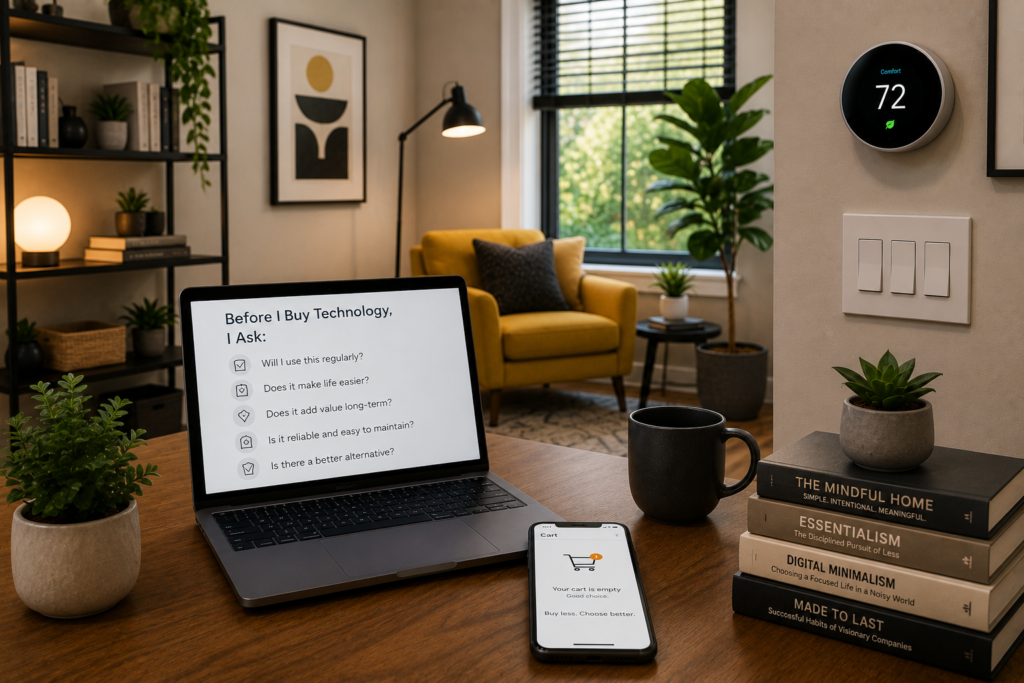
For years, consumer technology followed a simple pattern.
New products appeared. New features were introduced. Consumers upgraded frequently.
More technology generally felt better.
Today, that mindset is changing.
Many consumers are becoming far more selective about the products they bring into their homes.
The shift is not necessarily about spending less money.
It is about being more intentional.
People increasingly want technology that solves real problems, saves time, reduces effort, and fits naturally into everyday life. Products that create unnecessary complexity often struggle to hold attention for very long.
In many ways, consumers are becoming less interested in technology itself and more interested in what technology helps them accomplish.
Consumers Have More Experience Than Ever
One reason people are becoming more selective is simple.
They have experience.
Many consumers have already purchased products that seemed exciting initially but provided little long-term value.
That experience changes buying behavior.
People become better at distinguishing between useful products and products that simply generate temporary excitement.
The result is a more thoughtful approach to technology purchases.
Quick Comparison Table
| Earlier Buying Habits | Modern Buying Habits |
|---|---|
| Chasing new features | Prioritizing usefulness |
| Frequent upgrades | Selective upgrades |
| Technology first | Lifestyle first |
| More devices | Better devices |
| Novelty purchases | Problem-solving purchases |
| Complexity accepted | Simplicity preferred |
People Care More About Utility
Many technology purchases are now evaluated through a practical lens.
Consumers increasingly ask:
- Will I use this regularly?
- Does it save time?
- Does it reduce effort?
- Does it solve a real problem?
- Will it improve daily life?
These questions help filter out products that look impressive but provide limited long-term value.
Practicality is becoming a stronger purchasing factor than novelty.
Technology Must Earn Its Place
Many homes already contain a significant number of devices.
Because of this, new products increasingly need to justify their existence.
Consumers are asking whether a product deserves space, attention, maintenance, and money.
That is a very different mindset from simply buying technology because it is new.
Products that provide ongoing value tend to survive this evaluation process.
Convenience Became More Important Than Features
Features still matter.
Convenience matters more.
Many consumers would rather own a product that quietly saves time every day than a product packed with impressive features they rarely use.
This trend closely connects with the small frictions technology quietly removed from daily life.
Small conveniences often create more value than large feature lists.
People Are Becoming More Aware Of Maintenance
Every product carries some level of maintenance burden.
Updates.
Charging.
Troubleshooting.
Setup.
Learning curves.
Consumers increasingly recognize these hidden costs.
Many now prefer products that require minimal ongoing attention.
The best technologies often become valuable because they quietly operate in the background.
Technology Fatigue Is Real
Many people spend large portions of their day interacting with screens.
Work.
Communication.
Entertainment.
Information.
As a result, some consumers no longer want more technology.
They want better technology.
This shift helps explain why simplicity and ease of use have become major selling points.
The Most Valuable Products Often Feel Boring
Interestingly, many of the most useful products are not particularly exciting.
Reliable internet.
Smart lighting.
Navigation apps.
Scheduling tools.
Automated routines.
These products rarely generate headlines.
Yet they consistently improve daily life.
This same pattern appears in the technology people miss most when it stops working.
People Want Less Mental Clutter
Technology can reduce stress.
It can also create stress.
Consumers increasingly understand this distinction.
Products that reduce mental workload tend to perform better than products that demand constant attention.
Examples include:
- Reminder systems.
- Automated routines.
- Smart scheduling.
- Delivery tracking.
- Connected organization tools.
The goal is often reducing mental clutter rather than adding more information.
Consumers Are Researching More Carefully
Product reviews, videos, comparisons, and user experiences are more accessible than ever.
This allows consumers to make more informed decisions before purchasing.
Many buyers spend more time researching and less time making impulse purchases.
The result is a more selective and deliberate marketplace.
The Best Technology Feels Invisible
One major theme appears repeatedly.
Consumers increasingly value products that feel invisible.
Technology succeeds when it supports routines without becoming the center of attention.
That is one reason why technology feels less like technology than it used to resonates with so many people.
The most successful products often require the least attention.
People Value Longevity More Than Novelty
New products will always attract attention.
Long-term usefulness increasingly drives purchasing decisions.
Consumers want products that remain valuable years after the initial purchase.
They are becoming less interested in short-term excitement and more interested in lasting benefits.
This shift favors reliability, quality, and practicality.
Home Technology Is Becoming More Intentional
Homeowners are becoming increasingly selective about connected devices.
Many are asking whether a product genuinely improves daily life or simply adds another thing to manage.
This more intentional approach often results in fewer purchases but better overall experiences.
The focus shifts from quantity to quality.
People Appreciate Time Savings More
Time has become increasingly valuable.
Many consumers now evaluate products based on how much time they save.
Examples include:
- Automated cleaning.
- Digital organization.
- Simplified communication.
- Smart scheduling.
- Automated reminders.
Saving a few minutes repeatedly often creates significant long-term value.
Technology Must Fit Existing Routines
Products perform best when they fit naturally into daily life.
Consumers increasingly reject products that require major behavioral changes.
Instead, they prefer tools that improve existing routines.
This same principle appears in the home routines people spend less time thinking about today.
The easier a product integrates, the more likely it is to succeed.
Consumers Are Becoming More Quality Focused
Many buyers would rather own fewer high-quality products than many mediocre ones.
This trend appears across multiple categories.
Technology.
Furniture.
Appliances.
Home organization.
People increasingly prioritize reliability and long-term satisfaction.
The Market Is Maturing
Technology is no longer new.
Many categories are mature.
Consumers know what works and what does not.
This maturity encourages more thoughtful purchasing behavior and reduces interest in gimmicks.
Products increasingly compete on usefulness rather than novelty.
Technology Supports Lifestyle Goals
People rarely buy technology for its own sake.
They buy what it enables.
Comfort.
Organization.
Convenience.
Productivity.
Entertainment.
The focus increasingly shifts toward outcomes rather than specifications.
People Are Looking For Fewer Regrets
Every purchase carries risk.
Many consumers now prioritize avoiding regret rather than chasing excitement.
They want products that continue providing value long after the purchase is complete.
This often leads to more careful decision-making and fewer impulse purchases.
The Future Will Reward Useful Technology
Current trends suggest consumers will become even more selective.
Products that reduce friction, save time, and support everyday routines will likely continue thriving.
Products that create complexity without meaningful benefits may struggle.
The future appears increasingly focused on usefulness.
Why People Are Becoming More Selective About Technology
Consumers are not necessarily losing interest in technology.
They are becoming more intentional about it.
They want products that solve problems.
They want products that save time.
They want products that reduce effort.
They want products that fit naturally into everyday life.
Technology still matters.
The difference is that usefulness increasingly matters more.
This shift also connects with what modern home comfort looks like in 2026 and how homes quietly became easier to manage, where convenience and simplicity increasingly outweigh complexity and excess.