
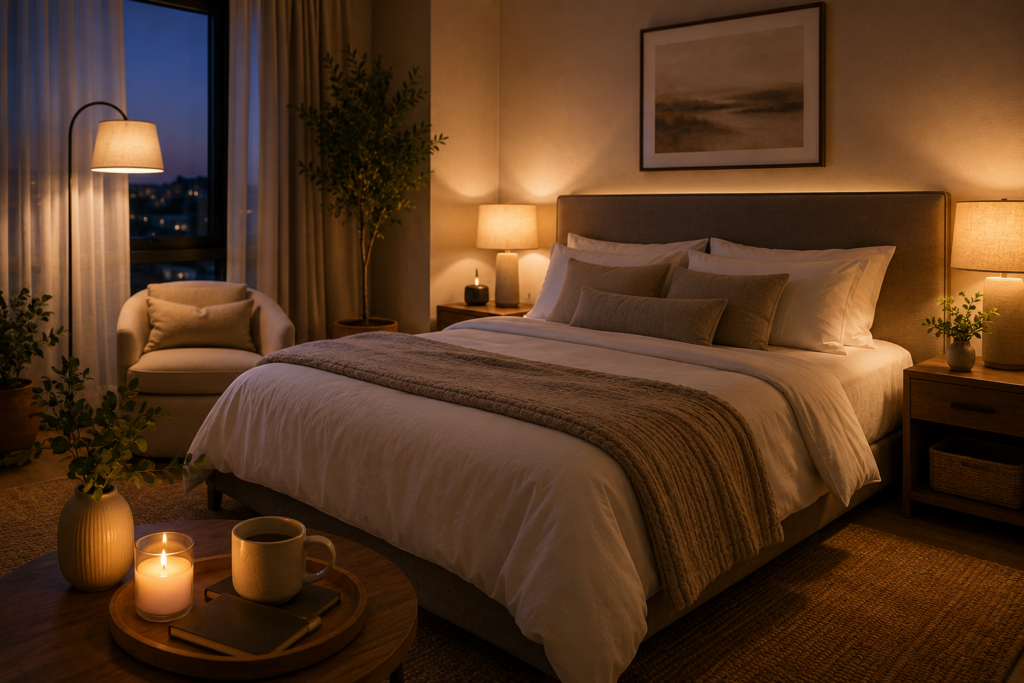
People Don’t Just Want Bigger Homes Anymore
Something subtle has changed over the past few years.
A lot of people no longer obsess over having the biggest house, the fanciest furniture, or rooms filled with expensive decor.
Instead, people are becoming obsessed with a different feeling entirely.
Comfort.
Calmness.
Soft lighting.
Quiet spaces.
Clean counters.
Fresh-smelling rooms.
Organized kitchens.
Comfortable beds.
Warm lighting at night.
Homes that feel mentally easier to exist inside.
That’s why so many people are quietly trying to recreate the feeling of hotels at home.
Not because hotels are luxurious.
Because good hotels remove stress.
The Appeal Isn’t Luxury. It’s Mental Relief
Most people think the reason hotels feel relaxing is because they’re expensive.
That’s usually not true.
What actually makes hotel rooms feel calming is:
- Minimal Visual Clutter
- Controlled Lighting
- Organized Layouts
- Soft Textures
- Quiet Color Palettes
- Simplicity
- Predictability
Everything feels intentional.
There’s a reason people come home from vacations and suddenly feel annoyed by random clutter, tangled cables, overcrowded countertops, or harsh lighting.
Once your brain experiences a calmer environment, it becomes harder to ignore environmental stress at home.
That’s part of the same psychology discussed in why your kitchen still feels messy and what actually fixes it. Most stress inside a home comes from dozens of small visual and mental interruptions adding up throughout the day.
People Are Spending More Time At Home Than Ever Before
Another major reason this trend exploded is simple:
People spend far more time at home now.
Homes became:
- Offices
- Gyms
- Coffee Shops
- Relaxation Spaces
- Workspaces
- Recovery Spaces
And suddenly people started noticing how much their environment affects mood, energy, focus, and stress levels.
That shift changed buying behavior massively.
Instead of chasing flashy products, many people started investing in things that make daily life feel smoother and calmer.
Soft Lighting Changed Everything
One of the biggest hotel-inspired trends is lighting.
Harsh ceiling lights are slowly disappearing from a lot of homes because people realized they make spaces feel cold and mentally exhausting.
Hotels almost never rely on bright overhead lighting alone.
Instead, they use:
- Warm Lamps
- Indirect Lighting
- Accent Lighting
- Soft Bedside Lighting
- Ambient Glow
That creates a calmer atmosphere instantly.
It’s also why smart lighting products and warm LED systems have exploded recently. People are trying to recreate that softer evening atmosphere at home without realizing they’re copying hotel design psychology.
A lot of that overlaps with the ideas explored in best smart lighting systems for your home.
People Want Homes That Feel Easier To Maintain
One of the most underrated things hotels do well is reducing visible friction.
Everything feels:
- Easy To Find
- Easy To Clean
- Easy To Use
- Easy To Navigate
That’s why organized spaces psychologically feel “expensive” even when they aren’t.
People are increasingly buying products that reduce visual chaos because clutter creates low-level stress all day long.
Simple upgrades like:
- Better Storage Containers
- Hidden Cable Management
- Countertop Organizers
- Compact Appliances
- Matching Dispensers
can completely change how a room feels emotionally.
That’s one reason articles like best kitchen organizers that actually save space continue connecting with readers so strongly.
People Are Becoming Obsessed With Comfort Routines
Another thing hotels accidentally mastered is ritual.
Good hotels create small comforting routines:
- Morning Coffee
- Soft Lighting At Night
- Clean Bedding
- Quiet Evenings
- Warm Showers
- Calm Atmospheres
People are now recreating those same rituals at home intentionally.
That’s part of why products like:
- Milk Frothers
- Espresso Machines
- Nugget Ice Makers
- Air Purifiers
- Soft Lighting Systems
feel emotionally satisfying even though they aren’t technically “necessary.”
They make ordinary routines feel elevated.
The “Clean Counter” Trend Is Bigger Than People Realize
One surprisingly powerful trend online right now is the obsession with clean counters.
Minimal countertops consistently perform well across:
- TikTok
- YouTube
because visually calm environments instantly feel more relaxing to people.
Hotels understand this extremely well.
Most hotel rooms keep surfaces intentionally clear because clutter competes for mental attention.
That’s exactly why so many people are now moving away from oversized appliances and toward the ideas discussed in small kitchen appliances that actually save space and what to avoid.
The Goal Isn’t Perfection. It’s Emotional Ease
This is where people misunderstand the trend.
Most people aren’t trying to make their homes look like luxury mansions.
They’re trying to make their homes feel emotionally easier to live in.
That’s a completely different goal.
People want:
- Less Visual Noise
- Less Cleaning Stress
- Better Sleep
- Better Routines
- More Calmness
- More Comfort
- Less Friction
The modern “dream home” is increasingly becoming:
peaceful rather than impressive.
That shift is huge.
Why Air Purifiers Became A Lifestyle Product
Air purifiers are a perfect example of this emotional shift.
Originally, they were marketed almost entirely around allergies and air quality.
Now they’re increasingly associated with:
- Calmness
- Better Sleep
- Quiet Bedrooms
- Relaxing Environments
- Wellness
People associate cleaner-feeling air with comfort now.
That emotional repositioning helped push products like the ones discussed in why more people are adding air purifiers to their homes far beyond basic health-focused marketing.
People Are Quietly Designing Homes Around Stress Reduction
This is probably the biggest hidden trend of all.
A huge percentage of modern home purchases are now indirectly tied to stress reduction.
Not status.
Not luxury.
Stress reduction.
People buy:
- Robot Vacuums
- Smart Lighting
- Better Mattresses
- Ergonomic Chairs
- Soft Blankets
- Standing Desks
- Organized Storage Systems
because they want daily life to feel smoother.
That’s fundamentally different from old-school consumerism focused purely on showing off expensive things.
Even Coffee Became Part Of The “Hotel Feeling”
Coffee products exploded partly because people realized small routines dramatically affect how mornings feel emotionally.
A simple coffee station with:
- Warm Lighting
- Organized Pods
- A Milk Frother
- Better Mugs
- A Compact Espresso Machine
can genuinely change the mood of an entire morning routine.
That emotional atmosphere matters more than people expect.
It’s one reason readers consistently connect with articles like best coffee makers for beginners. The product itself matters less than the experience surrounding it.
People No Longer Want Homes Filled With Random Stuff
Minimalism used to feel extreme to many people.
Now even average consumers are becoming more selective.
People are increasingly asking:
“Does this actually improve my life?”
instead of simply:
“Can I buy this?”
That shift is changing everything from:
- Kitchen Design
- Furniture
- Smart Home Products
- Cleaning Tools
The products surviving right now tend to be:
- Useful
- Calming
- Convenient
- Visually Clean
Why This Trend Is Probably Going To Keep Growing
Modern life feels mentally noisy.
People are overwhelmed constantly by:
- Notifications
- Screens
- Social Media
- Work Stress
- Clutter
- Information Overload
That’s exactly why calm environments are becoming so valuable emotionally.
Homes are increasingly becoming recovery spaces instead of just places people sleep.
And products that contribute to:
- Comfort
- Organization
- Quietness
- Convenience
- Emotional Calmness
are likely going to keep growing for years.
The Most Valuable Upgrade Usually Isn’t The Most Expensive One
Interestingly, the home upgrades people appreciate most are often surprisingly small.
Not massive renovations.
Usually:
- Better Lighting
- Cleaner Spaces
- Better Organization
- Softer Bedding
- Easier Cleaning
- More Comfortable Routines
Tiny improvements repeated every single day tend to affect happiness far more than dramatic one-time purchases.
That’s why these trends resonate so strongly online right now.
People aren’t just buying products anymore.
They’re trying to create homes that feel better to exist inside.