
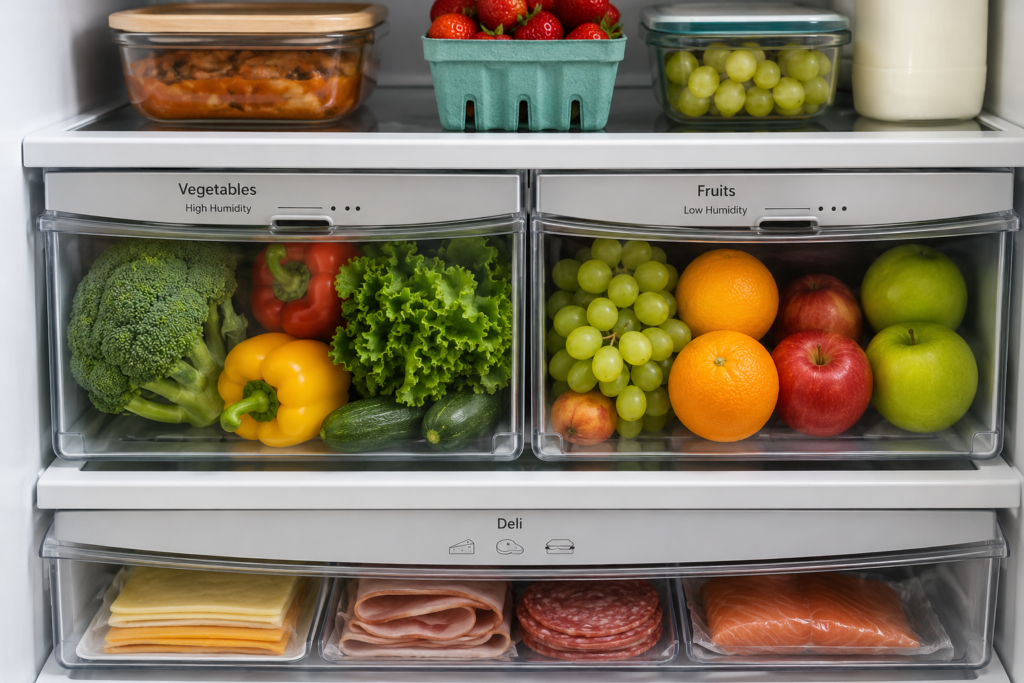
Most people use refrigerator drawers every day without really understanding what they are designed to do. Produce gets tossed into whichever drawer happens to be open, leftovers get pushed to random shelves, and before long vegetables become soft, berries start growing mold, and groceries seem to spoil faster than expected.
The surprising truth is that refrigerator drawers are not simply storage bins. They are designed to create slightly different environments that help specific foods stay fresh longer. When used correctly, they can reduce food waste, improve food quality, and make your refrigerator easier to organize.
Understanding what belongs in each drawer is one of the simplest ways to get more value from every grocery trip.
Why Refrigerator Drawers Exist
Many people assume refrigerator drawers exist purely for organization.
While organization is certainly part of the equation, the real purpose is controlling moisture levels around certain foods. Fruits and vegetables release moisture as they age, and different foods benefit from different humidity levels.
Manufacturers design drawers to create small environmental differences that help produce stay fresh longer than it would on an open shelf.
When drawers are used correctly, fruits remain firmer, vegetables stay crisp longer, and food waste often decreases significantly.
The Most Common Refrigerator Mistake
One of the biggest refrigerator mistakes is treating every drawer exactly the same.
Many homeowners place fruits and vegetables together simply because it seems convenient. Unfortunately, this often shortens the life of both.
Certain fruits release ethylene gas, which can speed up ripening and spoilage in nearby produce. Keeping everything mixed together can cause vegetables to deteriorate more quickly than expected.
This is one reason organization systems often matter more than people realize. Similar principles appear in articles such as why organized kitchens feel easier to cook in, where proper organization reduces frustration and improves daily routines.
Understanding Humidity Controls
Many refrigerators include small humidity sliders on crisper drawers.
Unfortunately, a surprising number of homeowners never touch them.
These controls adjust airflow inside the drawer. More airflow generally reduces humidity, while less airflow allows humidity levels to remain higher.
The settings may seem minor, but they can make a meaningful difference in how long certain foods stay fresh.
Learning to use these controls properly is often one of the fastest ways to improve refrigerator organization and food storage.
What High Humidity Drawers Are Designed For
High humidity drawers are typically best for vegetables.
Leafy greens, broccoli, carrots, cucumbers, celery, and many other vegetables benefit from retaining moisture.
The reduced airflow helps prevent vegetables from drying out too quickly, allowing them to stay crisp for a longer period.
This is especially useful for households that buy produce in larger quantities and may not use everything immediately.
What Low Humidity Drawers Are Designed For
Low humidity drawers are generally intended for fruits.
Apples, pears, peaches, nectarines, and many other fruits release ethylene gas during ripening.
Allowing more airflow helps reduce the buildup of this gas and can slow down the ripening process.
This often helps fruit maintain quality for a longer period while also protecting nearby produce.
Quick Comparison Table
| Drawer Type | Best For | Why It Works |
|---|---|---|
| High Humidity | Vegetables | Retains moisture and prevents drying |
| Low Humidity | Fruits | Reduces ethylene gas buildup |
| Deli Drawer | Meats and cheeses | Helps maintain consistent temperatures |
| Open Shelves | Drinks and leftovers | Easy access and visibility |
Why Leafy Greens Spoil So Quickly
Leafy greens are among the most commonly wasted foods in many households.
Lettuce, spinach, kale, and mixed greens contain a large amount of water. When exposed to improper conditions, they can become wilted or slimy surprisingly fast.
Keeping them in a high humidity drawer often extends their usable life significantly.
Proper storage also makes meal preparation easier because vegetables remain fresher when needed.
The Role Of Ethylene Gas
Ethylene gas is one of the biggest reasons certain foods spoil unexpectedly.
Fruits such as apples, bananas, avocados, and pears naturally release this gas as they ripen.
Nearby vegetables may respond by aging faster.
Separating produce according to drawer type helps minimize this problem and creates a more efficient storage system.
Why Organization Matters Inside The Drawer
Simply putting produce into the correct drawer is only part of the solution.
Overcrowded drawers often trap excess moisture and restrict airflow. This can create conditions where spoilage spreads more quickly.
Creating small categories within each drawer makes it easier to locate food before it goes bad.
This idea aligns closely with refrigerator storage ideas that make groceries easier to find, where visibility plays a major role in reducing waste.
What Belongs In The Deli Drawer
Many refrigerators include a shallow drawer located beneath the main shelves.
This area is often called a deli drawer.
It is usually intended for items such as sliced meats, cheese, bacon, and other products that benefit from stable temperatures.
Using this drawer correctly can free up shelf space and improve overall refrigerator organization.
Why Visibility Is More Important Than Capacity
A refrigerator packed with food is not always an efficient refrigerator.
Many households lose groceries simply because items disappear behind larger containers.
Food that cannot be seen is often forgotten.
Creating visible zones for fruits, vegetables, leftovers, drinks, and meal ingredients makes it easier to use food before it expires.
How Refrigerator Organization Reduces Food Waste
Food waste often begins with poor organization rather than poor purchasing decisions.
When ingredients are difficult to find, people frequently buy duplicates or allow existing groceries to spoil.
Simple organizational improvements can reduce waste without requiring major lifestyle changes.
This is one reason storage systems have become increasingly popular in modern kitchens.
Containers Can Improve Drawer Performance
Many people assume refrigerator drawers should remain completely empty except for produce.
However, small storage containers can sometimes improve organization.
Grouping similar foods together prevents produce from shifting around and makes inventory easier to manage.
This strategy mirrors techniques discussed in pantry organizers that make food easier to find, where categories improve visibility and accessibility.
Why Temperature Consistency Matters
Every refrigerator contains slight temperature differences.
The back of the refrigerator often stays colder than the front.
Drawers help protect certain foods from temperature fluctuations that occur whenever the door opens.
This consistency contributes to longer storage life for many fruits and vegetables.
Common Foods People Store Incorrectly
Several foods are frequently placed in the wrong locations.
Common examples include:
- Apples stored with vegetables
- Berries stored in sealed containers
- Leafy greens placed on open shelves
- Herbs left loose in drawers
- Cucumbers stored near high ethylene-producing fruits
Correcting these mistakes often produces noticeable improvements.
The Relationship Between Refrigerator And Pantry Storage
Good kitchen organization extends beyond the refrigerator itself.
Foods stored correctly in both areas tend to last longer and remain easier to use.
Many of the same organizational principles found in cabinet risers that create more storage without renovations and bathroom storage solutions that keep counters clear also apply inside the refrigerator.
Organization works best when it creates systems rather than isolated improvements.
When Drawers Need Cleaning
Dirty drawers can contribute to odors, moisture problems, and faster spoilage.
Regular cleaning removes residue that may encourage mold growth or bacteria.
Fortunately, most refrigerator drawers are easy to remove and wash.
A quick cleaning every few weeks helps maintain a healthier storage environment.
Building A Refrigerator System That Lasts
The most successful refrigerator organization systems are simple enough to maintain.
Complex systems often collapse after a few weeks because they require too much effort.
Instead, focus on assigning basic categories to each drawer and keeping similar foods together.
Consistency matters more than perfection.
How Families Benefit From Better Drawer Organization
Families often see the biggest benefits from improved refrigerator organization.
Larger grocery purchases create more opportunities for food to get lost, forgotten, or spoiled.
Using drawers correctly makes meal planning easier, improves visibility, and reduces waste.
It also helps children and other family members find ingredients without disrupting the entire refrigerator.
Why Understanding Refrigerator Drawers Is Worth The Effort
Refrigerator drawers may seem like minor features, but they play an important role in food storage.
When used correctly, they help fruits stay fresh longer, vegetables remain crisp, and groceries become easier to manage.
The result is a refrigerator that feels more organized, wastes less food, and supports smoother daily routines.
Sometimes the most effective kitchen upgrades are not new appliances or expensive renovations. They are simply better ways of using the tools you already have.