
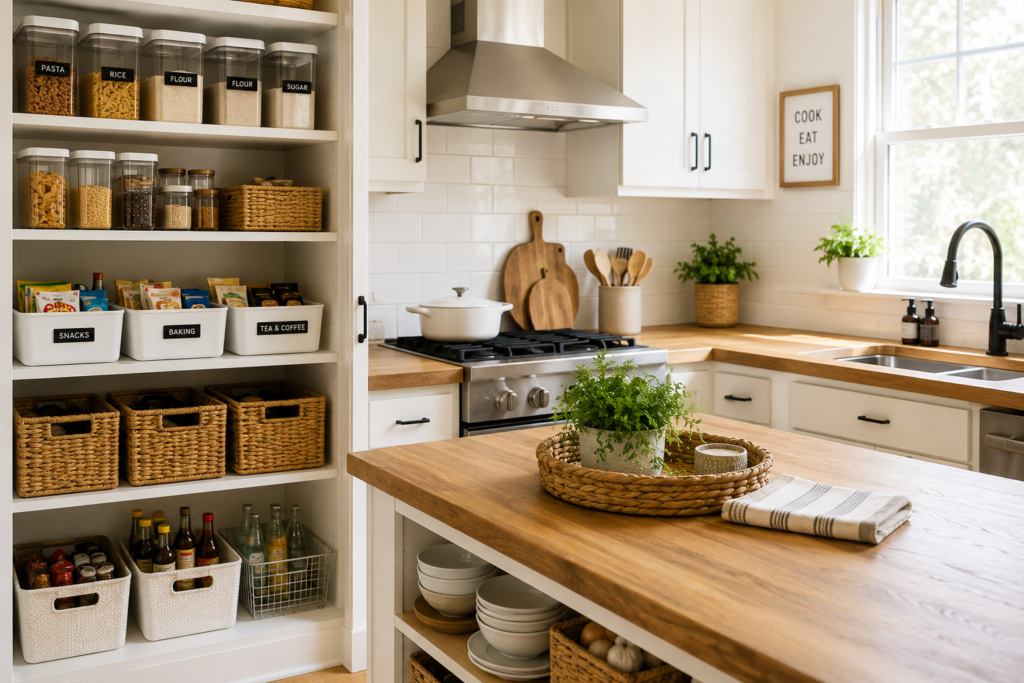
The kitchen is often called the heart of the home, but it can also become one of the most frustrating spaces to use when clutter begins to build. Cooking in a disorganized kitchen often feels slower, more stressful, and surprisingly exhausting. Meanwhile, organized kitchens tend to feel calmer, more efficient, and easier to work in.
The difference is not always about square footage or expensive renovations. Many highly functional kitchens are relatively small, while some large kitchens still feel difficult to use. More often than not, the difference comes down to organization.
An organized kitchen does more than look nice. It changes how people cook, clean, and move through daily routines. Small adjustments in layout and storage can make preparing meals feel less like a chore and more like an enjoyable part of the day.
Why Kitchen Clutter Creates Mental Friction
Cooking already requires dozens of small decisions. Choosing ingredients, following recipes, and timing different tasks all require mental energy. When clutter is added to the equation, even simple meals can feel more difficult.
Searching for measuring cups, moving appliances, or clearing counter space creates additional friction. These tiny interruptions may seem minor, but they add up quickly.
This is one reason why some homes always feel more organized than others. The easiest homes to live in often remove unnecessary obstacles from daily routines.
Clear Counters Make Kitchens Feel Larger
One of the fastest ways to change how a kitchen feels is to clear the counters. Even a small kitchen can feel significantly larger when surfaces remain mostly open.
Countertops naturally attract clutter because they are convenient. Mail, chargers, grocery bags, and miscellaneous items often land there temporarily before becoming permanent fixtures.
Open counter space also creates more room for food preparation. A clear workspace encourages cooking because it removes the need to clean before getting started.
Sometimes the feeling of spaciousness comes less from square footage and more from visual simplicity.
Zones Make Cooking More Efficient
Professional kitchens rely heavily on zones, and home kitchens benefit from the same principle. Grouping similar items together reduces unnecessary movement and makes cooking easier.
For example:
- Cooking utensils near the stove
- Cutting boards near prep areas
- Coffee supplies near the coffee maker
- Food storage containers near leftovers
These small adjustments reduce the number of steps required during meal preparation.
An organized kitchen often feels easier to use because it supports natural movement rather than working against it.
The Kitchen Triangle Still Matters
For decades, designers have discussed the kitchen triangle: the relationship between the sink, stove, and refrigerator. While modern kitchens vary widely, the concept remains useful.
The easier it is to move between these three areas, the smoother cooking tends to feel. Excessive walking, obstacles, or awkward layouts can create frustration during meal preparation.
Even without remodeling, organizing frequently used items around these key zones can improve efficiency.
Good organization often enhances existing layouts rather than replacing them.
Cabinets Work Better When They Are Not Full
Many kitchen cabinets contain far more items than households actually use. Duplicate utensils, rarely used gadgets, and expired products quietly consume valuable space.
When cabinets become overcrowded, finding everyday items becomes more difficult. Removing even a small number of unused products can make storage feel dramatically larger.
This reflects the hidden clutter that quietly builds up in every home, where useful items gradually accumulate until spaces become harder to manage.
Sometimes organization starts with removing rather than adding.
Comparison Table: Organized vs Cluttered Kitchens
| Kitchen Feature | Organized Kitchen | Cluttered Kitchen |
|---|---|---|
| Counter space | Mostly clear | Frequently crowded |
| Cooking flow | Efficient | Interrupted |
| Cleaning time | Faster | Slower |
| Food storage | Easy to access | Difficult to find |
| Stress level | Lower | Higher |
The differences may appear small individually, but together they significantly affect daily routines.
Pantries Function Better With Categories
Pantries often become difficult to manage because categories slowly disappear over time. Snacks mix with baking supplies, canned goods spread across shelves, and ingredients become difficult to locate.
Grouping items by category creates structure and improves visibility.
Common pantry zones include:
- Snacks
- Baking supplies
- Breakfast foods
- Canned goods
- Pasta and grains
Clear categories make grocery shopping easier because households can quickly see what they already have.
Many organization systems succeed because they reduce decision-making.
Food Visibility Helps Reduce Waste
Food hidden behind other items is more likely to expire before being used. Organized kitchens often waste less food simply because ingredients remain visible.
This applies to refrigerators, pantries, and cabinets alike. When households can see what they own, they are more likely to use it.
Food waste is not always caused by buying too much. Sometimes it is caused by not seeing what is already available.
This problem is especially common in refrigerators where leftovers and produce often get pushed behind newer groceries. When ingredients remain hidden, households are more likely to buy duplicates or allow food to expire unnoticed. Small organizational changes such as grouping similar items together and keeping frequently used foods at eye level can make a noticeable difference.
Our guide on refrigerator organization ideas that reduce food waste explores how visibility alone can help kitchens function more efficiently.
Better visibility does not just save money. It also makes meal planning easier because ingredients remain top of mind when preparing meals.
Simple visibility often changes behavior more than people expect.
Good Organization Supports Better Cooking Habits
Cooking habits are influenced by environment. When kitchens feel difficult to use, people may cook less often and rely more heavily on takeout or convenience foods.
A functional kitchen removes friction from the cooking process. Measuring cups are easy to find. Ingredients remain accessible. Work surfaces stay clear.
Small improvements can encourage healthier and more enjoyable cooking routines.
The easier something becomes, the more likely people are to do it regularly.
Small Kitchens Can Feel Surprisingly Functional
Large kitchens are not automatically organized, and small kitchens are not automatically difficult to use.
Many compact kitchens function exceptionally well because every inch serves a purpose. Vertical storage, drawer organizers, and thoughtful layouts often compensate for limited square footage.
This is why the small organization habits that keep homes looking tidy frequently matter more than the size of the space itself.
Good systems often outperform extra square footage.
Visual Calm Changes How A Space Feels
Clutter affects more than physical space. It also influences how rooms feel emotionally.
An organized kitchen often feels calmer because the brain processes less visual information. Open surfaces, grouped items, and consistent storage reduce visual noise.
This does not mean kitchens must look minimalist or empty. It simply means that items have clear homes.
Visual calm often creates the feeling that a space is easier to use.
Researchers have long studied how visual environments affect stress and decision-making. While kitchens will never stay perfectly clean all the time, reducing unnecessary visual noise can make a space feel more relaxing and manageable. This may help explain why organized homes often feel calmer even when their size remains unchanged.
The same principle appears throughout the home and is one reason the hidden clutter that quietly builds up in every home can have a bigger impact on daily life than people realize.
Organization Makes Cleaning Easier
One overlooked benefit of organized kitchens is how much easier they are to clean.
Clear counters allow faster wiping. Organized cabinets make spills easier to manage. Fewer unnecessary items mean fewer surfaces collecting dust and grease.
Cleaning becomes less overwhelming when clutter is reduced.
This creates a positive cycle. Cleaner kitchens stay organized more easily, and organized kitchens remain cleaner for longer periods.
Families Follow Simple Systems More Easily
The best kitchen organization systems are easy for everyone in the household to understand.
When categories are obvious and storage feels intuitive, family members are more likely to return items to the correct places.
Complicated systems often fail because they require too much effort or explanation.
Simple systems are easier to teach and easier to maintain. Labels, clearly defined zones, and consistent storage locations reduce confusion for both adults and children. Over time, these small systems become routines that require less thought and effort.
Many homeowners discover that label makers that help homes stay organized long term can make everyday systems easier for the entire household to follow.
This aligns closely with why organization systems fail (and how to make them last), where simplicity often proves more effective than perfection.
Organized Kitchens Support Meal Preparation
Meal preparation becomes easier when ingredients and tools are easy to access.
Preparing lunches, portioning leftovers, or cooking ahead for the week requires less effort when kitchens remain organized.
The ability to quickly find containers, spices, or utensils saves time during busy days.
Even households that do not formally meal prep often benefit from better kitchen organization.
Daily Resets Prevent Clutter From Returning
Organization is rarely a one-time project. Small daily habits usually determine whether systems last.
A five-minute reset at the end of the day can make a noticeable difference:
- Return items to cabinets
- Wipe counters
- Put dishes away
- Restock frequently used items
These small routines are especially effective when shared across the household. When everyone participates in resetting the kitchen, clutter becomes less likely to accumulate over time. Even a few minutes spent putting items back in their proper places can preserve organization systems for weeks.
Many tidy homes rely less on deep cleaning and more on consistent habits. This is why the small organization habits that keep homes looking tidy often have a larger impact than expensive storage solutions.
These routines prevent clutter from quietly accumulating over time.
Consistency often matters more than perfection.
Organized Spaces Encourage Better Routines
People tend to use spaces differently when those spaces feel easy to maintain.
An organized kitchen often encourages more cooking, quicker cleanup, and healthier habits. The environment quietly shapes behavior in ways people may not immediately notice.
This effect extends beyond the kitchen itself. People who maintain organized kitchens often apply similar habits elsewhere in the home, from bathrooms to utility spaces. Organization tends to create momentum, where improvements in one room encourage better habits in another.
The same idea appears in smart storage ideas for brooms, mops, and cleaning supplies, where small systems help reduce friction in everyday tasks.
This is one reason home organization extends beyond aesthetics. It influences how daily life functions.
Small improvements often create ripple effects throughout the household.
The Goal Is Function, Not Perfection
Social media sometimes creates the impression that organized kitchens must look perfect all the time. In reality, highly functional kitchens are still lived in every day.
The goal is not perfection. The goal is creating systems that support real life.
A practical kitchen may contain busy mornings, family dinners, and occasional messes while still remaining easy to maintain.
Organization succeeds when it serves the people living in the space.
An Organized Kitchen Changes More Than The Room
Organized kitchens feel easier to cook in because they reduce friction, improve visibility, simplify routines, and create calmer environments.
The benefits extend beyond appearance. Cooking becomes easier. Cleaning becomes faster. Daily life becomes slightly less stressful.
Small improvements rarely transform homes overnight, but they can quietly improve everyday experiences for years to come.
In many ways, an organized kitchen is not just about storage. It is about creating a space that works with you rather than against you.