
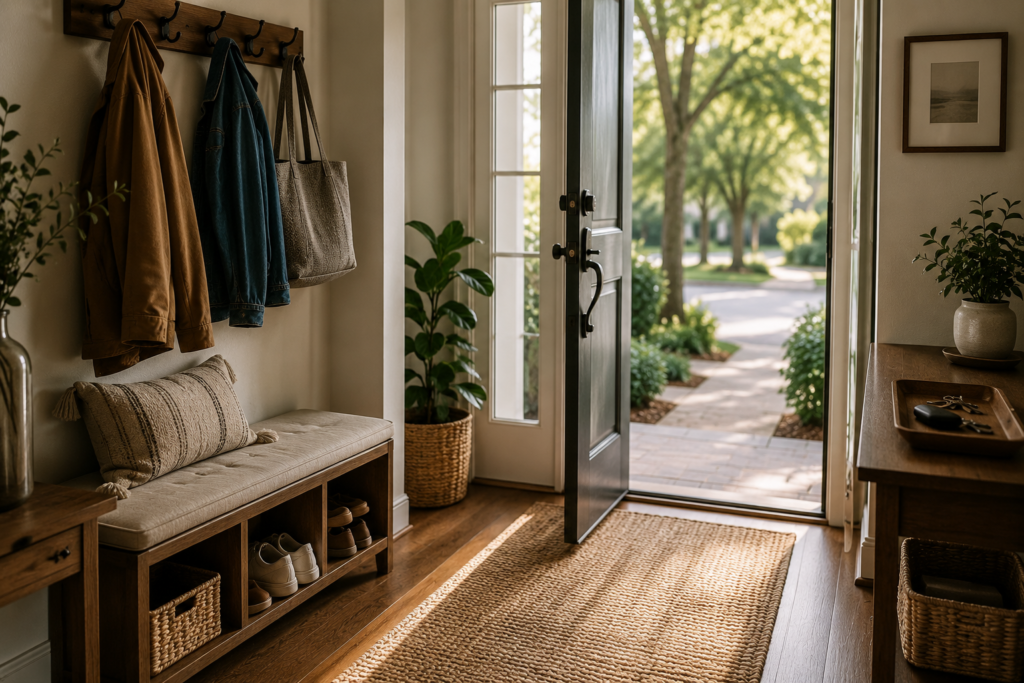
Walk into certain homes and something immediately feels different. The space may not be larger, newer, or more expensive, yet it somehow feels calmer, cleaner, and easier to navigate. Shoes are not scattered near the entrance, kitchen counters remain relatively clear, and everyday items seem to have places where they naturally belong.
At first glance, it may appear that these homeowners simply spend more time cleaning or organizing. In reality, that is rarely the case. Most organized homes are not maintained through constant effort. Instead, they rely on systems that quietly prevent clutter from building up in the first place.
Organization is often less about perfection and more about design. The homes that consistently feel organized usually make it easier to do the right thing and harder to create clutter accidentally. Like many of the small home upgrades people end up appreciating every day, the biggest improvements often come from solving small frustrations before they grow into larger problems.
Organized Homes Usually Have Better Systems, Not Better Owners
People often assume organized homeowners are naturally tidier or more disciplined than everyone else. While habits certainly matter, organization usually has less to do with personality and more to do with systems.
An organized home reduces the number of decisions people need to make throughout the day. When keys always go in the same tray, shoes always go on the same shelf, and chargers always stay in the same drawer, clutter has fewer opportunities to develop.
This idea appears throughout many homes and helps explain how homes quietly became easier to manage. The easiest systems are often the ones people barely notice because they fit naturally into everyday life.
In many cases, organized homes are not maintained by people who work harder. They are maintained by people whose homes are designed to support better habits automatically.
Every Item Usually Has A Home
One of the biggest differences between organized and disorganized spaces is surprisingly simple: organized homes tend to assign permanent homes to everyday items.
Without designated storage, objects begin migrating throughout the house. A charger ends up on the kitchen counter. Mail collects on a side table. Sunglasses move from room to room until they eventually disappear.
Organized homes typically create clear locations for frequently used items, including:
- Keys
- Wallets
- Chargers
- Bags
- Shoes
This structure removes uncertainty and makes tidying up easier. People spend less time deciding where things belong because the decision has already been made.
The same principle explains why the little things that make some homes feel easier to live in often revolve around organization rather than decoration.
Clutter Often Builds Slowly And Quietly
Very few homes become cluttered overnight. Instead, clutter usually develops gradually through small decisions repeated many times.
A receipt gets placed on the counter temporarily. A package sits in the entryway for a few days. One extra bottle gets added under the sink. Individually, these actions seem insignificant. Together, they create visible clutter over time.
This slow accumulation is one reason organization can feel difficult. People often notice clutter only after it reaches a tipping point.
Common clutter hotspots include:
- Entryways
- Kitchen counters
- Nightstands
- Junk drawers
- Bathroom cabinets
- Closets
Recognizing these areas is often the first step toward preventing clutter from returning. Organized homes are not necessarily clutter-free. They simply address clutter before it becomes overwhelming.
Visible Surfaces Shape How Homes Feel
People often judge the organization of a home based on what they can immediately see. Clear counters, tidy entryways, and uncluttered tables create an impression of order even when storage spaces behind closed doors are imperfect.
This helps explain why some homes always feel cleaner than others. The feeling of cleanliness is often closely tied to visual simplicity.
Organized homes frequently protect a few important surfaces from becoming catch-all spaces. Kitchen islands, coffee tables, and entry consoles are often kept intentionally clear.
This does not mean every surface must remain empty. Instead, it means creating boundaries that prevent clutter from spreading unchecked.
A few organized spaces can influence how an entire home feels.
Good Storage Makes Organization Easier
Many people believe they need more storage when what they actually need is better storage. A closet full of shelves may still feel disorganized if items are difficult to access or impossible to see.
Good storage is not simply about capacity. It is about convenience.
Effective storage often includes:
- Open baskets for quick access
- Drawer dividers for small items
- Shelf organizers for vertical storage
- Clear containers for visibility
- Labels for consistency
This is one reason products like drawer dividers that keep everyday clutter under control and closet shelf dividers that help clothes stay stacked properly can make such a noticeable difference.
When storage is easy to use, people are far more likely to maintain it.
Organized Homes Reduce Decision Fatigue
People make thousands of decisions every day. While most are small, those decisions gradually consume mental energy.
An organized home quietly removes many of those choices. There is no need to wonder where batteries belong or where to store extra cleaning supplies because the system already exists.
This reduction in mental load may help explain why home upgrades that actually reduce daily stress often focus on organization and convenience rather than luxury.
The goal of organization is not perfection. It is simplification.
When homes require fewer decisions, daily life often feels easier and calmer.
Labels Often Matter More Than People Expect
Many organization systems fail because they depend entirely on memory. Over time, people forget where items belong and clutter gradually returns.
Labels solve this problem by creating clear visual reminders that remain consistent for everyone in the household.
Labels are particularly useful for:
- Pantry containers
- Storage bins
- Cleaning supplies
- Office drawers
- Linen closets
This helps explain why label makers that help homes stay organized long term have become increasingly popular.
The best organization systems are not the ones people remember. They are the ones people no longer have to think about.
Small Habits Usually Matter More Than Big Cleanups
Many people attempt to organize through occasional large cleaning sessions. While these efforts can be helpful, they often produce only temporary results.
Organized homes tend to rely on smaller habits repeated consistently.
Examples include:
- Returning items immediately after use
- Emptying bags upon arriving home
- Resetting counters before bed
- Putting away laundry promptly
- Sorting mail daily
These habits may seem minor, but their cumulative effect can be significant.
This reflects many of the ideas behind the home habits that quietly make life feel less stressful. Organization often succeeds not because of dramatic efforts but because of small actions performed regularly.
Organized Homes Often Embrace Vertical Space
One common characteristic of organized homes is efficient use of vertical space. Many households focus only on floor-level storage while leaving valuable space above shelves and cabinets unused.
Vertical organization can include:
- Wall hooks
- Floating shelves
- Cabinet risers
- Over-door organizers
- Hanging storage
This principle explains why products like cabinet risers that create more storage without renovations often deliver surprisingly large benefits.
Using space effectively frequently matters more than simply having more space.
Even small homes can feel highly organized when storage extends upward rather than outward.
The Entryway Often Predicts The Rest Of The Home
Entryways serve as transition zones between the outside world and the home. Because they experience heavy daily traffic, they often reveal whether organization systems are working.
Organized homes frequently include storage near the entrance for:
- Shoes
- Keys
- Jackets
- Bags
This is one reason entryway organizers that stop shoes, keys, and bags from piling up can have an impact far beyond the entryway itself.
When clutter is contained immediately upon entering the home, it is less likely to spread into other rooms.
Sometimes improving an entire home begins with improving the first few feet inside the door.
Bathrooms And Kitchens Reveal Everyday Systems
Bathrooms and kitchens are among the most frequently used spaces in any home. Because they experience constant activity, they quickly expose weaknesses in organization systems.
Under-sink cabinets, pantries, and showers often become cluttered because they store many different categories of items.
Products such as under-sink organizers that make small cabinets less annoying and shower caddies that keep bathrooms looking cleaner help create structure in areas where clutter naturally develops.
Organized homes do not eliminate daily use. They simply make daily use easier to manage.
Good systems quietly absorb everyday life instead of fighting against it.
Technology Has Created New Forms Of Clutter
Modern homes contain more devices than ever before. Phones, tablets, smart watches, earbuds, and chargers have all introduced new categories of clutter that previous generations did not face.
Charging cables in particular tend to spread across desks, nightstands, and countertops.
This helps explain the growing popularity of products like cord organizers that make desks and nightstands look cleaner and bedside organizers that keep nightstands functional.
Organization evolves alongside changing lifestyles. As homes adapt to new technologies, storage systems must adapt as well.
The most organized homes continue evolving rather than remaining fixed.
Organization Is Often About Reducing Friction
The best organization systems remove obstacles instead of creating them. If putting something away requires too much effort, people are unlikely to maintain the system for long.
Successful homes often ask simple questions:
- Is this easy to access?
- Is it easy to return?
- Does it fit daily habits?
- Can everyone use it?
This focus on convenience is one reason organized homes frequently feel easier to live in.
Good organization does not demand perfection. It quietly makes good choices easier and clutter harder to create.
Over time, reducing friction can transform how an entire home functions.
The Most Organized Homes Rarely Look Perfect
Perhaps the biggest misconception about organized homes is that they remain perfect all the time. In reality, even highly organized homes experience clutter, busy schedules, and unexpected messes.
The difference is not perfection. The difference is recovery.
Organized homes recover from clutter more quickly because systems already exist. Items have homes. Storage makes sense. Tidying up requires minutes rather than hours.
This may be why so many organized homes feel calm even during busy periods. Their systems continue working even when life becomes hectic.
In the end, organization is not really about appearances. It is about creating a home that supports everyday life instead of complicating it.
That may be why some homes always feel more organized than others. They are not necessarily owned by people who work harder. They are often owned by people whose systems quietly do the work for them.