
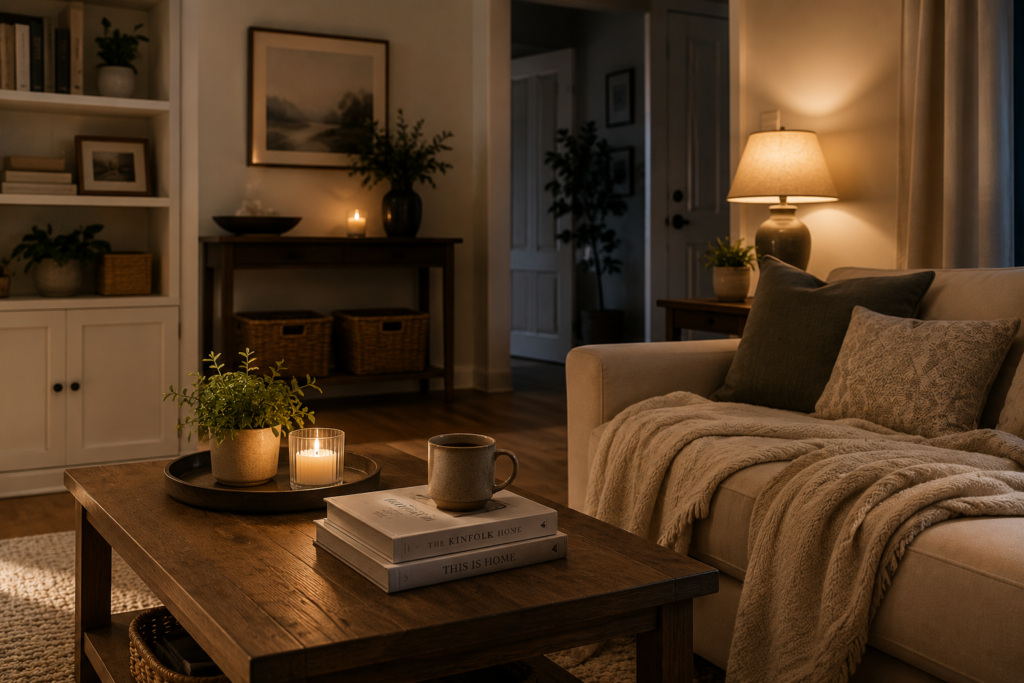
People often assume that relaxing homes are larger, more expensive, or professionally designed. Yet some of the calmest homes are surprisingly ordinary. They may have modest kitchens, small entryways, and limited storage, but they still feel easier to live in.
Walk into these homes and something immediately feels different. Counters are not overflowing. Everyday items seem to have places to belong. The space feels functional rather than chaotic.
This feeling is not necessarily the result of constant cleaning. In many cases, it comes from organization.
Organization is often misunderstood as a visual goal, but its real benefit is practical. Organized homes reduce friction. They remove small frustrations that quietly occur throughout the day. Like many of the small home upgrades people end up appreciating every day, good organization works quietly in the background. Over time, these small improvements can make homes feel calmer, simpler, and less stressful.
Stress Often Comes From Small Frustrations Rather Than Big Problems
When people think about stress, they usually imagine major life events. Yet much of everyday stress comes from repeated small inconveniences.
Searching for keys before leaving the house. Looking for batteries in a cluttered drawer. Digging through cabinets to find cleaning supplies. Untangling charging cables before bed.
Individually, these moments seem minor. Together, they create dozens of small interruptions every week.
Organized homes reduce these interruptions by creating systems that simplify routine tasks. Instead of constantly solving the same problems, homeowners can move through daily routines more smoothly.
This may help explain why the little things that make some homes feel easier to live in often involve convenience rather than luxury. A home rarely becomes less stressful because of expensive features. More often, it becomes less stressful because everyday life simply works better.
Visual Clutter Competes For Attention
Every room communicates information to the brain. Even when people are not consciously paying attention, their surroundings are constantly being processed.
A pile of mail on the counter. Shoes near the door. Products scattered across a bathroom sink. Cables stretched across a desk.
These objects quietly compete for attention throughout the day.
Organized homes reduce visual noise by creating clearer environments. This does not mean homes must be minimalist or perfectly styled. Instead, it means reducing unnecessary clutter so important spaces can breathe.
The same idea appears in why some homes always feel cleaner than others. Often, the feeling of cleanliness comes less from deep cleaning and more from organization.
Sometimes reducing stress is not about adding more comfort. It is about removing distractions.
Every Item Having A Home Changes Everything
One of the simplest characteristics of organized homes is that everyday objects usually have designated places.
Without assigned storage, items tend to migrate throughout the house. Chargers move from room to room. Keys disappear into random drawers. Bags land wherever there is available space.
Organized homes often create permanent homes for:
- Keys
- Wallets
- Chargers
- Bags
- Shoes
This removes decision-making from everyday life. People do not have to wonder where something belongs because the decision has already been made.
Good organization often succeeds because it reduces thinking rather than requiring more effort.
Entryways Often Set The Emotional Tone Of A Home
The first few moments after entering a home can influence how the entire space feels.
Walking into an entryway filled with shoes, bags, and scattered items immediately creates visual clutter. By contrast, organized entrances often feel welcoming and calm.
Well-designed entryways typically include places for:
- Shoes
- Jackets
- Keys
- Bags
This prevents clutter from spreading into the rest of the home.
It is one reason so many homeowners appreciate entryway organizers that stop shoes, keys, and bags from piling up. Small improvements near the front door often create benefits throughout the entire house.
Sometimes making a home feel calmer begins within the first few feet inside the entrance.
Kitchens Often Create More Stress Than People Realize
Kitchens are among the busiest spaces in any home. Because they experience constant activity, clutter develops quickly.
Pantries become crowded. Cabinets fill up. Cleaning products disappear into the back of shelves. Counters gradually collect everyday items.
These frustrations may seem minor, but they repeat daily.
This helps explain why homeowners often invest in solutions such as under-sink organizers that make small cabinets less annoying and pantry organizers that make food easier to find.
When items remain visible and accessible, cooking and cleaning become easier. A kitchen that functions smoothly often feels calmer because fewer small frustrations interrupt daily routines.
Organized Homes Reduce Decision Fatigue
People make thousands of decisions every day. Even small choices consume mental energy.
Disorganized spaces create additional questions:
- Where did I put that?
- Do I already have one?
- Which drawer is it in?
- Where should this go?
Organized homes reduce these decisions by creating predictable systems.
This may be one reason home upgrades that actually reduce daily stress are often practical rather than luxurious. Good systems remove unnecessary decisions so people can focus their energy elsewhere.
Organization is not really about creating perfect spaces. It is about making daily life easier to navigate.
Bathrooms Feel Better When They Are Easier To Use
Bathrooms are often small spaces that store many different products. Shampoo bottles, skincare items, towels, and cleaning supplies compete for limited room.
Without organization, clutter develops quickly.
Simple systems often make a surprisingly large difference. Products like shower caddies that keep bathrooms looking cleaner help reduce visual clutter while making everyday routines easier.
Likewise, organized cabinets make supplies easier to find and easier to put away.
A bathroom rarely becomes relaxing because it is luxurious. More often, it feels relaxing because it functions well.
Convenience quietly influences comfort more than many people realize.
Bedrooms Should Support Rest Rather Than Clutter
Bedrooms serve a different purpose than most other rooms. They are spaces intended for rest and recovery.
When nightstands become crowded or cables spread across surfaces, bedrooms may begin to feel busier than intended.
Small improvements often have meaningful effects:
- Clearing nightstands
- Managing charging cables
- Organizing drawers
- Reducing visible clutter
- Creating better storage
This helps explain why bedside organizers that keep nightstands functional and cord organizers that make desks and nightstands look cleaner have become increasingly popular.
Comfort is not always created by adding more. Sometimes it comes from removing distractions.
Labels Help Systems Last Longer
Many organization systems fail because they depend entirely on memory.
People forget where things belong. Family members create their own systems. Over time, clutter slowly returns.
Labels solve this problem by creating consistency.
Common areas that benefit from labels include:
- Pantry containers
- Storage bins
- Cleaning supplies
- Linen closets
- Office drawers
This is one reason label makers that help homes stay organized long term have become increasingly popular.
The best systems are often the ones people no longer have to think about.
Good Habits Become Easier When Homes Support Them
People often assume organization depends entirely on discipline. In reality, environment matters greatly.
When storage is convenient, people naturally use it. When systems are difficult, clutter tends to return.
Organized homes frequently support habits such as:
- Returning items after use
- Sorting mail immediately
- Putting shoes away
- Resetting counters at night
- Returning chargers to the same place
This aligns closely with the home habits that quietly make life feel less stressful. Good habits become easier when homes are designed to support them.
Organization works best when it feels natural rather than forced.
Technology Has Created New Forms Of Clutter
Modern homes contain more electronics than ever before. Phones, tablets, smart watches, earbuds, and chargers have introduced entirely new categories of clutter.
Unlike traditional household items, cables tend to spread across multiple rooms and surfaces.
Without systems in place, technology can quickly create visual disorder.
This trend helps explain the popularity of products like cord organizers that make desks and nightstands look cleaner.
Technology should ideally simplify life. Good organization helps ensure that it does.
The most comfortable homes often adapt their systems as lifestyles evolve.
Small Improvements Often Deliver The Greatest Benefits
Many homeowners believe reducing stress requires large renovations or expensive upgrades.
Often, the opposite is true.
Small improvements frequently create the biggest impact:
- Organizing a drawer
- Labeling containers
- Clearing counters
- Creating drop zones
- Managing cables
These actions may seem insignificant, but they improve moments that occur repeatedly every day.
This may be why how homes quietly became easier to manage resonates with so many people. The homes that feel easiest to live in are often built through small, thoughtful improvements rather than dramatic changes.
The Goal Is Not Perfection
Perhaps the biggest misconception about organized homes is that they remain perfect all the time.
In reality, every home experiences clutter. Laundry piles up. Packages arrive. Life becomes busy.
The difference is not perfection. The difference is recovery.
Organized homes recover more quickly because systems already exist. Items have places to return to. Storage makes sense. Tidying takes minutes rather than hours.
That may be why organized homes often feel less stressful than cluttered ones. They do not remove life’s challenges, but they quietly remove many of the small frustrations that make everyday life harder than it needs to be.
In the end, organization is not really about appearance. It is about creating a home that supports the people who live there.