
Stress at home does not always come from big problems.
Sometimes it comes from small things that repeat quietly.
A noisy bedroom. A rushed morning. A messy entryway. Dry air. Harsh lighting. A living room that never feels fully relaxing. None of these things may seem serious on their own, but together they can make daily life feel heavier than it needs to.
That is why home habits matter.
The right habits do not need to be complicated. They simply reduce friction, create predictability, and make the home feel easier to move through. Over time, small routines can quietly change how a space feels.
Why Small Habits Matter More Than Big Changes
Large home changes can feel exciting, but small habits are usually what shape daily life.
A cleaner evening routine.
A calmer bedroom.
A better morning rhythm.
A few minutes spent resetting a space before bed.
These habits may not look dramatic, but they repeat often enough to matter.
A home that feels less stressful usually works because small things have been made easier, not because everything is perfect.
Quick Comparison Table
| Home Habit | What It Reduces | Why It Helps |
|---|---|---|
| Evening reset | Visual clutter | Makes mornings easier |
| Calmer bedroom routine | Sleep friction | Supports better rest |
| Softer lighting | Evening tension | Helps the home feel calmer |
| Better air habits | Dry or stale rooms | Improves comfort |
| Noise control | Background stress | Makes spaces feel more peaceful |
| Morning preparation | Rushing | Starts the day smoother |
Why Stress Often Comes From Repeated Friction
Most people can handle one small inconvenience.
The issue is repetition.
When the same small discomfort happens every day, it slowly becomes part of the home experience. That is why the everyday discomforts people stop noticing at home can matter more than expected.
The problem is not always one major issue.
It is the build-up of little things that never get fixed.
A Simple Evening Reset Can Change The Next Morning
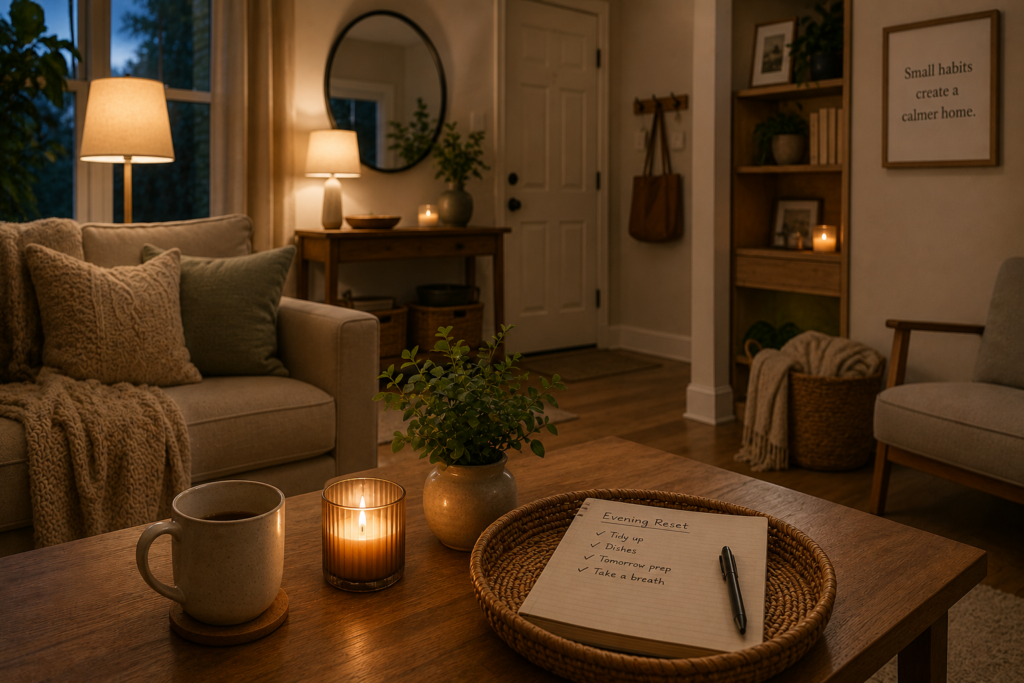
One of the easiest low-stress habits is a short evening reset.
This does not mean deep cleaning.
It means putting away the obvious things that will bother you tomorrow. A few dishes. A cluttered table. Shoes near the door. Blankets left everywhere. Small messes feel less irritating when they are handled before they grow.
The benefit is not only a cleaner room.
It is waking up to less friction.
Bedrooms Need Their Own Routine
A bedroom should not feel like a storage zone, work zone, and sleep zone all at once.
When the bedroom feels chaotic, rest can feel harder. A simple bedroom routine can help separate the end of the day from everything that came before it.
That might mean dimming lights, reducing noise, clearing the nightstand, or keeping the phone away from the bed.
This connects naturally with why some homes feel more relaxing at night than others.
Lighting Is A Habit, Not Just A Design Choice
Many people think of lighting as decor.
It is also a habit.
Turning off harsh overhead lights in the evening and using softer lamps can change the entire mood of a home. The space starts to feel less active and more restful.
That shift helps signal that the day is slowing down.
Small lighting habits can make evenings feel calmer without requiring a major redesign.
Air Comfort Should Be Part Of The Routine
Air quality and humidity are easy to ignore because they are invisible.
But they affect how a room feels.
Opening windows when possible, replacing filters, keeping bedrooms fresh, and paying attention to dryness can all make a home feel more comfortable.
This is why best air purifier and humidifier setups for bedrooms fits so well into a stress-reducing home routine.
A room often feels calmer when the air feels better.
Noise Control Makes A Home Feel More Peaceful
Noise is one of the most overlooked stress triggers at home.
People adapt to it, but that does not mean it stops affecting them. Traffic, neighbors, appliances, televisions, and constant notifications all add background pressure.
A calmer sound environment helps the home feel more settled.
This does not mean total silence.
It means reducing unpredictable interruptions where possible.
Morning Habits Reduce Stress Before The Day Starts
A stressful morning can make the whole day feel harder.
Small habits the night before can help. Preparing clothes, clearing the kitchen counter, setting up coffee, charging devices, or planning the first task of the day can remove small decisions from the morning.
The less friction waiting for you, the easier the day begins.
That is why morning-focused comfort changes often feel more valuable than expected.
The Entryway Sets The Tone
The entryway is easy to underestimate.
It is the first place people see when they come home and the last place they pass before leaving. If it feels messy or chaotic, it can make the home feel less settled.
A simple entryway habit can help:
- Keep shoes contained.
- Have one place for keys.
- Clear bags and mail quickly.
- Avoid letting small piles become permanent.
The goal is not perfection.
It is reducing the first moment of friction.
Comfort Habits Work Best When They Are Easy
A habit that feels complicated will not last.
The best home habits are simple enough to repeat without much thought. They fit naturally into routines that already exist.
This is similar to the pattern behind wellness products that quietly become part of daily life.
The easier something is to repeat, the more likely it becomes part of the home.
Relaxation Needs A Clear Starting Point
Many people want to relax at home but never create a clear transition.
They finish work, check their phone, leave tasks half done, and move from one distraction to another.
A simple relaxation cue can help.
That might be making tea, turning on softer lighting, changing clothes, sitting in a specific chair, or spending ten quiet minutes without screens.
The habit matters because it tells the brain the day has shifted.
Why Homes Feel Better When Routines Are Predictable
Predictability reduces stress.
When a home has simple routines, fewer things feel scattered or uncertain. People know where items belong. They know how evenings usually wind down. They know what happens before bed.
This does not make the home boring.
It makes the home easier.
A predictable home often feels calmer because it asks less from the people living in it.
Small Comfort Habits Create Emotional Relief
Comfort is not only physical.
It is emotional.
A clean counter, soft lighting, fresh air, a calmer bedroom, or a quieter evening can create a sense of relief. These details help people feel like the home is supporting them rather than adding more pressure.
That is why home wellness products people say help them relax the most works as part of this larger idea.
Relaxation often starts with removing small sources of stress.
The Best Habits Remove Decisions
Decision fatigue is real.
The more choices people make throughout the day, the more tiring simple tasks can feel. Home habits help by turning repeated decisions into automatic actions.
Where do keys go?
When does the kitchen get reset?
What happens before bed?
How does the evening start?
When these answers become routine, the home feels easier to manage.
Why Small Fixes Often Beat Big Overhauls
People sometimes delay improving their home because they imagine the solution needs to be large.
New furniture.
A renovation.
A full redesign.
But many stressful parts of home life can be improved with smaller changes. A better routine, a clearer surface, a calmer bedroom, or softer lighting can create real improvement without a major project.
This is exactly why the home comfort products people wish they bought earlier connects with readers.
People often realize the fix was simpler than expected.
Home Habits Should Match Real Life
The best habits are realistic.
A busy person does not need a perfect morning routine. A parent does not need a spotless living room every night. Someone working long hours does not need a complicated reset process.
The habit should fit the life.
That might mean five minutes, not thirty.
Simple habits that survive real life are far more valuable than ideal routines that collapse after a week.
Why A Less Stressful Home Feels More Personal
When a home feels less stressful, people usually enjoy it more.
They spend more time in rooms they used to avoid. They relax more easily. They notice small comforts. They feel more connected to the space.
That emotional connection is important.
A home should not just look finished.
It should feel livable.
What People Usually Notice First
When stress-reducing habits start working, people often notice the absence of irritation.
The morning feels less rushed.
The bedroom feels calmer.
The living room feels easier to settle into.
The air feels better.
The home feels less demanding.
That is the quiet power of good routines.
The Home Habits That Quietly Make Life Feel Less Stressful
The best home habits are not dramatic.
They are steady.
They reduce friction in small ways. They make repeated moments easier. They help the home feel calmer without requiring perfection.
Over time, those habits shape the way a home feels.
Not because every room is flawless.
Because daily life feels a little easier inside it.