
This article contains affiliate links. As an Amazon Associate, I earn from qualifying purchases at no extra cost to you.
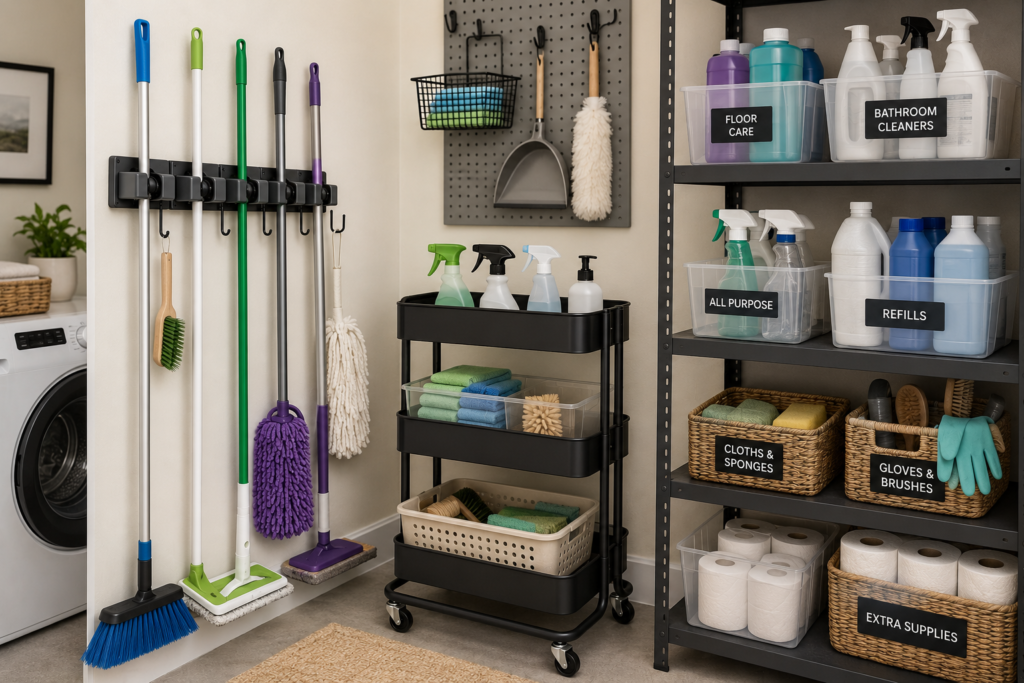
Cleaning supplies can make a home feel more organized, but only if those supplies have a proper place to live. Brooms fall over, mops lean against walls, sprays get buried under sinks, and extra supplies slowly spread into laundry rooms, garages, closets, and kitchen cabinets. What starts as a practical collection of cleaning tools can quickly become one of the messiest areas in the home.
The good news is that smart storage does not require a large utility room or custom cabinetry. With the right zones, organizers, shelves, hooks, and habits, even a small space can hold cleaning supplies neatly. The goal is not to hide everything perfectly. It is to make the items you use regularly easy to grab, easy to return, and less likely to create clutter.
Why Cleaning Supplies Become Clutter So Easily
Cleaning supplies are used in different rooms, so they rarely stay in one place by accident. A broom might end up near the kitchen, a mop might stay in the laundry room, and extra sprays might get pushed under a bathroom sink. Over time, the system becomes scattered.
This is one reason cleaning clutter feels different from regular clutter. It is usually made of useful items, but those items still create visual mess when they do not have a clear home. If your home often feels messier than it should, our guide on the hidden clutter that quietly builds up in every home explains how practical items often create the most overlooked clutter.
Start With One Cleaning Supply Zone
Before buying storage products, choose one main zone for cleaning supplies. This could be a laundry room, garage wall, utility closet, pantry corner, or under-sink cabinet.
The best location depends on your home layout. If you clean mostly around the kitchen and main living area, a nearby closet may work better than a garage. If you use larger tools often, a laundry room or garage wall may be more practical.
A dedicated zone makes everything easier to manage. Instead of asking where the mop went, everyone knows where cleaning tools belong.
Top Picks From This Article
If you want cleaning tools and supplies to stay easier to find, these simple storage upgrades can help keep brooms, mops, sprays, and refills in order.
Wall-Mounted Broom And Mop Holders
A practical way to keep brooms, mops, dusters, and long-handled cleaning tools upright instead of leaning against walls or falling over.
View price on AmazonClear Cleaning Supply Bins
Helpful for grouping sprays, refills, cloths, and everyday cleaners so supplies stay visible and do not get buried in cabinets.
View price on AmazonLabel Makers For Home Organization
Makes cleaning bins, garage shelves, laundry room storage, and backup supplies easier for everyone in the home to follow.
View price on AmazonPrices and availability can change. Check Amazon for the latest details before buying.
Broom and Mop Storage Ideas That Save Floor Space
Brooms and mops are awkward because they are tall, narrow, and easy to knock over. Leaning them against a wall usually works for a day or two, then they slide, fall, or block access to something else.
A wall-mounted holder is usually the cleanest solution. Wall-mounted broom and mop holders keep handles upright, free floor space, and make each tool easy to grab.
This type of storage works especially well in laundry rooms, garages, pantry closets, and utility spaces. It also prevents wet mop heads from sitting directly on the floor.
Use Wall Space Before Floor Space
When storage is limited, vertical space becomes more valuable than floor space. Walls can hold hooks, racks, shelves, and pegboards without making the room feel crowded.
This is especially helpful for small laundry rooms and narrow garage corners. Hanging tools keeps the walking path clear while making the space feel more intentional.
The same idea applies throughout the home. Our article on why some homes always feel more organized than others explains how easy-to-see systems often help people maintain order without thinking about it constantly.
Cleaning Supply Storage Ideas For Sprays and Bottles
Spray bottles are easy to collect and difficult to store neatly. Glass cleaner, bathroom cleaner, disinfectant, floor cleaner, and specialty products can quickly fill a cabinet.
Instead of stacking bottles randomly, group them by purpose. Keep daily cleaners together, floor products together, and backup supplies separate.
Clear cleaning supply bins are useful because they make bottles easier to see and easier to pull out as a group. This helps prevent the problem of buying duplicates because a product was hidden in the back.
Avoid Storing Everything Under One Sink
The under-sink cabinet is convenient, but it can become overloaded quickly. Plumbing pipes reduce usable space, and deep cabinets make it easy for small items to disappear.
If you use under-sink storage, choose organizers that slide or stack. That makes it easier to reach items in the back without emptying the whole cabinet.
For homes where under-sink areas are already frustrating, under-sink organizers that make small cabinets less annoying can help you think through better options.
Laundry Room Storage Ideas That Actually Work
Laundry rooms often become storage spaces for cleaning supplies, extra paper products, detergents, towels, and household overflow. Without structure, they can become crowded very quickly.
Shelves above the washer and dryer can hold baskets, detergents, and smaller supplies. A narrow rolling cart can fit between appliances or beside a cabinet. Hooks can hold brushes, dusters, and reusable bags.
If your laundry room is small, slim rolling storage carts can be especially useful because they add storage without requiring much floor space.
Comparison Table: Common Cleaning Storage Solutions
| Storage solution | Best for | Why it helps |
|---|---|---|
| Wall-mounted holder | Brooms and mops | Keeps tall tools upright |
| Clear bins | Spray bottles | Makes products easier to see |
| Rolling cart | Laundry rooms | Adds flexible storage |
| Garage shelves | Bulk supplies | Keeps extras off the floor |
| Hooks and pegboards | Small tools | Uses wall space efficiently |
The best solution depends on the type of clutter you are dealing with. A broom holder will not fix a crowded cabinet, and a storage bin will not solve tools falling over. Matching the solution to the problem matters.
Garage Shelf Organization Ideas For Bulk Supplies
Garages are often used for backup cleaning supplies, but they can quickly turn into storage overflow. Extra paper towels, mop refills, detergent, and outdoor cleaners need proper shelving.
Strong shelves work better than stacking products on the floor. Keep heavy items on lower shelves and lighter products higher up. Clear bins or labeled baskets can prevent smaller supplies from spreading.
If you store several categories in the garage, a simple label system helps everyone return items correctly.
Keep Daily Supplies Separate From Backup Supplies
One of the biggest cleaning storage mistakes is mixing daily supplies with backup inventory. When everything is stored together, cabinets become crowded and harder to use.
Daily items should stay in the most accessible spot. Backup products can live in a garage, laundry room shelf, or storage closet.
This simple separation makes your main cleaning area feel much lighter. It also helps you see what you actually need before buying more.
Use Labels To Keep The System From Falling Apart
A good storage system should be easy for everyone in the home to follow. Labels make that much easier.
You do not need to label every single bottle. But labels on bins, shelves, or categories can help maintain order. For example, you might label bins as floor care, bathroom cleaners, refills, cloths, and brushes.
A label maker for home organization can make the system look cleaner and more permanent. You can also read more in label makers that help homes stay organized long term.
Store Cleaning Cloths and Sponges Properly
Cleaning cloths, microfiber towels, scrub pads, and sponges often become messy because they are small and used frequently. If they do not have a dedicated bin or drawer, they spread quickly.
A small basket works well for clean cloths. Used cloths should have a separate place so they do not mix with fresh ones.
If you use many small tools, drawer inserts can help. Our guide on drawer dividers that keep everyday clutter under control explains why small categories need boundaries to stay neat.
Make Cleaning Tools Easy To Return
Storage systems fail when putting things away feels annoying. If the broom holder is hard to reach, the broom will end up leaning against the wall again. If the spray bin is packed too tightly, bottles will be left on counters.
The best systems reduce effort. A good broom holder should be at a comfortable height. A cleaning bin should slide out easily. A shelf should not require moving five items to reach one product.
This is exactly why why organization systems fail (and how to make them last) is so relevant to cleaning storage.
Avoid Buying Too Many Cleaning Products
Many homes do not have a storage problem as much as an inventory problem. Too many specialty cleaners can create clutter even in a well-designed cabinet.
Before adding more storage, check what you already own. Empty old bottles, remove products you do not use, and combine duplicates where appropriate.
A smaller collection is easier to organize, easier to use, and easier to restock. Storage becomes much simpler when you are not trying to manage unnecessary extras.
Create A Grab And Go Cleaning Caddy
A cleaning caddy can make routine cleaning easier, especially in homes with multiple bathrooms or floors. Instead of carrying individual bottles from room to room, you can keep essential supplies together.
A simple caddy might hold an all-purpose cleaner, glass cleaner, cloths, gloves, and a scrub brush.
Portable cleaning caddies are especially useful for people who prefer quick, focused cleaning sessions instead of searching for supplies each time.
Keep Hazardous Items Out Of Reach
Cleaning supplies should be organized, but they should also be stored safely. Strong chemicals, pods, bleach, and certain cleaners should be kept away from children and pets.
Use higher shelves, cabinet locks, or closed storage when needed. Safety should always come before convenience.
Even if you prefer open shelves for visual organization, certain products are better kept behind closed doors.
Let The Storage Match The Room
A garage storage system can look more practical and heavy duty. A laundry room system may need to look cleaner and more decorative. A kitchen cabinet system should be compact and easy to access.
The storage does not need to match perfectly across the entire home. It only needs to make sense for the room.
This is similar to the way the small organization habits that keep homes looking tidy focuses on practical routines instead of perfect-looking spaces.
Do A Quick Reset Once A Month
Cleaning storage works best when it gets occasional attention. Once a month, check for empty bottles, misplaced tools, expired products, and duplicate supplies.
This does not need to be a major project. A five-minute reset can keep the system from slowly falling apart.
Small resets prevent the kind of clutter that becomes overwhelming later.
Smart Cleaning Storage Makes The Whole Home Easier To Maintain
Cleaning supplies should help your home feel better, not become another source of clutter. When brooms, mops, sprays, cloths, and refills all have a clear place, cleaning becomes faster and less frustrating.
The best storage ideas are simple, visible, and easy to repeat. A wall holder for tall tools, clear bins for sprays, shelves for backup supplies, and labels for categories can completely change how a utility space works.
A more organized cleaning area also makes it easier to keep the rest of the home clean. When the tools are ready, visible, and easy to return, the habit becomes much easier to maintain.