Few things are more frustrating than spending an entire weekend organizing a space only to find it messy again a few weeks later. The pantry slowly becomes cluttered. Drawers lose their order. Counters fill with random items. Before long, the system that once worked so well seems to have disappeared entirely.
This experience is surprisingly common. Many people assume they lack discipline or motivation when organization systems fail. In reality, the problem is often the system itself rather than the person using it.
Good organization should make life easier, not create more work. The best systems quietly support daily routines and require very little effort to maintain. Like many of the small home upgrades people end up appreciating every day, the most effective solutions are often the ones people stop noticing because they work so naturally.
Organization succeeds when it fits real life rather than an ideal version of it.
Many Systems Fail Because They Are Too Complicated
One of the most common reasons organization fails is complexity. A system may look beautiful at first, but if it requires too many steps, people gradually stop using it.
Imagine a storage solution that requires opening several containers, removing lids, and sorting items into tiny categories every time something is used. Even if it looks impressive, it quickly becomes difficult to maintain.
The best systems are often surprisingly simple.
Effective organization usually answers a few questions:
- Is it easy to access?
- Is it easy to return?
- Can everyone use it?
- Does it fit daily habits?
The easier a system feels, the longer it tends to last. Organized homes rarely depend on perfect behavior. Instead, they make good habits feel almost automatic.
People Naturally Choose The Path Of Least Resistance
Human beings are remarkably consistent in one area: they prefer convenience.
If placing keys on the counter is easier than walking to a storage tray, keys will end up on the counter. If putting away laundry requires extra effort, clothes may remain on a chair.
This is not laziness. It is human behavior.
Successful homes reduce friction by making the desired action the easiest action. This principle helps explain how homes quietly became easier to manage. The homes that feel effortless often rely on systems that work with habits instead of against them.
Organization becomes sustainable when it aligns with how people naturally behave rather than expecting constant discipline.
Items Without Homes Eventually Create Clutter
One of the biggest predictors of clutter is surprisingly simple: objects without designated homes.
When people do not know where something belongs, they create temporary storage. Unfortunately, temporary storage often becomes permanent.
Common examples include:
- Mail on kitchen counters
- Chargers on nightstands
- Shoes near doors
- Bags on chairs
- Receipts in drawers
Over time, these small collections grow into visible clutter.
This is why entryway organizers that stop shoes, keys, and bags from piling up often make such a noticeable difference. They give everyday items clear destinations.
Organization succeeds when every item knows where it belongs.
Storage Must Be Easy To Use
A storage solution is only effective if people actually use it.
Many homeowners purchase organizers that look attractive but prove inconvenient during daily life. If reaching an item feels difficult or putting it away requires extra effort, clutter often returns.
Good storage tends to share several characteristics:
- Visible when needed
- Easy to access
- Easy to clean
- Flexible over time
- Appropriate for the space
This is one reason under-sink organizers that make small cabinets less annoying are so effective. They improve access rather than simply adding storage.
Convenience quietly determines whether a system survives.
Organization Often Fails Without Categories
Many spaces become cluttered because items are grouped randomly rather than intentionally.
Drawers frequently contain batteries, tape, chargers, and office supplies all mixed together. Pantries often store snacks beside spices and baking ingredients without clear zones.
Categories create order by reducing uncertainty.
Common household categories include:
- Cleaning supplies
- Baking ingredients
- Office items
- Electronics
- Seasonal products
This helps explain why drawer dividers that keep everyday clutter under control work so well. Categories make it easier to maintain order because people know exactly where items belong.
Clarity often prevents clutter before it begins.
Labels Remove Guesswork
Even the best systems become difficult to maintain if people forget how they work.
Labels solve this problem by creating visual reminders that remain consistent over time. They help family members, guests, and even future versions of ourselves understand where things belong.
Areas that commonly benefit from labels include:
- Pantry containers
- Storage bins
- Cleaning supplies
- Linen closets
- Office storage
This is why label makers that help homes stay organized long term have become increasingly popular.
A system that depends entirely on memory often struggles to survive. A system that communicates clearly usually lasts much longer.
The Best Systems Adapt Over Time
Homes are constantly changing. Families grow. New hobbies develop. Technology evolves. What worked five years ago may no longer fit current routines.
Organization systems fail when they remain rigid while life changes around them.
Flexible systems tend to perform better because they can adapt.
Examples include:
- Adjustable shelves
- Expandable organizers
- Stackable bins
- Movable dividers
- Multi-purpose containers
Successful homes evolve gradually. They treat organization as an ongoing process rather than a one-time project.
The goal is not creating a perfect system forever. The goal is creating systems that can change alongside life.
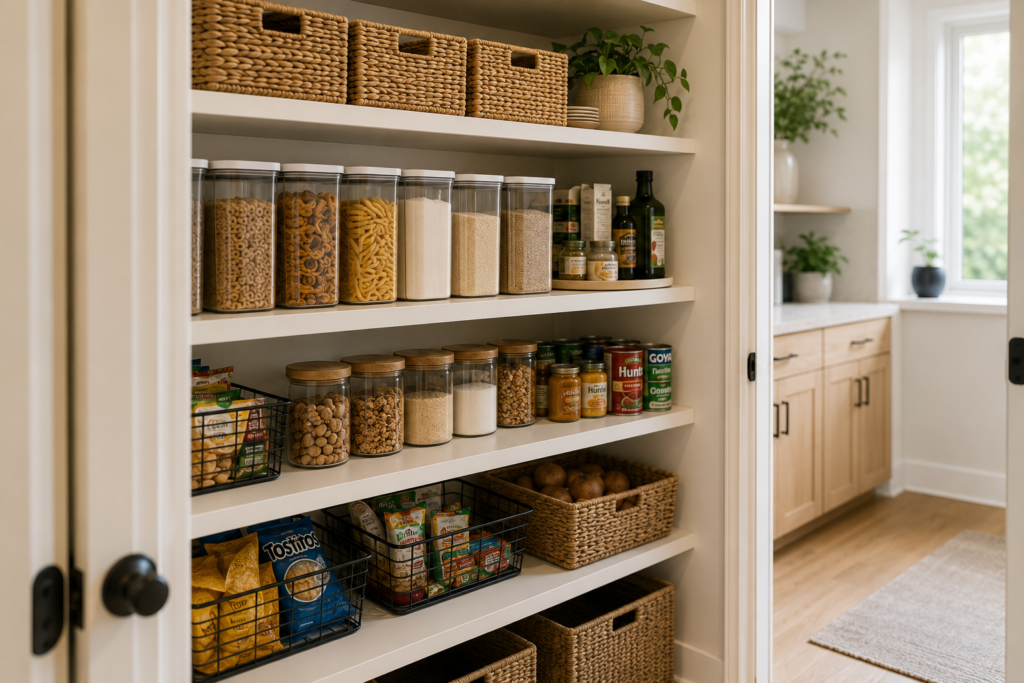
Pantries Reveal Whether Systems Are Working
Pantries provide excellent examples of how organization succeeds or fails.
Without structure, food disappears into the back of shelves, duplicates are purchased, and expired items accumulate over time.
A good pantry system prioritizes visibility and accessibility.
This is why pantry organizers that make food easier to find have become popular. When people can easily see what they own, they are more likely to use it.
Organization often saves time and money simultaneously because visibility reduces waste.
Sometimes maintaining order is simply a matter of making things easier to see.
Closets Require Systems That Match Reality
Closets often fail because homeowners organize for an ideal lifestyle rather than their actual one.
If everyday clothes are difficult to reach while rarely used items occupy the most convenient locations, clutter naturally develops.
Good closet systems prioritize real life.
Frequently used items should remain easy to access, while seasonal products can occupy less convenient areas.
This helps explain why closet shelf dividers that help clothes stay stacked properly are effective. They support how people naturally store and retrieve clothing.
The best systems respect everyday behavior instead of fighting it.
Technology Has Introduced New Organizational Challenges
Modern homes contain far more devices than previous generations ever imagined.
Phones, tablets, smart watches, earbuds, and chargers create entirely new forms of clutter.
Without systems, technology quickly spreads across desks, counters, and nightstands.
Many households now rely on designated charging areas and cable management to keep spaces functional.
This is one reason cord organizers that make desks and nightstands look cleaner have become increasingly valuable.
Technology changes quickly, and home organization must evolve alongside it.
Good systems adapt to modern life rather than resisting it.
Small Habits Sustain Good Systems
Even the best organization system benefits from simple routines.
Small habits often matter more than occasional large cleanups because they prevent clutter from accumulating in the first place.
Examples include:
- Returning items immediately
- Emptying bags after arriving home
- Sorting mail daily
- Resetting counters each evening
- Putting laundry away promptly
These actions may seem insignificant, yet their effects compound over time.
This closely aligns with the home habits that quietly make life feel less stressful. Good systems support good habits, and good habits strengthen good systems.
The relationship works both ways.
Organization Is About Reducing Friction
People often imagine organization as an aesthetic goal, but its true purpose is practical.
A well-organized home reduces friction. It minimizes searching, simplifies routines, and removes small frustrations that occur repeatedly throughout the day.
This may help explain why home upgrades that actually reduce daily stress resonate with so many homeowners.
The most successful systems often feel invisible because they quietly support daily life in the background.
Organization is not really about containers, labels, or shelves. It is about creating homes that are easier to live in.
The Best Systems Are The Ones People Keep Using
Ultimately, an organization system succeeds for one simple reason: people continue using it.
Perfect systems that are abandoned after two weeks provide little value. Simple systems used for years often create far greater benefits.
The goal is not perfection. It is sustainability.
That may be why organization systems fail so often. Many are designed for ideal circumstances rather than real life.
The systems that last tend to be simple, convenient, flexible, and forgiving. They work with human behavior instead of expecting people to behave differently.
In the end, the most organized homes are not necessarily owned by people who work harder. They are often owned by people whose systems quietly do much of the work for them.