
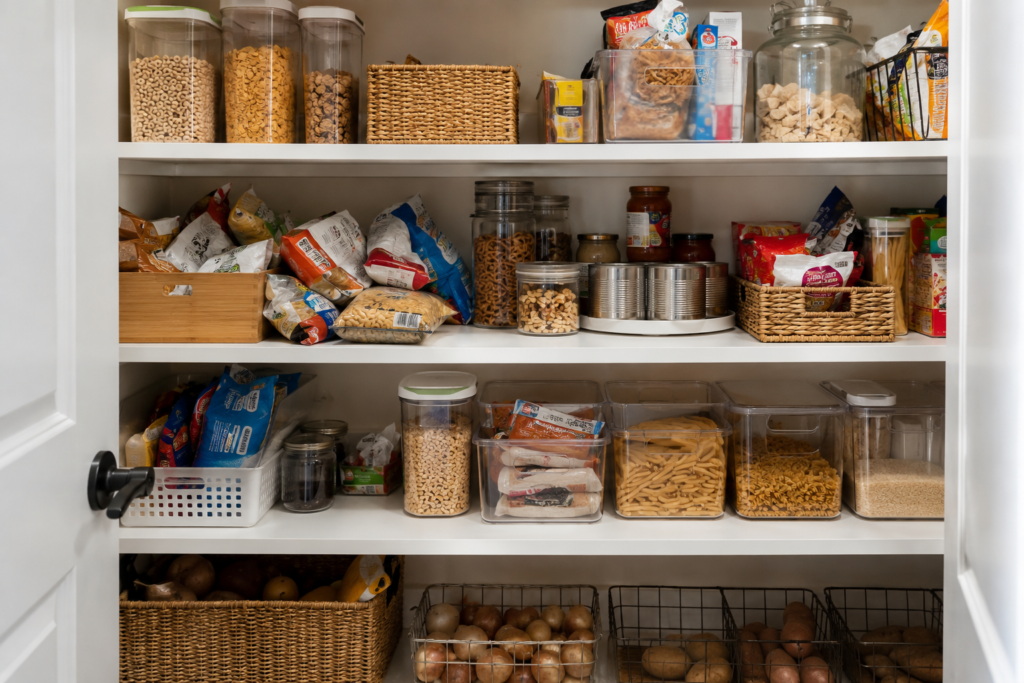
A well-organized pantry can make cooking easier, grocery shopping more efficient, and meal preparation significantly less frustrating. Unfortunately, many pantries slowly become cluttered without homeowners even realizing it. A few misplaced items turn into crowded shelves, expired ingredients disappear into the back, and suddenly finding a simple can of beans feels like a treasure hunt.
The problem is not usually a lack of space. More often, it is a lack of structure.
Many pantry organization problems come from small storage mistakes that compound over time. Correcting those mistakes can make a pantry feel larger, cleaner, and easier to use without requiring a renovation.
Why Pantry Organization Matters More Than Most People Think
People interact with their pantry almost every day.
Whether grabbing snacks, preparing dinner, packing lunches, or checking grocery inventory, the pantry plays a major role in daily routines. When items are difficult to find, small frustrations begin adding up.
An organized pantry saves time because ingredients are visible and easy to access. It also helps reduce duplicate purchases and food waste.
This is one reason homeowners often notice benefits similar to those discussed in why organized kitchens feel easier to cook in.
Mistake 1: Storing Food Wherever It Fits
One of the most common pantry mistakes is putting groceries wherever empty space exists.
While this may feel efficient after a shopping trip, it quickly creates confusion. Similar products become scattered throughout multiple shelves, making inventory difficult to track.
Grouping foods into categories creates a much more functional system. Baking supplies, canned goods, snacks, breakfast foods, and cooking ingredients should each have designated areas.
Categories make it easier to find items and easier to restock them later.
Mistake 2: Ignoring Vertical Space
Many pantry shelves have significant unused vertical space.
People often place items directly on shelves without considering how much room exists above them. As a result, valuable storage capacity goes unused.
Stacking shelves, risers, and organizational systems can help maximize available space.
This follows many of the same principles discussed in cabinet risers that create more storage without renovations, where visibility and accessibility improve simultaneously.
Mistake 3: Keeping Expired Food Too Long
Expired products often hide in the back of pantries for months or even years.
Because they are rarely visible, they continue occupying valuable storage space while creating clutter.
Periodic pantry reviews help eliminate products that will never be used.
Removing expired food immediately creates more room and improves visibility for items that actually matter.
Mistake 4: Buying Containers Before Building A System
Many homeowners start organizing by purchasing containers.
The problem is that containers alone do not create organization.
Without a clear system, even attractive storage bins eventually become cluttered. Before purchasing organization products, it helps to understand what categories exist, how frequently items are used, and where they should live.
The system should come first. The containers should support the system.
Quick Comparison Table
| Pantry Habit | Result |
|---|---|
| Categorized Shelves | Easier To Find Food |
| Random Placement | Frequent Searching |
| Labeled Zones | Better Visibility |
| Expired Food Removal | More Storage Space |
| Organized Categories | Faster Meal Prep |
| Overcrowded Shelves | Hidden Ingredients |
Mistake 5: Not Creating Pantry Zones
Every pantry benefits from designated zones.
Without them, foods gradually migrate throughout the space.
For example:
- Breakfast items
- Snacks
- Baking ingredients
- Cooking supplies
- Canned goods
- Pasta and grains
When each category has a dedicated home, organization becomes easier to maintain over time.
Mistake 6: Hiding Frequently Used Foods
Frequently used items should be the easiest items to access.
Unfortunately, many pantries place everyday ingredients on high shelves or deep corners where they become difficult to reach.
The foods used weekly should occupy prime locations.
Less frequently used products can move toward higher shelves or deeper storage areas.
Mistake 7: Treating Deep Shelves Like Flat Surfaces
Deep shelves create hidden storage problems.
Items placed in the back often disappear from memory. Eventually, duplicate purchases occur because homeowners forget what they already own.
Using bins or pull-out organizers can make deep shelves significantly easier to manage.
Visibility should always be prioritized over maximum capacity.
Mistake 8: Forgetting About Labels
Labels are one of the simplest organizational tools available.
Many homeowners assume they will remember where everything belongs. Unfortunately, pantry systems become harder to maintain when categories are unclear.
This is why articles like label makers that help homes stay organized long term have become increasingly popular.
Clear labels reduce decision fatigue and make maintenance easier.
Mistake 9: Mixing Snacks With Cooking Ingredients
Combining unrelated food categories often creates confusion.
Children searching for snacks may disrupt cooking ingredients. Baking supplies become mixed with canned goods. Pantry shelves slowly lose structure.
Separating foods by purpose creates a more intuitive experience.
People naturally know where to look because similar products remain together.
Mistake 10: Overcrowding Every Shelf
A completely full pantry rarely functions well.
While maximizing storage sounds efficient, overcrowding often reduces visibility and accessibility.
Leaving a small amount of breathing room between categories makes it easier to locate products and return items to their correct locations.
Organization is often more about accessibility than raw storage capacity.
Why Visibility Is More Important Than Storage Capacity
People frequently underestimate the importance of visibility.
A pantry can technically hold hundreds of items while still feeling disorganized.
The goal is not simply fitting more food into the space. The goal is finding food quickly when needed.
Visible ingredients encourage better meal planning and reduce waste.
The Connection Between Pantry And Refrigerator Organization
Pantry organization rarely exists in isolation.
Households that maintain organized pantries often have organized refrigerators as well.
Many of the same concepts discussed in refrigerator storage ideas that make groceries easier to find apply equally well to pantry storage.
Categories, visibility, and accessibility matter in both spaces.
Why Food Waste Often Starts In The Pantry
Food waste is not always caused by spoilage.
Sometimes ingredients are simply forgotten.
Items hidden behind newer purchases often expire before anyone remembers they exist. Better pantry organization reduces this problem by keeping inventory visible.
When food can be seen, it is more likely to be used.
How Organized Pantries Simplify Grocery Shopping
Shopping becomes easier when pantry inventory is clear.
People can quickly identify missing items without guessing.
This often reduces unnecessary purchases and helps maintain a more efficient household budget.
A well-organized pantry essentially becomes a visual inventory system.
Maintaining Organization After The Initial Cleanup
Many pantry projects fail because maintenance feels overwhelming.
The most successful systems are simple enough to sustain.
Returning products to designated categories takes only a few seconds, but those few seconds prevent clutter from accumulating again.
Consistency matters far more than perfection.
How Families Benefit From Better Pantry Systems
Families often experience the greatest improvements from pantry organization.
Multiple people accessing the same space can create disorder quickly.
Clear categories, labels, and zones make it easier for everyone to find what they need without disrupting the entire pantry.
This reduces frustration and improves daily efficiency.
Why Simpler Systems Usually Work Better
Complicated organizational systems may look impressive online, but they often fail in real life.
Simple systems are easier to maintain because they require less effort.
Most households do not need dozens of containers or highly detailed categories.
They simply need a structure that makes food easier to find.
The Pantry Should Support Daily Life
The purpose of pantry organization is not creating a showroom.
The purpose is making daily life easier.
When ingredients are easy to find, meal preparation becomes smoother, grocery shopping becomes more efficient, and food waste decreases.
Small improvements often create surprisingly large benefits over time.
A pantry that functions well is not necessarily the most beautiful pantry. It is the one that helps people find what they need quickly and consistently every single day.