
Most People Don’t Have Too Many Kitchen Appliances. They Just Have The Wrong Ones.
It’s easy to assume that a cluttered kitchen means you need to get rid of things. In reality, the issue is usually different. The appliances you own aren’t pulling their weight.
Some tools make cooking easier, faster, and more consistent. Others sit on the counter, take up space, and barely get used.
The difference isn’t price or brand. It’s whether the appliance fits your routine.
Once you start filtering appliances this way, your kitchen becomes simpler without feeling empty.
What Actually Makes An Appliance Worth It
An appliance earns its place when it solves a real, repeated problem.
That usually means:
• It saves time during daily cooking
• It replaces multiple tools or steps
• It’s easy enough to use regularly
• It fits naturally into your kitchen setup
Anything outside of that tends to become clutter over time.
This is why many people end up surrounded by appliances they thought they needed but rarely touch. If that sounds familiar, it often connects back to issues explained in why your kitchen still feels messy and what actually fixes it.
Appliances That Are Actually Worth Buying
Some appliances consistently prove their value because they improve everyday cooking without adding complexity.
These tend to include:
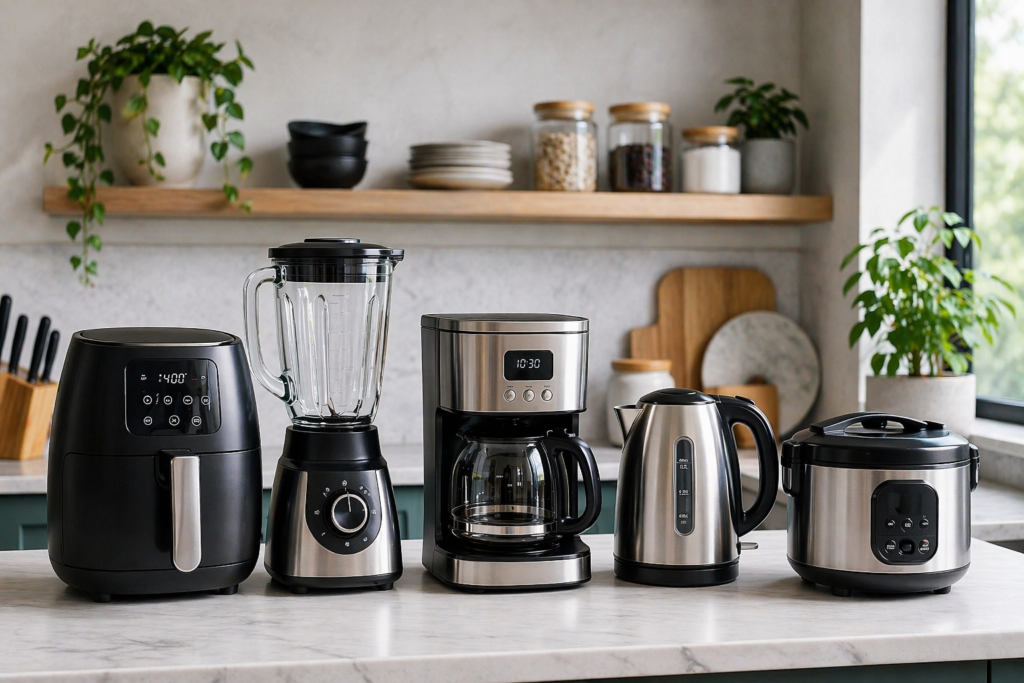
• Air fryers that simplify meals and reduce oven use
• Blenders that handle multiple prep tasks in one place
• Coffee makers that fit your routine without unnecessary features
• Rice cookers that automate cooking and reduce effort
The key is choosing the right version, not the biggest or most advanced one.
For example, many people get more use out of compact air fryers than oversized ones, especially after understanding options like best small air fryers for apartments, compact affordable.
Quick Breakdown: What’s Worth It Vs What’s Not
| Category | Worth Buying | Usually Not Worth It |
|---|---|---|
| Air Fryers | Compact, daily-use models | Oversized units for occasional cooking |
| Blenders | Multi-purpose blenders | Separate single-use blending tools |
| Coffee Makers | Simple, routine-based machines | Feature-heavy machines rarely used |
| Rice Cookers | Reliable mid-size units | Large units used occasionally |
This is where most people make better decisions. It’s not about avoiding appliances, it’s about choosing ones that actually get used.
The Appliances Most People Regret Buying
There’s a pattern behind appliances that don’t work out.
They usually fall into one of these categories:
• Bought for occasional use
• Too complicated to use daily
• Hard to clean or maintain
• Overlapping with something you already own
These don’t feel like bad purchases at first. The regret builds slowly as they take up space without providing value.
This is especially common with blending tools. Instead of choosing one strong option, people end up stacking multiple devices, which is exactly what guides like blender buying guide features sizes and tips for every shopper help prevent.
Why “More Features” Usually Leads To Worse Decisions
More features sound like a benefit, but they often reduce usability.
Appliances packed with options tend to:
• Take longer to learn
• Be harder to clean
• Add steps to simple tasks
Most people only use a small portion of what those appliances offer. The rest becomes unnecessary complexity.
In practice, simpler appliances get used more often because they fit naturally into daily routines.
This is one of the main reasons beginner-friendly setups often perform better, especially if you’ve explored options like best coffee makers for beginners.
Why Expensive Doesn’t Always Mean Better
Price is one of the most misleading signals when it comes to appliances.
Higher-end models often come with more features, premium materials, and stronger branding. But that doesn’t automatically make them better for your kitchen.
In many cases, the added cost goes toward features you won’t use regularly.
This is where people overspend without realizing it. They assume a more expensive appliance will last longer or perform better in everyday use, but if it complicates your routine, it ends up being used less.
A simpler, mid-range appliance that fits your habits will almost always deliver more value than a premium model that feels like overkill.
When It Actually Makes Sense To Skip An Appliance
Not every kitchen needs every tool.
In some cases, skipping an appliance is the better decision.
This usually applies when:
• You already have something that does the same job
• The appliance only solves a rare problem
• It adds more steps instead of removing them
• You wouldn’t use it weekly
Skipping these purchases doesn’t limit your kitchen. It keeps it efficient.
The Role Of Kitchen Size In Your Decisions
The smaller your kitchen, the more important your decisions become.
In tight spaces, every appliance needs to justify itself.
This doesn’t mean you need fewer appliances overall. It means each one needs to be more intentional.
A compact kitchen with the right tools feels easier to use than a large kitchen filled with unnecessary ones.
If you’re unsure how to balance size and function, understanding sizing decisions through something like how to choose the right air fryer size makes a noticeable difference.
A Simple Way To Decide Before You Buy
Before adding anything new to your kitchen, a quick check can prevent regret.
Ask yourself:
• Will I realistically use this every week?
• Does it replace something I already own?
• Is it easy enough to use regularly?
• Do I know exactly where it will go?
If the answer isn’t clear, it’s usually not worth buying yet.
This approach filters out most unnecessary purchases without overthinking it.
Why Most Kitchens End Up With Too Many Appliances Over Time
Appliance clutter doesn’t happen all at once. It builds gradually.
You buy something new to solve a problem. Then your routine changes. Or another appliance replaces it. But the original one never fully leaves your space.
Over time, this creates layers.
Older appliances stay “just in case.” New ones get added for convenience. Eventually, you end up with more tools than you actually use.
This is why clutter feels harder to fix later. It’s not about one bad decision. It’s the accumulation of small, reasonable choices that were never corrected.
Recognizing this pattern makes it much easier to stop it from continuing.
What Happens When Appliances Don’t Match Your Routine
One of the most overlooked problems is mismatch.
An appliance can be high quality, well-reviewed, and still not work for you.
This happens when:
• It doesn’t match how often you cook
• It requires more effort than your routine allows
• It solves a problem you don’t have consistently
When that mismatch exists, the appliance becomes something you work around instead of something that helps you.
Over time, this creates friction, and friction is what leads to clutter.
The Goal Isn’t Fewer Appliances, It’s Better Ones
A well-functioning kitchen doesn’t depend on having less. It depends on having the right tools.
When each appliance earns its place, everything becomes easier. Cooking takes less effort, cleaning becomes simpler, and your space feels more open.
That’s what separates a cluttered kitchen from an efficient one.