
This article contains affiliate links. As an Amazon Associate, I earn from qualifying purchases at no extra cost to you.
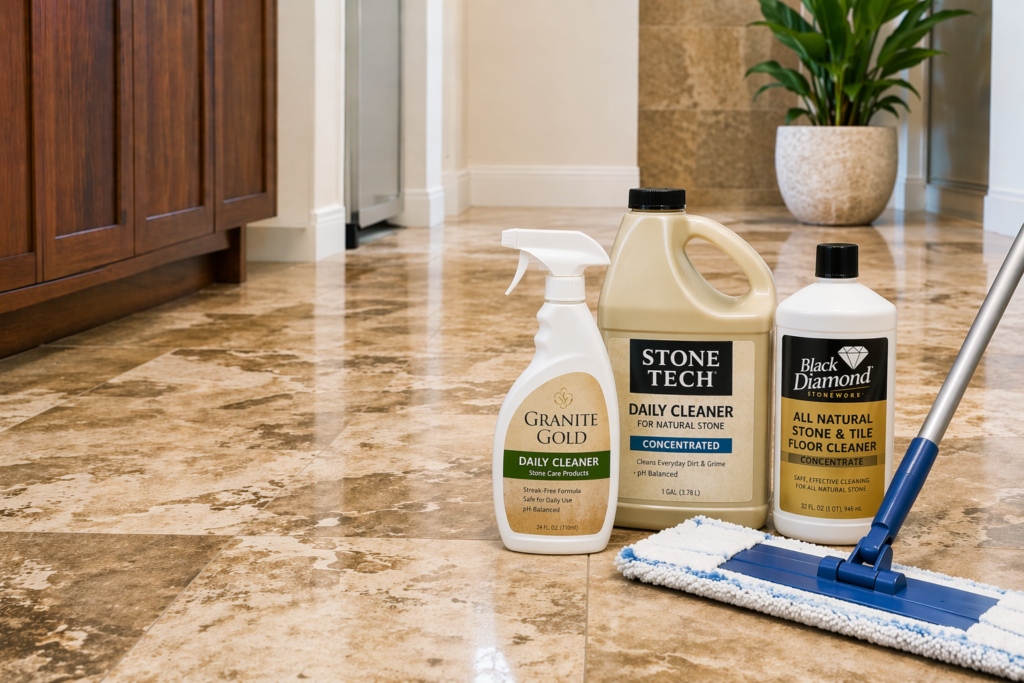
Stone floors can completely change the look of a home, but they also come with one major downside. They are easy to damage if you clean them the wrong way.
Most people assume a stronger cleaner means better results. With stone, that mindset does the opposite. The wrong product slowly strips the surface, dulls the finish, and can even cause permanent staining.
If your floors never look as clean as they should, or they lose their shine over time, there is a good chance the cleaner is the problem, not your effort.
Why Stone Floors Need a Different Type of Cleaner
Natural stone is porous, which means it absorbs liquids instead of repelling them like tile or vinyl.
Common types of stone flooring include marble, granite, travertine, and slate. All of them react badly to harsh chemicals, especially anything acidic.
That is why using the right cleaner matters more than how often you clean. If you have ever wondered why your floors still feel off even after mopping, this guide on why your floors still feel dirty after cleaning explains exactly what causes that issue.
Best Cleaner for Stone Floor (Top Picks That Actually Work)
Here are the safest and most effective options you can use without damaging your floors:
| Product | Best For | Why It Works |
|---|---|---|
| Stone-specific pH-neutral cleaner | Daily cleaning | Safe and residue-free |
| Spray stone cleaner | Quick cleaning | Easy and streak-free |
| Concentrated stone solution | Deep cleaning | Strong but safe |
| Microfiber mop system | Routine use | Prevents buildup |
For daily cleaning, StoneTech Daily Cleaner for natural stone floors is one of the safest choices because it maintains the surface without stripping it.
For quick cleanups, Granite Gold stone floor cleaner spray works well when you want something fast that doesn’t leave streaks behind.
For deeper cleaning sessions, Black Diamond Stoneworks cleaner concentrate for stone floors is a stronger option that still avoids damaging ingredients.
What You Should Never Use on Stone Floors
This is where most damage happens.
Avoid these completely:
- Vinegar or citrus-based cleaners
- Bleach or ammonia
- Generic all-purpose cleaners
- Rough scrubbing tools
These products break down the seal on stone surfaces. Once that seal is gone, the stone becomes more vulnerable to stains and dullness.
How to Clean Stone Floors Properly
Cleaning stone floors is more about technique than effort.
Start by removing dust and debris before adding any moisture. This step is often skipped, but it makes a big difference.
Use a slightly damp microfiber mop instead of soaking the floor. Too much water can seep into the stone and cause long-term issues.
Apply your cleaner lightly and evenly, then let the surface air dry or gently buff it with a cloth.
If you rush this process or use too much liquid, you end up spreading dirt instead of removing it.
The Tools You Use Matter More Than You Think
Even the best cleaner will not work properly if the tool is wrong.
Microfiber mops are ideal because they lift dirt instead of pushing it around. Spray mops also work well because they control how much liquid touches the floor.
Traditional mops often hold too much water, which can cause streaks and buildup.
If you want to compare cleaning systems, this guide on best spin mops for tile floors gives a good idea of how different tools perform.
How to Choose the Right Stone Floor Cleaner for Your Specific Floor
Not all stone floors behave the same, which means the cleaner you choose should match the material.
For example:
- Marble and limestone are more sensitive and require ultra-gentle cleaners
- Granite is more durable but still needs pH-neutral solutions
- Travertine benefits from regular maintenance cleaners to prevent buildup
If you are unsure what type of cleaner fits your home setup overall, this broader guide on how to choose the right vacuum cleaner can help you think in terms of matching tools and surfaces properly.
Choosing based on your specific stone type prevents long-term damage and improves cleaning results immediately.
Can You Use a Steam Mop on Stone Floors
Steam mops are popular, but they are not always the best option for stone.
They can help remove bacteria and break down dirt without chemicals, but they also push heat and moisture into the surface.
If your floors are not properly sealed, that moisture can cause damage over time.
If you are considering one, this guide on best steam mops under $150 explains which options are safer and how to use them correctly.
When to Deep Clean vs Maintain Your Stone Floors
A common mistake is treating every cleaning session the same.
There is a big difference between maintenance cleaning and deep cleaning.
Maintenance cleaning should be light, frequent, and gentle. This keeps dirt from building up and protects the surface.
Deep cleaning should only be done occasionally when:
- You notice buildup that regular cleaning does not remove
- The floor starts to look dull or uneven
- There are visible marks or residue
Using a strong cleaner too often can wear down the protective seal, so it is better to maintain consistently instead of over-cleaning.
How Often You Should Clean Stone Floors
Consistency matters more than intensity.
A simple routine works best:
- Light cleaning several times per week
- Proper mopping once per week
- Occasional deep cleaning when needed
Waiting too long between cleanings allows dirt to settle into the surface, which makes it harder to remove later.
Signs Your Cleaner Is Damaging Your Floor
If your floors look worse over time, your cleaner might be the reason.
Watch for:
- Dull or cloudy appearance
- Sticky or uneven surface
- Streaks that do not go away
- Loss of natural shine
These are clear signs that the cleaner is too harsh or not designed for stone.
Why Your Stone Floor Loses Shine Over Time
Many people assume dull floors mean they need stronger cleaners, but that is usually not the case.
Loss of shine often happens because:
- Residue buildup from improper cleaners
- Micro-scratches from dirt particles
- Overuse of water or harsh chemicals
Restoring shine is less about scrubbing and more about switching to the right cleaning approach.
This is why using proper tools and techniques consistently makes a bigger difference than aggressive cleaning.
Why Vacuuming First Makes a Big Difference
One of the simplest upgrades you can make is vacuuming before mopping.
Dust and grit act like sandpaper on stone surfaces. If you skip this step, you are grinding debris into the floor every time you mop.
How to Get Better Results Without More Effort
Most people think better results come from stronger cleaners or more scrubbing.
In reality, better results come from using the right product consistently.
A quality cleaner, a microfiber tool, and a simple routine will outperform aggressive cleaning every time.
That is how you keep stone floors looking clean without slowly damaging them.
Top Picks from this Article
Want the short version? These are the best stone cleaners based on safety, effectiveness, and everyday use.
A gentle and effective cleaner designed specifically for natural stone, making it ideal for regular maintenance without damaging surfaces.
View price on AmazonA powerful cleaner that lifts tougher grime while remaining safe for natural stone surfaces when used as directed.
View price on Amazon