
This article contains affiliate links. As an Amazon Associate, I earn from qualifying purchases at no extra cost to you.
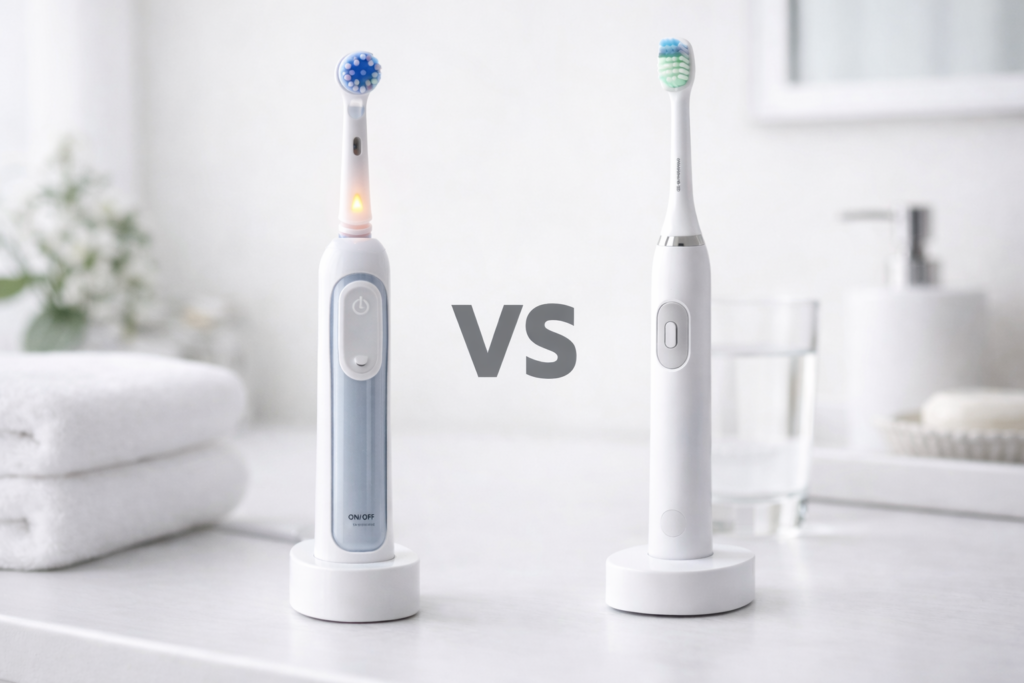
Choosing between Oral-B and Sonicare is one of the most common decisions people face when buying an electric toothbrush. Both brands dominate the market, and both offer effective cleaning. The challenge is understanding which one actually fits your needs.
At first glance, they seem similar. They both promise better cleaning, healthier gums, and improved oral hygiene. The difference only becomes clear once you understand how they work and what that means for daily use.
The right choice depends less on which brand is “better” and more on which one matches your comfort and brushing habits.
Quick Comparison Table
| Feature | Oral-B | Sonicare |
|---|---|---|
| Cleaning style | Rotating oscillation | Sonic vibration |
| Best for | Deep cleaning | Gentle cleaning |
| Feel during use | More mechanical | Smoother |
| Pressure control | Strong sensors | Softer by design |
| Noise level | Slightly louder | Quieter |
The Core Difference: How They Clean
The biggest difference between these two brands is how they clean your teeth.
Oral-B uses a rotating brush head that moves back and forth across each tooth. This creates a scrubbing effect that physically removes plaque.
Sonicare uses high-frequency vibrations that move fluid between teeth. Instead of scrubbing directly, it relies more on movement and flow.
Both methods are effective. The difference is how they feel and how they interact with your brushing style.
If you want a deeper breakdown of how these technologies work, how to choose the right electric toothbrush explains it in detail.
Best Choice for Deep Cleaning
If your goal is removing as much plaque as possible, Oral-B has a slight advantage.
The Oral-B Pro 1000 Electric Toothbrush is known for its strong cleaning performance. The rotating motion helps target individual teeth more directly, which many users describe as a “dentist clean” feeling.
For users who want maximum cleaning power, Oral-B Pro 1000 Electric Toothbrush is often the better choice.
Best Choice for Sensitive Teeth and Gums
If comfort is your priority, Sonicare tends to feel more natural.
The Philips Sonicare 4100 Electric Toothbrush provides a gentler brushing experience. The vibration-based cleaning reduces direct pressure, which helps minimize irritation.
For users with sensitivity concerns, Philips Sonicare 4100 Electric Toothbrush is usually the safer option.
If you are specifically focused on comfort, best electric toothbrush for sensitive teeth provides more targeted recommendations.
Best for Controlling Brushing Pressure
Pressure control is one of the most important factors in preventing gum irritation.
The Oral-B Smart 1500 Electric Toothbrush includes a pressure sensor that alerts you when you brush too hard. This helps correct habits that often go unnoticed.
While Sonicare models are naturally gentler, this feature gives Oral-B an advantage for users who tend to apply too much force.
If pressure is a concern, Oral-B Smart 1500 Electric Toothbrush is a strong option.
Quick Recommendation
| If You Want… | Best Pick |
|---|---|
| Stronger cleaning performance | Oral-B Pro 1000 Electric Toothbrush |
| A gentler, smoother experience | Philips Sonicare 4100 Electric Toothbrush |
| Better pressure control | Oral-B Smart 1500 Electric Toothbrush |
Who Should Choose Oral-B vs Sonicare (Simple Shortcut)
If you still feel unsure, the easiest way to decide is to match the toothbrush to your natural preference.
Choose Oral-B if you like a more hands-on cleaning feel where you guide the brush across each tooth and feel the movement doing the work. This style suits people who want stronger feedback while brushing and a more noticeable cleaning sensation.
Choose Sonicare if you prefer a smoother and more relaxed experience. The vibration-based cleaning feels less aggressive, which makes it easier to use consistently without overthinking technique.
Most people are naturally drawn to one of these styles within the first few uses. Once you recognize which one feels more comfortable, the decision becomes much clearer.
What You’ll Notice in Daily Use
The difference between Oral-B and Sonicare becomes more noticeable over time.
Oral-B feels more active during brushing. You guide the brush across each tooth and feel the rotation working directly.
Sonicare feels smoother and quieter. The vibration is less noticeable, which many users find more comfortable for long-term use.
Neither is objectively better. It comes down to which experience you prefer.
Common Mistakes When Choosing Between Them
Many buyers focus too much on brand instead of how they actually brush.
Common mistakes include:
• Choosing Based On Popularity Instead Of Comfort
• Ignoring Sensitivity Levels
• Overestimating The Need For Strong Cleaning
• Not Considering Daily Usability
Avoiding these mistakes makes the decision much easier.
Why the Right Choice Is About Habits, Not Features
The best toothbrush is the one that fits your routine.
If you prefer a more active brushing style and want stronger cleaning feedback, Oral-B will feel more natural.
If you prefer a smoother, less aggressive experience, Sonicare is easier to use consistently.
The difference is not just performance. It is how the toothbrush integrates into your daily habits.
How to Decide Quickly Without Overthinking It
The easiest way to choose is to focus on your main priority.
• Want deep cleaning → choose Oral-B
• Have sensitive teeth → choose Sonicare
• Concerned about pressure → choose Oral-B with sensor
• Want comfort and simplicity → choose Sonicare
This approach removes most of the confusion.
Why Most People End Up Preferring One Over the Other
Even though both Oral-B and Sonicare are effective, most users naturally end up preferring one after a few weeks of use. This usually has less to do with performance and more to do with how the toothbrush feels during daily brushing.
Oral-B tends to appeal to people who like a more active cleaning sensation. The rotating brush head makes it feel like each tooth is being cleaned individually, which gives a stronger sense of control and thoroughness.
Sonicare, on the other hand, is usually preferred by people who value comfort and simplicity. The smoother vibration feels less aggressive, which makes it easier to use consistently without thinking about technique as much.
This is why the decision becomes much clearer when you think about your personal preference instead of focusing only on features. Once you choose the style that feels natural, everything else becomes secondary.
Which One Is Actually Better
There is no universal winner between Oral-B and Sonicare.
Both brands are effective, reliable, and widely recommended. The better choice depends entirely on your needs.
If you match the toothbrush to your habits, you will get better results regardless of the brand.
Top Picks from this Article
Want the short version? These are the best electric toothbrushes based on performance, comfort, and everyday usability.
A powerful electric toothbrush with pressure control and consistent cleaning performance, making it a reliable everyday choice.
View price on AmazonA gentle sonic toothbrush that’s ideal for sensitive teeth while still delivering effective daily cleaning.
View price on AmazonIt Comes Down to Comfort
At the end of the day, the right toothbrush is the one you will use consistently.
If it feels comfortable, you will use it properly. If it feels awkward or too aggressive, you will adjust your habits or avoid using it.
That consistency is what actually improves your oral health over time.