
This article contains affiliate links. As an Amazon Associate, I earn from qualifying purchases at no extra cost to you.
Robot vacuums sound like the perfect shortcut. You buy one, set it up, press a button, and suddenly your floors are supposed to stay cleaner without much effort.
That promise is exactly why cheap robot vacuums are so tempting. They look like an easy way to get the convenience of smart cleaning without spending too much money.
The problem is that many budget models create just enough frustration that people slowly stop using them. At first, the robot vacuum feels exciting. A few weeks later, it sits in the corner, the battery is dead, the dust bin is full, and nobody bothers restarting it.
That does not mean every affordable robot vacuum is bad. It just means the wrong one can quickly turn from a helpful home upgrade into another gadget people regret buying.
Why Cheap Robot Vacuums Often Disappoint
| Problem | What It Feels Like In Real Life | Why It Matters |
|---|---|---|
| Weak navigation | The vacuum bumps around randomly | It misses spots and wastes time |
| Small dust bin | You empty it constantly | It feels less automatic |
| Weak suction | Dust and hair remain behind | Floors do not feel truly clean |
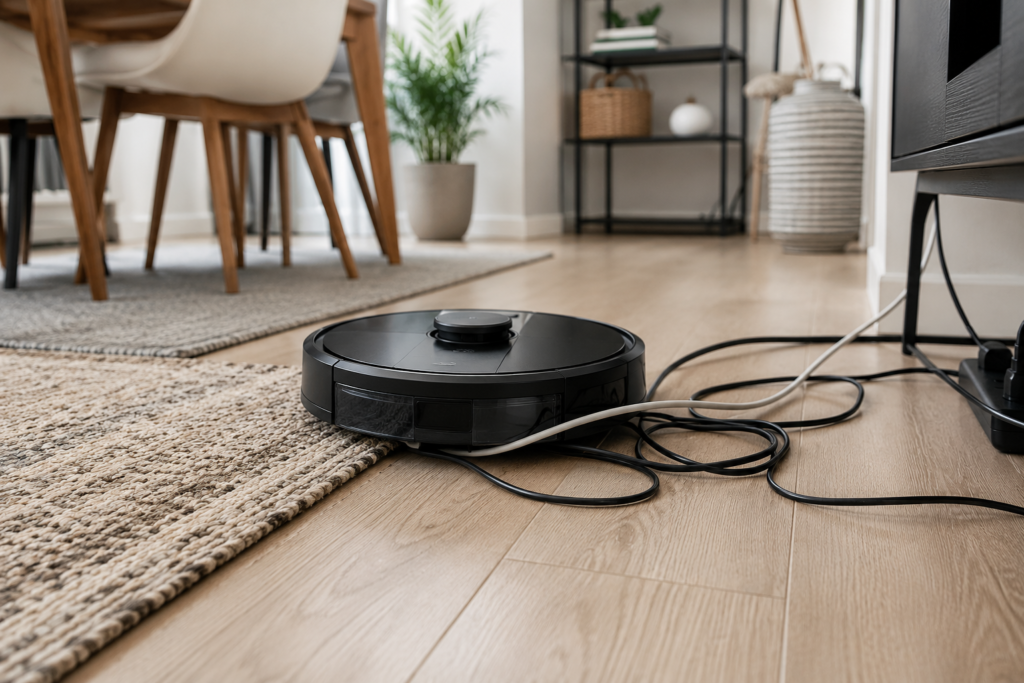
| Poor obstacle handling | It gets stuck under chairs or cords | You have to rescue it often |
| Bad app controls | Scheduling feels annoying | You stop using it regularly |
| Short battery life | It cannot finish the space | Cleaning feels incomplete |
Top Picks From This Article
Roborock Robot Vacuum
A strong pick for smart mapping, reliable cleaning, and homes that need a more advanced robot vacuum experience.
View price on AmazonShark Robot Vacuum
A practical choice for people who want strong everyday cleaning, easy scheduling, and a familiar household brand.
View price on AmazonLefant Robot Vacuum
A more affordable option for smaller homes, apartments, and basic maintenance cleaning without overspending.
View price on AmazonPrices and availability can change at any time, so check Amazon for the latest details before buying.
They Often Feel Smart Before They Actually Are
A cheap robot vacuum can look advanced from the outside. It may have a sleek shape, a charging dock, a mobile app, and a few cleaning modes.
But the real test is not how modern it looks. The real test is whether it can clean your floors without becoming another chore.
Many budget models still rely on basic movement patterns instead of proper smart mapping. That means they may clean one area several times while ignoring another area completely.
This is where people start losing patience. The product was supposed to reduce effort, but now the owner is watching it closely, moving chairs around, checking missed spots, and wondering whether it would have been faster to use a regular vacuum.
That frustration is very similar to the product regret discussed in why people stop using products they thought would change their routine.
Random Navigation Gets Old Fast
One of the biggest reasons cheap robot vacuums get abandoned is random navigation.
At first, watching a robot vacuum bounce around the room can feel entertaining. After a while, it starts to feel inefficient.
It may clean under the coffee table three times, miss the kitchen corner completely, and spend several minutes trying to escape from one chair leg. That might be acceptable once, but it becomes annoying when it happens every day.
A better smart mapping robot vacuum usually feels more reliable because it learns the space, follows a more organized path, and gives the user more control over where it cleans.
This is one of the main reasons people start comparing cheaper models with a Roborock robot vacuum or a Shark robot vacuum once they realize navigation matters more than they expected.
Weak Suction Makes The Convenience Feel Pointless
A robot vacuum does not need to replace every deep cleaning session, but it still needs to make the floor feel noticeably cleaner.
When suction is too weak, the vacuum may pick up light dust but leave behind heavier crumbs, pet hair, and debris near edges. That makes the entire product feel disappointing.
People do not usually abandon robot vacuums because they expect perfection. They abandon them when the results are not good enough to justify the setup, charging, emptying, and troubleshooting.
This is especially true in homes with pets. A weak robot vacuum may glide over hair without pulling it up properly, which defeats one of the biggest reasons people buy one in the first place.
For heavier cleaning needs, readers may still be better served by the options in best vacuums for pet hair under $150 that actually work.
Small Dust Bins Ruin The Automatic Feeling
A robot vacuum is supposed to feel automatic. That feeling disappears quickly when the dust bin fills up constantly.
Many cheaper models have smaller bins that need frequent emptying. In a home with pets, kids, or daily dirt, that can become annoying fast.
Instead of feeling like the vacuum is helping in the background, it starts feeling like another small device that constantly needs attention.
That is why a self emptying robot vacuum can feel like such a major upgrade. The cleaning experience becomes less hands on, which is the entire point of buying a robot vacuum in the first place.
This is one reason cheap models can feel affordable at purchase but expensive in frustration later.
They Get Stuck Too Often
Getting stuck is one of the fastest ways for a robot vacuum to lose trust.
Cheap robot vacuums often struggle with cords, rug edges, chair legs, low furniture, pet bowls, and uneven flooring transitions.
At first, owners may adjust the room before every cleaning session. They pick up cords, move shoes, lift small rugs, and clear the floor.
But after a while, that preparation becomes tiring.
If someone has to clean the room before the robot vacuum can clean the room, the convenience starts to feel questionable.
This is where many people realize that obstacle avoidance is not just a premium feature. It can be the difference between a robot vacuum that becomes part of the routine and one that gets ignored.
Cheap Models Often Need Too Much Babysitting
The best home products quietly earn their place because they make life easier without asking for too much attention.
Cheap robot vacuums often do the opposite. They need charging help, bin emptying, brush cleaning, app resets, route checking, and regular rescuing from furniture.
That creates a strange situation. The vacuum is technically automatic, but emotionally it still feels like another responsibility.
This is exactly why convenience products either become everyday habits or disappear from use. The ones that stay are the ones that remove friction instead of adding new friction.
That idea connects naturally with why convenience products quietly become part of everyday life.
The App Experience Can Be Surprisingly Important
Many people underestimate the app before buying a robot vacuum.
A bad app can make even basic tasks feel annoying. Scheduling may be confusing. Room control may be limited. Notifications may be unreliable. The map may not update properly.
For a product that is supposed to save time, those small software issues matter.
A good app makes the robot vacuum feel like part of the home. A bad app makes it feel like a cheap gadget that needs constant fiddling.
That is why smart home products should be judged by daily usability, not just feature lists. The same idea appears in smart home devices worth buying vs what to avoid.
Cheap Robot Vacuums Can Be Loud In The Wrong Way
Noise is another reason some people stop using robot vacuums.
A robot vacuum does not need to be silent, but it should not make the home feel more stressful. Some cheaper models sound rough, high pitched, or distracting on hard floors.
If someone works from home, has pets, has children, or likes a quiet house, that noise becomes a real issue.
The result is predictable. The owner stops scheduling the vacuum during the day. Then they forget to run it later. Eventually, it becomes one more unused device.
A useful robot vacuum should blend into the routine, not interrupt it.
They Struggle More In Real Homes Than Empty Rooms
Robot vacuum ads usually show open floors, perfect furniture spacing, and very little clutter.
Real homes are different.
Most homes have shoes near doors, cords near desks, toys on floors, dining chairs, pet bowls, rugs, baskets, uneven room layouts, and tight furniture spaces.
Cheap robot vacuums often perform fine in simple rooms but struggle in normal lived in spaces.
That matters because a product should work in the home someone actually has, not the staged room shown in a product photo.
This is especially important for apartments and smaller spaces, where tight layouts can make navigation harder. Readers dealing with compact homes may also find lightweight vacuums for apartments that are easy to use and store useful.
The Price Feels Good Until The Routine Gets Annoying
Cheap robot vacuums are attractive because the upfront price feels safer.
People think they are being practical. Instead of spending more, they test the category with a cheaper model.
That can work if expectations are realistic. But if the model is too limited, the buyer may end up deciding robot vacuums are not worth it at all.
That is the bigger problem. A bad cheap model does not just disappoint people with one product. It can make them lose confidence in the entire category.
This is why it sometimes makes sense to spend more on a product that has a better chance of becoming part of daily life.
That broader buying pattern connects with why people keep replacing cheap products instead of buying better once.
Some Budget Models Still Make Sense
To be fair, not every cheap robot vacuum is a bad purchase.
A budget model can make sense for:
People with small apartments.
People with mostly hard floors.
People without pets.
People who only need light maintenance cleaning.
People who do not care about advanced mapping.
People who are comfortable emptying the bin often.
In those cases, a simple Lefant robot vacuum or another entry level model may be enough.
The key is matching the vacuum to the home instead of assuming every robot vacuum can handle every cleaning situation.
When Spending More Is Actually Worth It
A more expensive robot vacuum usually makes sense when the home has pets, multiple rooms, larger floor space, rugs, kids, or frequent debris.
In those situations, features like smart mapping, stronger suction, self emptying docks, better obstacle detection, and room specific cleaning become more than luxury extras.
They help the robot vacuum feel reliable.
That reliability is what keeps people using it.
A Roborock robot vacuum may appeal to people who want stronger mapping and more advanced cleaning control, while a Shark robot vacuum may appeal to people who want a practical smart cleaning upgrade from a familiar brand.
The best choice depends on the home, but the lesson is simple. Cheap only feels cheap if the product still works well enough to stay useful.
The Real Reason They Get Abandoned
Cheap robot vacuums usually get abandoned because they fail at the emotional promise.
People do not buy them only to clean dust. They buy them because they want less work, less stress, and cleaner floors without thinking about it.
When the vacuum needs too much attention, misses too many spots, gets stuck too often, or fails to clean properly, it breaks that promise.
That is why the best robot vacuum is not always the cheapest one. It is the one that fits the space well enough to become a habit.
A good robot vacuum quietly becomes part of the home. A frustrating one becomes another product people meant to use more often but slowly forgot about.