
This article contains affiliate links. As an Amazon Associate, I earn from qualifying purchases at no extra cost to you.
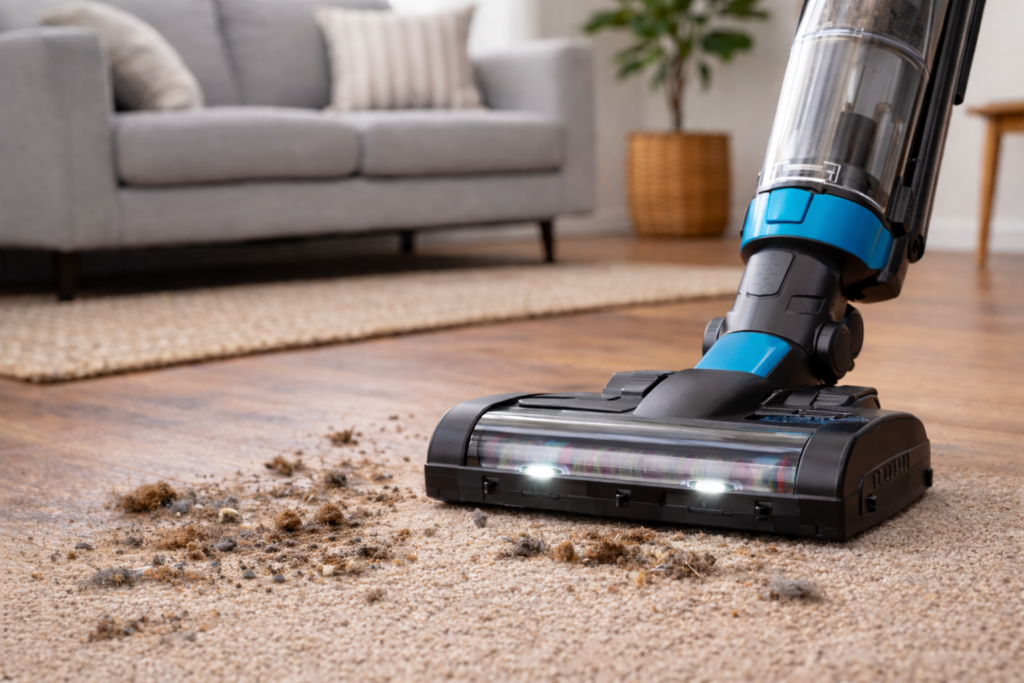
One of the most common mistakes people make when buying a vacuum under $150 is choosing the wrong type, not the wrong model. Cordless and upright vacuums solve very different problems, and picking the wrong one often leads to frustration within weeks.
At first, the choice seems simple. Cordless looks more convenient. Upright looks more powerful. Once you start using the vacuum in your actual home, though, the differences become much more noticeable. The wrong fit starts showing up fast through weak carpet performance, awkward storage, annoying battery limitations, or a machine that feels too bulky to use often.
Understanding how each type performs in real situations is what prevents regret later. This is not really about which type is better overall. It is about which type makes more sense for your floors, your cleaning habits, and how often you realistically vacuum.
Quick Comparison Table
| Type | Best For | Strength | Weakness |
|---|---|---|---|
| Cordless Vacuum | Frequent light cleaning | Easy to use | Limited battery |
| Upright Vacuum | Deep cleaning | Strong suction | Bulkier |
Why People Regret Buying the Wrong Type
Most regret does not come from the vacuum being bad. It comes from it not matching how the person actually cleans.
A common example is buying a cordless vacuum expecting it to replace a full upright. It feels great at first because it is light and easy to grab, but then it struggles when carpets need more than a quick pass or when a larger cleaning session pushes the battery harder than expected.
The opposite happens too. People buy a stronger upright because they assume more power automatically means better value. Then they realize it is heavier, takes up more space, and feels annoying to pull out for everyday messes. In small homes and apartments, that friction adds up quickly.
That is why the real issue is usually not quality. It is mismatch. If you want a broader breakdown of what vacuum type fits different home setups, how to choose the right vacuum cleaner is a useful place to start.
What Most Buyers Get Wrong Before They Click Buy
A lot of people compare specs without thinking enough about routine. They focus on price, battery, suction claims, or attachments, but ignore the more practical question of how the vacuum will fit into daily life.
That mistake matters because the best vacuum on paper can easily become the wrong vacuum in practice. A bulky upright might sound like the stronger buy, but if it lives in a closet because it feels like too much trouble, it is not actually doing its job. A cordless model might feel modern and easy, but if the home has a lot of carpeting, convenience starts losing value once performance falls short.
This is one of the main reasons people end up dissatisfied. They do not choose the wrong product category because of bad reviews. They choose it because they imagine an ideal cleaning routine instead of the one they actually have.
When Cordless Vacuums Make More Sense
Cordless vacuums are built for convenience. They remove a lot of the friction that usually comes with vacuuming, especially in smaller homes where quick access matters more than heavy-duty cleaning.
They work best if:
• You Clean Frequently In Short Sessions
• Your Home Has Mostly Hard Floors
• You Want Something Quick And Easy To Grab
• Storage Space Is Limited
The Shark Navigator Freestyle Cordless Stick Vacuum fits well into this kind of setup. It is easy to use regularly and keeps everyday mess under control without turning cleaning into a chore. That matters more than many buyers realize. A vacuum that feels easy tends to get used more often, which means floors stay cleaner with less effort overall.
If your priority is consistency and ease, Shark Navigator Freestyle Cordless Stick Vacuum is the more natural choice. Buyers who mainly need help with everyday dirt and lighter maintenance should also review best lightweight vacuums for apartments once that post is live in your cluster, because that angle supports the same kind of use case especially well.
When Upright Vacuums Are the Better Option
Upright vacuums are designed for stronger, more consistent suction. They are better suited for situations where dirt, hair, and debris require more force to remove.
They work best if:
• You Have Carpets Or Rugs
• You Prefer Fewer, Deeper Cleaning Sessions
• You Want Stronger Suction Over Convenience
• You Do Not Mind A Slightly Bulkier Machine
The Eureka PowerSpeed Lightweight Upright Vacuum Cleaner is a good example of this balance. It provides stronger cleaning performance while still being manageable in a smaller home. It makes more sense for buyers who care more about how much dirt gets lifted in each pass than how quickly the vacuum can be pulled out.
If power matters more than speed, Eureka PowerSpeed Lightweight Upright Vacuum Cleaner is the safer choice. If you want to compare it with other strong-value models in the same budget range, best vacuum cleaners under $150 gives a broader look at what else is available.
Where Cordless Vacuums Fall Short
Cordless vacuums are convenient, but that convenience comes with clear tradeoffs. Battery life is the obvious one, but it is not the only limitation. Cordless models also tend to be less satisfying when the job goes beyond light maintenance.
They are usually best when the home is already somewhat under control. They help maintain cleanliness. They are not always the best tool for reversing neglect, dealing with heavy pet hair on carpet, or handling long weekend cleaning sessions where you want steady suction from start to finish.
This is where regret often starts. Buyers love the idea of cordless, but expect it to perform like a stronger upright. When that does not happen, the problem feels bigger than it actually is. The issue is usually expectation, not failure. If pet hair is part of the equation, best vacuums for pet hair under $150 is the more relevant comparison page to review once that supporting article is published in your cluster.
Where Upright Vacuums Become a Problem
Upright vacuums solve the power issue, but they introduce a different kind of friction. They take up more space, require more effort to move around, and are less convenient for quick cleanups.
That tradeoff matters most in apartments and smaller homes. In those spaces, convenience often has more influence on cleaning frequency than raw performance. A stronger vacuum that feels annoying to use can quietly become less effective over time than a lighter model that gets used every couple of days.
This is exactly why some buyers regret going upright even when the machine itself performs well. They bought according to suction, but live according to convenience. If your home is smaller and storage is tight, best compact vacuum cleaners for small spaces is worth comparing alongside this article.
Best Balanced Option for Most People
Some buyers want a middle ground. Not fully cordless, but not overly bulky either. They want something that still feels practical for a smaller home without giving up too much cleaning power.
The Bissell CleanView Compact Upright Vacuum fits this role well. It gives you a more balanced mix of usability and performance, which makes it easier to recommend to buyers who are unsure which direction to go. It is not trying to be the strongest or the lightest. Its strength is that it avoids leaning too far into either extreme.
That balance is what makes it a safer starting point for many people. If you are undecided and do not want to overcommit to either cordless convenience or upright power, Bissell CleanView Compact Upright Vacuum gives you a more forgiving middle option.
When Lightweight Matters More Than Power
In smaller spaces, the biggest factor is often how easy the vacuum is to use, not how powerful it sounds. This is especially true for buyers who clean often and prefer doing a little at a time.
The Dirt Devil Endura Lite Upright Bagless Vacuum Cleaner is a good example of this. It is simple, lightweight, and easy to grab for quick cleaning. That makes it more practical for routine maintenance than for heavy-duty mess.
It is not built for deep cleaning sessions or thicker carpet problems. Its value is speed, ease, and low-effort upkeep. For the right kind of user, that can actually be more useful than extra power. If you know you are the kind of person who avoids cleaning when setup feels annoying, this kind of lightweight model usually makes more sense than a stronger vacuum you rarely want to use.
Cordless vs Upright for Apartments
Apartments change the equation more than people think. In larger homes, stronger suction often wins because there is more floor to cover and more debris to manage. In apartments, convenience becomes a much bigger factor because space is tight and everyday mess tends to be lighter.
A cordless vacuum is often more appealing here because it feels less disruptive. You can take it out for a few minutes, clean the obvious areas, and put it away quickly. That rhythm works well in apartment living.
An upright can still be the better choice if the apartment has carpet or if you prefer fewer but more thorough cleanings. The important part is being honest about your habits. Buyers who vacuum in short bursts usually do better with cordless. Buyers who want more complete passes and stronger suction usually do better with upright.
How To Avoid Regret When Choosing
The easiest way to avoid regret is to match the vacuum to your habits instead of guessing what sounds best.
• If You Hate Long Cleaning Sessions, Go Cordless
• If You Want Stronger Results In Fewer Passes, Go Upright
• If You Live In A Small Space, Prioritize Convenience
• If You Have Carpets, Do Not Ignore Suction
• If Storage Is Tight, Think About Size Before Features
This sounds simple, but it is where most good decisions come from. Once you stop chasing the best-sounding option and start choosing for your actual home, the right pick becomes much clearer. Buyers who want an even broader feature-by-feature comparison should also check complete vacuum cleaner buying guide.
Top Picks from this Article
Want the short version? These are the best vacuum options based on convenience, cleaning power, and everyday usability.
A lightweight cordless vacuum that offers strong suction and easy maneuverability for quick and convenient daily cleaning.
View price on AmazonA powerful upright vacuum built for deeper cleaning, especially effective on carpets and larger messes.
View price on AmazonThe Final Decision Comes Down to Use
There is no universally better option between cordless and upright vacuums. Each one is designed for a different kind of use.
Cordless is about convenience and frequency. Upright is about power and depth. The mistake is thinking one should automatically replace the other in every situation.
Once you understand that difference, the decision becomes easier and much more practical. You are not choosing the better vacuum in some abstract sense. You are choosing the one that matches how you live, how often you clean, and what kind of frustration you want to avoid. That is what keeps this decision from turning into buyer’s remorse a few weeks later.