
This article contains affiliate links. As an Amazon Associate, I earn from qualifying purchases at no extra cost to you.
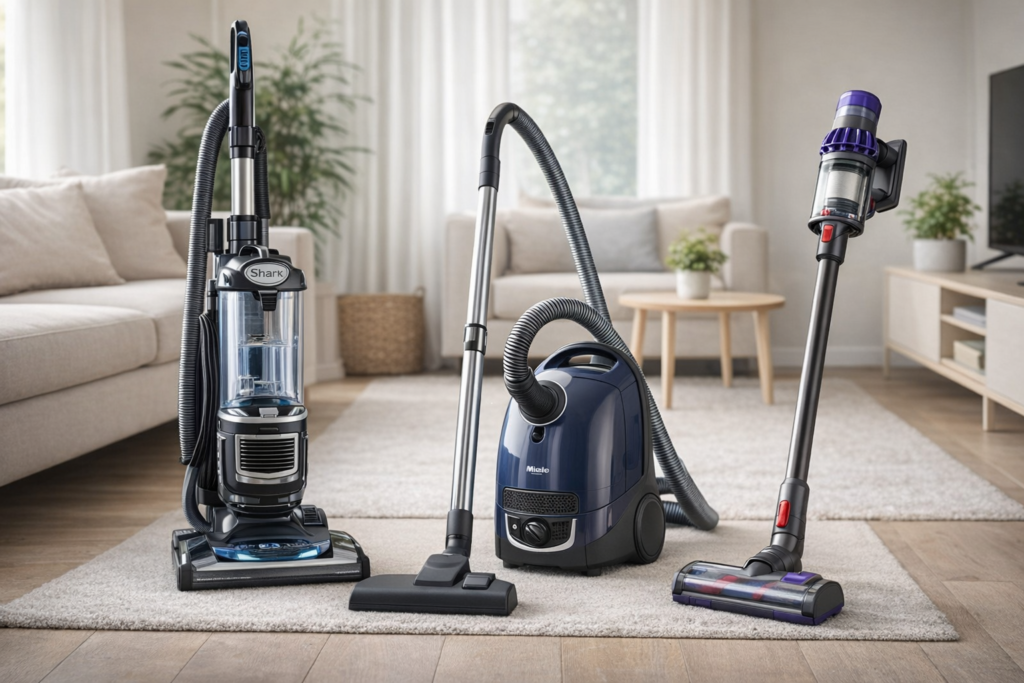
Choosing a vacuum cleaner doesn’t need to be complicated, but most people make it harder than it should be. The key is not to look at everything at once, but to narrow things down quickly based on your home and cleaning style.
If you just want a fast answer, this complete vacuum cleaner buying guide will help you.
Quick Recommendations (Start Here)
• Best overall for most homes: Shark Navigator Lift-Away upright vacuum
• Best for convenience and small spaces: Dyson V8 cordless stick vacuum
• Best for mixed flooring and flexibility: Miele Classic C1 canister vacuum
If you want more detailed comparisons, you can also check best vacuum cleaners under 150 affordable and powerful options or best vacuum cleaners for families powerful and durable picks.
Vacuum Types Comparison (Fast Overview)
| Type | Best For | Pros | Cons |
|---|---|---|---|
| Upright | Carpets, large areas | Strong suction, wide coverage | Bulky, harder to store |
| Canister | Mixed floors, flexibility | Easy to maneuver, versatile | Takes more storage space |
| Stick | Apartments, quick cleaning | Lightweight, convenient | Less power, smaller capacity |
| Robot | Maintenance cleaning | Hands-free | Not a deep-clean solution |
This table alone should help you eliminate the wrong options quickly.
Understanding The Main Types
Upright vacuums are usually the safest choice if you want one machine that can handle most cleaning tasks. They’re especially effective on carpets and larger open areas, which is why they’re still the most common choice for households.
Canister vacuums are more flexible. They’re easier to move around furniture and work better on a mix of surfaces like hardwood, tiles, and rugs. If your home isn’t mostly carpet, this type often feels more natural to use.
Stick vacuums are all about ease. They’re ideal if you clean more frequently but for shorter periods. If storage is tight or you don’t want something heavy, this category makes the most sense. You can explore more options in best compact vacuum cleaners for small spaces.
If you’re comparing different styles, this breakdown of cordless vs upright vacuums under $150 can help you avoid choosing the wrong type.
Robot vacuums are helpful, but only as a supplement. They keep floors clean between sessions but won’t replace a proper vacuum.
Which Vacuum Cleaner Is Right for Your Home? (Quick Decision Guide)
If you’re still unsure which vacuum cleaner to choose, here’s a simple way to decide based on your home and lifestyle:
- Small apartments or limited storage
Stick vacuums or handheld models are compact, easy to store, and perfect for quick cleanups. For smaller homes, you can also explore best lightweight vacuums for apartments that are easy to use and store. - Homes with carpets
Upright vacuums with strong suction are better for deep cleaning and removing embedded dirt. - Hardwood or tile floors
Lightweight stick or canister vacuums work well without damaging surfaces. - Pet owners
Choose a vacuum designed for pet hair with strong suction and specialized brush attachments. You can also explore best vacuums for pet hair under $150 for reliable options that handle shedding effectively. - Large homes
Corded or high-battery cordless vacuums are ideal to avoid interruptions during cleaning.
This quick breakdown helps you narrow your options without overthinking every feature.
Choosing The Right Size (Important)
Size affects how often you’ll actually use your vacuum.
• Small space – go lightweight and compact
• Large home – go bigger with more capacity
• Mixed use – balance between size and power
If your vacuum feels annoying to carry, store, or move, you’ll avoid using it. That matters more than most specs.
This is why many people prefer compact models, especially in smaller homes, which you can explore in best compact vacuum cleaners for small spaces.
For deeper comparisons on sizing and power differences, how to choose the right vacuum cleaner complete buyer guide breaks this down further.
Key Features That Actually Matter
Ignore most marketing features. Focus on what impacts real use.
• Suction + design – matters more than raw numbers
• Filtration – important for dust, allergies, pets
• Attachments – only a few are actually useful
• Corded vs cordless – depends on your routine
A simple, well-built vacuum will almost always outperform a complicated one with unnecessary extras.
Many cheaper models lose suction over time, which is explained in why cheap vacuums lose suction and which ones don’t under $150.
Common Vacuum Buying Mistakes to Avoid
Buying the wrong vacuum cleaner usually comes down to a few common mistakes:
- Focusing only on price
Cheaper models can lack the suction power needed for proper cleaning. - Ignoring floor type
Not all vacuums perform well on both carpets and hard floors. - Overlooking weight and usability
A powerful vacuum isn’t useful if it’s too heavy or difficult to move. - Choosing the wrong size or capacity
Small dust bins require frequent emptying, which becomes frustrating over time. - Not considering filtration
If you have allergies, a vacuum with a high-quality filter can make a noticeable difference in air quality.
Avoiding these mistakes will save you time, money, and frustration in the long run.
Best Picks By Use Case (Practical Breakdown)
Instead of overthinking features, match the vacuum to your situation.
• Everyday home cleaning
A reliable upright model like Shark Navigator Lift-Away upright vacuum handles most needs without overcomplicating things
• Small apartments or quick cleaning
A lightweight option like Dyson V8 cordless stick vacuum is easier to use regularly
• Mixed flooring and tighter layouts
A flexible model like Miele Classic C1 canister vacuum gives better control and maneuverability
For larger households, best vacuum cleaners for families offers stronger and more durable options.
These are not random picks. Each one solves a different type of cleaning problem.
How Long Should a Vacuum Cleaner Last?
A good vacuum cleaner should last anywhere from 5 to 10 years, depending on usage and maintenance.
Here’s what affects lifespan:
- Frequency of use
Daily use wears out components faster than occasional cleaning. - Build quality
Higher-quality models tend to last longer and maintain suction over time. - Maintenance habits
Regularly cleaning filters, emptying the dust bin, and checking for clogs can significantly extend the life of your vacuum. - Type of vacuum
Simpler models like upright vacuums often last longer than compact or cordless options with batteries.
Investing in the right vacuum and maintaining it properly ensures consistent performance for years.
How To Make The Right Final Choice
If you’re still unsure, simplify your decision:
• Step 1: Choose the type
• Step 2: Match it to your home size
• Step 3: Focus on practical features
• Step 4: Pick a model that solves your specific need
Is It Better to Buy Online or In Store?
Most people today buy vacuum cleaners online, and for good reason.
Online shopping gives you access to more options, better pricing, and real customer reviews that help you understand how a vacuum performs over time.
In-store shopping can still be useful if you want to physically see the size and weight, but it often limits your choices.
For most buyers, the best approach is:
- Research online
- Compare models
- Then choose based on real use cases, not just specs
This helps you avoid impulse decisions and choose a vacuum that actually fits your needs.
Once you do that, everything becomes much clearer. You’re no longer comparing dozens of random products. You’re choosing from a shortlist that actually fits your home.
Top Picks from this Article
If you just want a simple recommendation, these are the best options based on how most people use a vacuum at home.
Strong suction and full-size performance make this the safest all-around choice for everyday home cleaning.
View price on AmazonLightweight and easy to grab for quick cleanups, smaller spaces, and everyday convenience.
View price on Amazon