
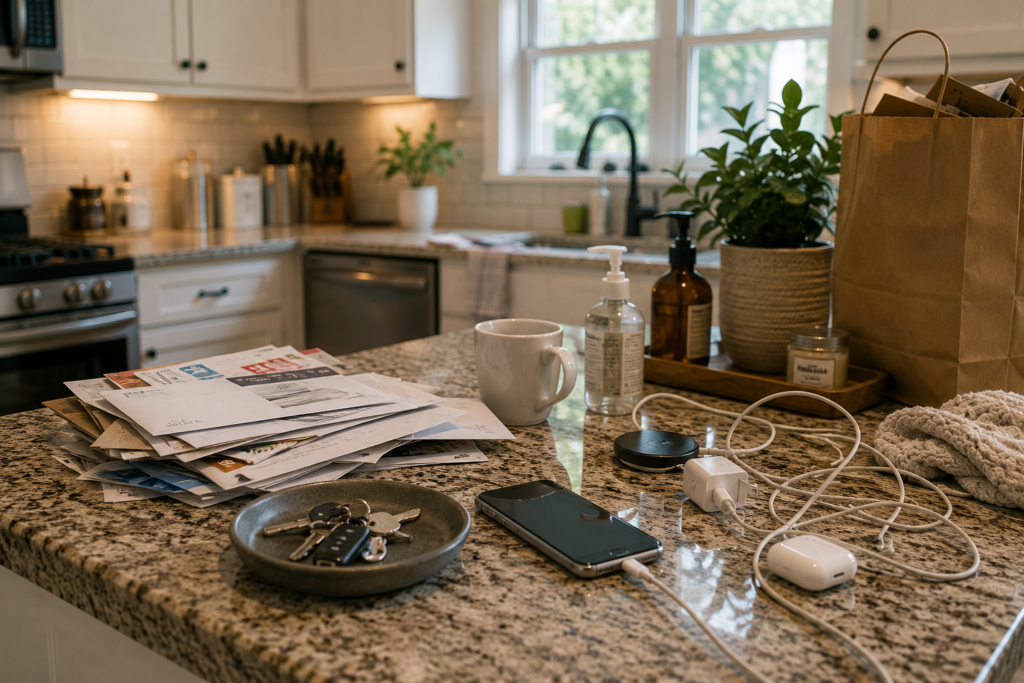
Clutter rarely arrives all at once. Most homes do not suddenly become messy overnight. Instead, clutter builds quietly and gradually through small decisions repeated day after day. A package sits by the door for a few hours. Mail lands on the counter temporarily. A charger gets placed on a nightstand with the intention of putting it away later.
Days turn into weeks, and those small moments begin to accumulate.
This is why clutter often feels difficult to control. People usually notice it only after it reaches a point where it becomes visually obvious. By then, it can feel overwhelming to tackle.
The reality is that almost every home contains hidden clutter. Even tidy homes experience it. The difference is that organized homes tend to identify and manage clutter before it spreads.
Like many of the small home upgrades people end up appreciating every day, the goal is not perfection. It is creating systems that quietly make daily life easier.
Hidden Clutter Usually Lives In Everyday Spaces
People often think clutter is obvious, but much of it hides in places used every single day. Because these spaces become familiar, homeowners gradually stop noticing the disorder.
Some of the most common clutter hotspots include:
- Entryways
- Nightstands
- Kitchen counters
- Junk drawers
- Bathroom cabinets
- Closets
These areas collect items because they sit at the intersection of daily routines. The more frequently a space is used, the more opportunities clutter has to build.
This helps explain why why some homes always feel cleaner than others often has less to do with cleaning and more to do with preventing clutter from accumulating in the first place.
Small clutter rarely stays small for long.
The Entryway Often Becomes A Drop Zone
The moment people enter their homes, habits take over. Shoes come off. Keys get dropped. Bags land wherever there is space.
None of these actions seem problematic individually. The challenge is repetition.
Without a dedicated system, entryways gradually become storage areas for everyday life. A few scattered items quickly become a pile.
Many organized homes solve this problem by creating designated areas for:
- Shoes
- Keys
- Bags
- Jackets
This is one reason entryway organizers that stop shoes, keys, and bags from piling up can have such a significant impact on the feel of an entire home.
Sometimes clutter spreads because there is nowhere for it to stop.
Kitchen Counters Collect More Than Food
Kitchen counters are among the most valuable surfaces in any home, yet they often become magnets for unrelated items.
Mail, receipts, chargers, water bottles, shopping lists, and random household objects frequently gather there because the kitchen sits at the center of daily activity.
The challenge is not necessarily owning too many things. It is allowing temporary items to become permanent residents.
Many homeowners experience this frustration, which helps explain why your kitchen still feels messy despite regular cleaning.
Counters influence how an entire kitchen feels. Even a relatively clean kitchen can feel chaotic when surfaces become crowded.
Protecting a few important surfaces from clutter often creates an outsized effect on the appearance of the entire home.
Nightstands Quietly Become Storage Areas
Nightstands begin with simple purposes: holding a lamp, a book, or a glass of water. Over time, however, they often become miniature storage spaces for everyday life.
Phones, charging cables, medications, receipts, earbuds, and random objects slowly accumulate.
This type of clutter tends to go unnoticed because bedrooms are private spaces. Yet visual clutter near the bed can subtly affect how restful a room feels.
The popularity of bedside organizers that keep nightstands functional reflects how common this challenge has become.
A cluttered nightstand may seem insignificant, but small visual distractions often influence comfort more than people realize.
Sometimes creating a calmer bedroom begins with clearing just a few square feet.
Cables Have Become A New Form Of Clutter
Previous generations did not manage the number of cables modern households face today.
Phones, tablets, smart watches, earbuds, lamps, and laptops all introduce charging cords into daily life. Without systems in place, these cables spread across desks, nightstands, and counters.
Cable clutter creates a unique challenge because it combines visual disorder with inconvenience.
Common cable problems include:
- Tangled chargers
- Hidden cords
- Lost charging cables
- Crowded power strips
- Desk clutter
This is why cord organizers that make desks and nightstands look cleaner have become increasingly popular.
Technology should simplify life. Good organization helps ensure that it does.
The Junk Drawer Is Rarely Just One Drawer
Almost every home contains at least one junk drawer. In many homes, there are several.
These drawers often begin with good intentions. They serve as temporary storage for small items that do not have obvious homes.
Over time, however, temporary storage becomes permanent.
Junk drawers frequently contain:
- Batteries
- Pens
- Tape
- Chargers
- Receipts
- Random tools
The problem is not necessarily the drawer itself. The problem is that many items inside never received designated storage locations.
Products like drawer dividers that keep everyday clutter under control work because they transform undefined spaces into organized systems.
Clutter often grows wherever categories do not exist.
Closets Hide More Clutter Than People Think
Closets have doors, which makes them easy places to hide disorder.
Clothing piles grow gradually. Seasonal items remain long after they are needed. Shelves become difficult to maintain.
Because the clutter is hidden, people often postpone dealing with it.
Organized closets usually rely on categories:
- Everyday clothing
- Seasonal clothing
- Bedding
- Towels
- Accessories
This explains why closet shelf dividers that help clothes stay stacked properly can quietly improve routines every day.
The easier storage is to maintain, the longer it tends to stay organized.
Pantries Create Invisible Waste
Pantries often hide a different kind of clutter: forgotten food.
Products pushed to the back of shelves gradually disappear from memory. Duplicates get purchased. Expiration dates pass unnoticed.
This form of clutter not only affects organization but can also lead to unnecessary spending.
Many homeowners discover that pantry organizers that make food easier to find improve visibility and reduce waste at the same time.
When people can see what they own, they are more likely to use it.
Sometimes organization saves money in ways that are easy to overlook.
Bathrooms Experience Constant Clutter
Bathrooms contain dozens of products used every day. Shampoo bottles, skincare products, cleaning supplies, towels, and toiletries compete for limited storage.
Because these spaces are used so frequently, clutter returns quickly when systems are weak.
Many bathrooms benefit from simple improvements such as:
- Better cabinet storage
- Dedicated product zones
- Shower organization
- Drawer separation
- Labels
The popularity of shower caddies that keep bathrooms looking cleaner reflects how common these frustrations are.
Good systems often reduce maintenance because organized spaces are easier to keep clean.
Under-Sink Cabinets Hide Chaos Surprisingly Well
Few spaces hide clutter as effectively as under-sink cabinets.
Cleaning supplies, trash bags, sponges, and household products often end up piled together because plumbing creates awkward layouts.
Over time, homeowners may forget what is stored there entirely.
This challenge explains why under-sink organizers that make small cabinets less annoying have become popular in both kitchens and bathrooms.
When hidden spaces become easier to use, the entire home often feels more manageable.
Sometimes organization is less about adding storage and more about improving access.
Clutter Often Represents Delayed Decisions
Many forms of clutter share something in common: they are decisions postponed until later.
Mail waiting to be sorted. Items waiting to be donated. Objects waiting to be repaired.
Clutter frequently accumulates in the gap between intention and action.
This is one reason how homes quietly became easier to manage resonates with so many homeowners. Good systems reduce the number of decisions that need to be made repeatedly.
When homes remove friction, daily life becomes easier.
Organization succeeds when it simplifies action rather than creating more work.
Small Habits Prevent Large Messes
Many people imagine organization as large weekend projects. In reality, organized homes often rely on small daily habits.
Examples include:
- Returning items after use
- Emptying bags immediately
- Sorting mail daily
- Clearing counters at night
- Resetting shared spaces
These habits may take only minutes, yet they prevent hours of future cleanup.
This closely aligns with the home habits that quietly make life feel less stressful.
Consistency often matters more than intensity when maintaining an organized home.
The Goal Is Not Perfection
The most organized homes are not necessarily perfect. They still experience clutter, busy weeks, and unexpected messes.
The difference is recovery.
Organized homes recover quickly because systems already exist. Items have homes. Storage makes sense. Tidying requires less effort.
This may be why clutter often feels stressful. It is not merely the presence of objects. It is the feeling that those objects have nowhere to belong.
In the end, hidden clutter builds quietly in every home. The goal is not to eliminate it forever. The goal is to create systems that prevent it from taking over.
Sometimes the homes that feel calmest are simply the homes that make everyday life easier to manage.