
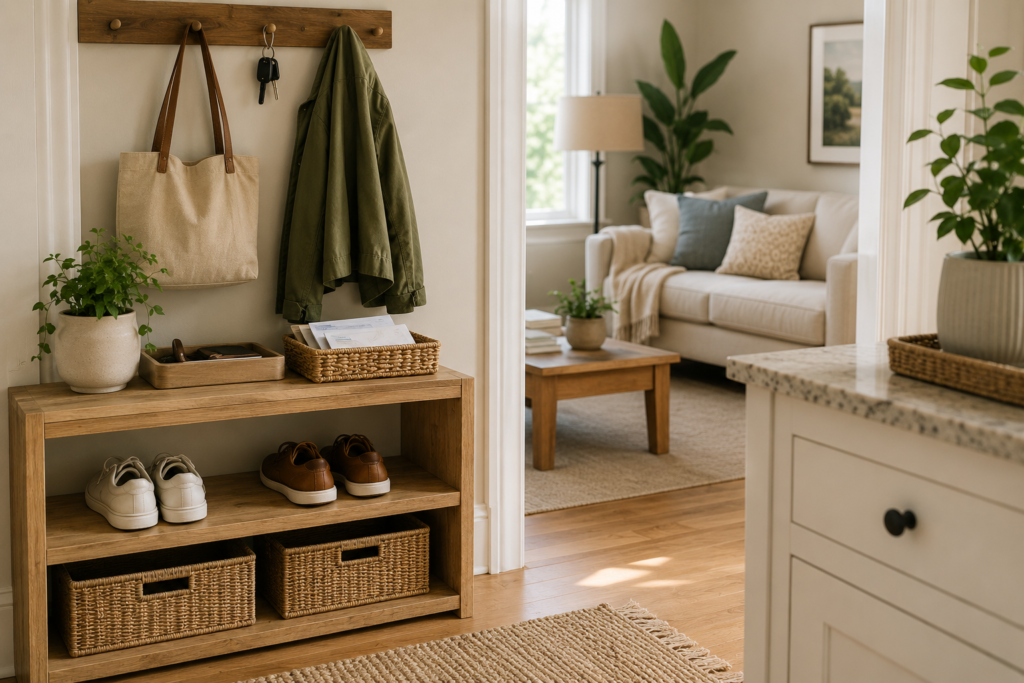
People often assume tidy homes are maintained through hours of cleaning every week. In reality, many organized homes stay that way because of small habits rather than large efforts. The difference is not always how much people clean. Often, it is how they manage everyday tasks before clutter has a chance to build.
A tidy home rarely happens by accident. Behind most organized spaces are small routines repeated consistently over time. These habits may take only a few seconds or minutes, but their effects accumulate day after day.
What makes these habits so powerful is that they reduce friction. Instead of allowing messes to grow into projects, they prevent clutter from becoming overwhelming in the first place. Similar to the small home upgrades people end up appreciating every day, these routines quietly improve daily life without demanding much attention.
The goal is not perfection. It is creating a home that feels easier to maintain.
Tidy Homes Usually Prioritize Small Resets
One of the biggest differences between tidy homes and cluttered homes is not the absence of mess. It is how quickly clutter gets reset.
Small resets prevent minor messes from becoming major projects. Rather than waiting for the weekend, many organized households handle small tasks immediately.
Examples include:
- Straightening pillows before leaving a room
- Returning dishes to the kitchen
- Folding blankets after use
- Putting shoes back in place
- Clearing a countertop before bed
These habits rarely take more than a minute or two, yet they prevent clutter from accumulating.
This may help explain why the little things that make some homes feel easier to live in often feel surprisingly impactful. Small actions repeated consistently tend to create large results over time.
The One-Minute Rule Prevents Clutter From Growing
Many homeowners unknowingly create clutter because tasks feel too small to handle immediately. Unfortunately, those small tasks accumulate.
A useful principle is simple: if something takes less than one minute, do it now.
This might include:
- Hanging a jacket
- Throwing away packaging
- Returning an item to its place
- Sorting mail
- Wiping a spill
Completing small tasks immediately prevents dozens of unfinished actions from collecting throughout the home.
The one-minute rule works because it removes procrastination from everyday routines. People often underestimate how quickly clutter grows when small actions are postponed repeatedly.
Tidy homes are not always cleaner. They are often simply faster at addressing small problems.
Everything Needs A Home
One of the strongest predictors of an organized home is whether everyday items have designated places.
When objects do not have homes, they tend to migrate throughout the house. Chargers end up on counters. Keys move from room to room. Bags land wherever there is available space.
Organized households often create dedicated storage for:
- Keys
- Wallets
- Chargers
- Bags
- Shoes
This removes the need to decide where something belongs each time it is used.
It is one reason entryway organizers that stop shoes, keys, and bags from piling up can dramatically change how homes function. Good systems reduce decisions and make tidying easier.
Counters Stay Clear Because They Have Boundaries
Counters naturally attract clutter because they are convenient surfaces. Kitchens, bathrooms, and entry tables often become temporary storage areas that slowly turn permanent.
Organized homes usually protect a few key surfaces from becoming catch-all spaces.
Common boundaries include:
- No mail on kitchen counters
- No charging devices on dining tables
- No random items on bathroom sinks
- No bags left near doorways
These rules are simple, but they create visual calm.
This helps explain why some homes always feel cleaner than others. Clear surfaces often create the impression of a cleaner and more organized home even when daily life remains busy.
Sometimes maintaining order begins with protecting just a few important spaces.
The Entryway Sets The Tone For The Entire House
The first few moments after entering a home often determine where clutter begins.
Without a system, shoes, keys, and bags quickly spread throughout nearby rooms.
Organized households frequently create entry routines such as:
- Removing shoes immediately
- Hanging jackets
- Emptying pockets
- Returning keys to trays
- Placing bags in designated areas
These small actions prevent clutter from spreading deeper into the home.
The popularity of entryway organizers that stop shoes, keys, and bags from piling up reflects how powerful these simple systems can be.
Many homes feel calmer not because they contain less stuff, but because clutter stops at the door.
Nightly Kitchen Resets Make A Big Difference
Kitchens often reveal how manageable a home feels. Waking up to a clean kitchen frequently changes the tone of an entire day.
Many organized households perform a small nightly reset before bed.
Tasks often include:
- Loading the dishwasher
- Wiping counters
- Returning items to cabinets
- Clearing the sink
- Putting away food
These habits rarely take long, yet they prevent mess from carrying into the following day.
This closely aligns with how homes quietly became easier to manage, where small systems create long-term benefits.
A reset does not need to create perfection. It only needs to create a better starting point for tomorrow.
Visible Storage Encourages Better Habits
People naturally use storage that is easy to access. Difficult systems often fail because they require too much effort.
This is why many organized homes rely on visible and convenient storage solutions.
Examples include:
- Open baskets
- Hooks near entrances
- Clear containers
- Simple trays
- Labeled bins
Convenient systems encourage people to put items away because doing so feels effortless.
The popularity of pantry organizers that make food easier to find reflects this principle. When people can easily see and access items, organization becomes easier to maintain.
Good systems support habits instead of relying on discipline.
Small Daily Habits Prevent Weekend Projects
Many homeowners spend entire weekends catching up on organization that slowly accumulated throughout the week.
Small habits help avoid this cycle.
Examples include:
- Returning laundry immediately
- Putting groceries away completely
- Sorting mail daily
- Emptying trash before it overflows
- Resetting shared spaces
Each habit may require only minutes, but together they reduce hours of future work.
This may be why the home habits that quietly make life feel less stressful resonate with so many people. Small routines often create the greatest long-term comfort.
Consistency usually matters more than intensity.
Labels Remove Guesswork
One reason organization systems fail is that people forget where items belong.
Labels solve this problem by creating clear visual instructions that remain consistent over time.
Common areas that benefit from labels include:
- Pantry containers
- Storage bins
- Cleaning supplies
- Linen closets
- Office drawers
This explains why label makers that help homes stay organized long term have become popular among homeowners.
Good systems should be easy enough that anyone in the household can maintain them.
The less people need to think about organization, the more likely they are to keep spaces tidy.
Technology Needs Systems Too
Modern homes contain more devices than ever before. Phones, tablets, smart watches, and chargers introduce new forms of clutter that previous generations rarely faced.
Charging cables often spread across desks, nightstands, and counters because they are used constantly.
Without systems, technology can quickly make tidy spaces feel messy.
Many households reduce visual clutter by using:
- Charging stations
- Cable clips
- Drawer organizers
- Device trays
- Nightstand storage
The growing popularity of cord organizers that make desks and nightstands look cleaner shows how important these small systems have become.
Technology should simplify life rather than complicate it.
Bathrooms Stay Tidy When Products Have Zones
Bathrooms contain dozens of products used every day. Without structure, bottles and toiletries quickly spread across counters and shelves.
Organized bathrooms often separate products into clear categories such as:
- Daily essentials
- Backup supplies
- Cleaning products
- Skincare
- Hair products
This helps reduce visual clutter and improve access.
Many homeowners appreciate under-sink organizers that make small cabinets less annoying because they create dedicated storage zones that are easier to maintain.
Organization often succeeds when items become easier to find and easier to return.
Tidy Homes Focus On Progress Rather Than Perfection
Perhaps the biggest misconception about organized homes is that they remain perfect all the time.
In reality, every home experiences clutter. Laundry piles up. Packages arrive. Life becomes busy.
The difference is that organized homes recover quickly because systems already exist.
When items have homes and routines feel natural, tidying becomes easier and faster.
This may be one reason home upgrades that actually reduce daily stress often focus on convenience rather than luxury.
In the end, tidy homes are rarely the result of extraordinary effort. More often, they are built through small habits repeated consistently over time.
Those habits may seem insignificant individually, but together they create homes that feel calmer, easier to maintain, and far less stressful to live in.