This article contains affiliate links. As an Amazon Associate, I earn from qualifying purchases at no extra cost to you.
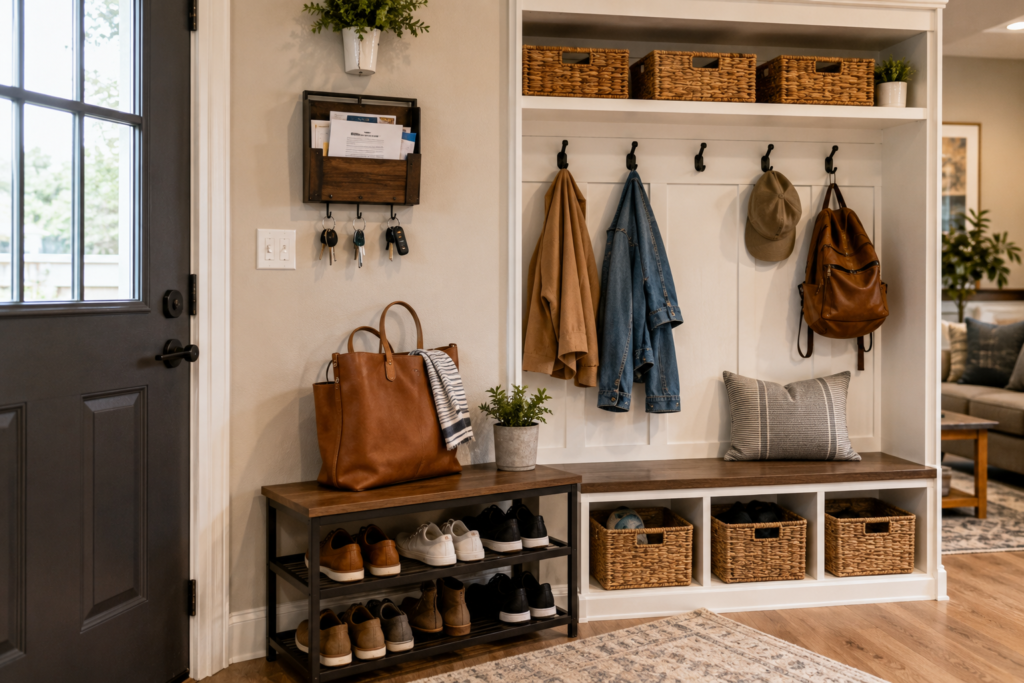
Most people do not think of their entryway as one of the most important spaces in the home. Kitchens get more attention. Living rooms receive more decorating effort. Bedrooms often feel more personal. Yet the entryway quietly influences how every day begins and ends.
A cluttered entryway can create stress before people even leave the house. Missing keys, misplaced bags, scattered shoes, and piles of unopened mail often turn simple departures into frustrating experiences. In contrast, organized entryways create a sense of calm and predictability that makes daily routines feel easier.
The difference is not necessarily about having a larger home or more storage. It is usually about creating systems that help everyday items stay where they belong.
The Entryway Is A Transition Zone
An entryway serves a unique purpose.
Unlike most rooms, it functions as a transition point between the outside world and the home. Every day, people move through this area carrying keys, bags, jackets, shoes, packages, and countless small items.
Because so many objects pass through this space, clutter can accumulate surprisingly quickly. Without a clear system, everyday belongings often end up scattered across benches, tables, floors, and countertops.
An organized entryway helps manage that flow. Instead of becoming a dumping ground, it becomes a controlled space that supports daily routines.
Small Delays Add Up Quickly
Many people underestimate how much time they lose searching for everyday items.
A missing set of keys may only delay someone by two minutes. Searching for a wallet might take another minute. Looking for a misplaced jacket could take several more.
Individually these delays seem insignificant. Collectively they create unnecessary stress, especially during busy mornings.
Organized entryways reduce these delays because frequently used items always have designated locations.
Visual Clutter Creates Mental Clutter
Research consistently shows that visual clutter affects how people feel.
Even when homeowners are not consciously thinking about clutter, crowded surfaces and scattered belongings create low-level mental stress. The brain continues processing the disorder in the background.
An entryway filled with shoes, bags, jackets, and miscellaneous items can make the home feel more chaotic than it actually is.
This is similar to the principles discussed in why organized kitchens feel easier to cook in, where organized environments reduce mental friction and improve daily experiences.
Why Shoes Often Become The Biggest Problem
Shoes are one of the primary sources of entryway clutter.
Every household member may own multiple pairs that rotate throughout the week. Without designated storage, footwear quickly spreads across floors and walkways.
This not only creates visual clutter but also makes cleaning more difficult.
Simple shoe storage systems can dramatically improve the appearance and functionality of an entryway. The goal is not hiding shoes completely but giving them a consistent place to live.
The Importance Of A Landing Zone
Many professional organizers recommend creating what is often called a landing zone.
A landing zone is a designated area where everyday essentials naturally belong when entering the home.
Items commonly included are:
- Keys
- Wallets
- Sunglasses
- Phones
- Bags
When these items always return to the same location, searching for them becomes far less common.
Quick Comparison Table
| Entryway Habit | Typical Result |
|---|---|
| Designated Key Storage | Fewer Lost Keys |
| Shoe Organization | Cleaner Floors |
| Landing Zone | Faster Departures |
| Bag Storage Area | Less Clutter |
| Mail Management | Fewer Paper Piles |
| Daily Reset Routine | Long-Term Organization |
Why Bags Need Dedicated Storage
Bags are another frequent source of entryway clutter.
Work bags, purses, gym bags, backpacks, and reusable shopping bags often end up wherever space is available.
Unfortunately, this creates visual noise and makes items harder to locate.
Hooks, cubbies, and designated shelves provide simple solutions. When every bag has a home, mornings become more predictable.
This concept overlaps with entryway organizers that stop shoes, keys, and bags from piling up, where dedicated storage significantly reduces clutter.
The Hidden Impact Of Mail Piles
Paper clutter tends to accumulate silently.
A few envelopes become a stack. A stack becomes a pile. Eventually important documents become difficult to find.
Entryways often serve as temporary storage for incoming mail, but temporary storage frequently becomes permanent storage.
Creating a simple system for sorting mail immediately prevents this problem from growing.
Jackets Can Overwhelm Small Spaces
Outerwear creates unique challenges.
During colder months, multiple coats per person can quickly overwhelm hooks, benches, and closets.
The solution is often not more storage but smarter storage. Rotating seasonal items and limiting visible jackets to current-use pieces can dramatically reduce clutter.
Small adjustments often create surprisingly large visual improvements.
Why Families Benefit The Most
Families tend to experience the biggest improvements from organized entryways.
Multiple people entering and leaving throughout the day naturally generate more activity. Shoes multiply, bags accumulate, and personal belongings spread quickly.
Clear storage zones reduce confusion by helping everyone understand where items belong.
The result is fewer arguments, fewer lost belongings, and smoother departures.
Creating Zones Makes Organization Easier
One of the most effective strategies is dividing the entryway into functional zones.
For example:
- Shoe zone
- Bag zone
- Key zone
- Mail zone
- Jacket zone
Zones simplify decision-making because each item has an obvious destination.
This approach works well throughout the home and is similar to methods discussed in drawer dividers that keep everyday clutter under control.
The Morning Advantage
An organized entryway creates benefits long before someone opens the front door.
People begin their mornings with fewer decisions and fewer distractions. Instead of hunting for belongings, they can focus on getting where they need to go.
This may seem like a small improvement, but repeated daily it can significantly reduce stress.
Better systems often have a larger impact than people expect.
Why Convenience Matters More Than Perfection
Many organizational systems fail because they require too much effort.
If storage solutions are inconvenient, people eventually stop using them.
The most successful entryways prioritize convenience. Storage should feel easier than leaving items out.
When the organized option becomes the simplest option, habits tend to stick.
Labels Can Support Shared Spaces
In family households, labels can sometimes improve consistency.
Children and guests are more likely to return items correctly when storage areas are clearly identified.
This is one reason label makers that help homes stay organized long term remain useful even outside traditional storage areas.
Small reminders often support long-term habits.
Small Entryways Can Still Work Well
Limited square footage does not automatically create clutter.
Some of the most functional entryways are surprisingly small.
The key is using available space intentionally. Wall hooks, narrow benches, vertical storage, and compact shelves can provide significant functionality without requiring large footprints.
Organization is usually more important than size.
Daily Resets Prevent Bigger Problems
A quick daily reset can keep clutter from accumulating.
Spending just a few minutes returning items to their proper locations often prevents hours of future cleanup.
This habit helps maintain organization without requiring major efforts.
Small actions performed consistently tend to outperform occasional large cleanups.
Why Organized Homes Often Start At The Door
Many organizational improvements begin in entryways.
Because the space is used constantly, even small upgrades produce noticeable results. Homeowners often experience immediate benefits that motivate additional improvements elsewhere.
The same mindset can eventually influence kitchens, bathrooms, closets, and storage areas throughout the home.
The Connection Between Entryways And Daily Habits
Entryways reflect household habits more clearly than almost any other space.
When systems work well, belongings naturally return to their designated locations. When systems fail, clutter becomes visible almost immediately.
Improving the entryway often improves routines because it supports the behaviors people perform every day.
Organization becomes less about cleaning and more about creating predictable patterns.
The Goal Is Making Daily Life Easier
The best entryway is not necessarily the most beautiful one.
It is the one that helps people leave the house smoothly, return home comfortably, and spend less time searching for everyday essentials.
When shoes have homes, keys stay visible, bags remain accessible, and clutter stays under control, mornings simply feel easier.
That is why organized entryways often create benefits that extend far beyond storage. They help daily life run more smoothly from the moment the day begins.