
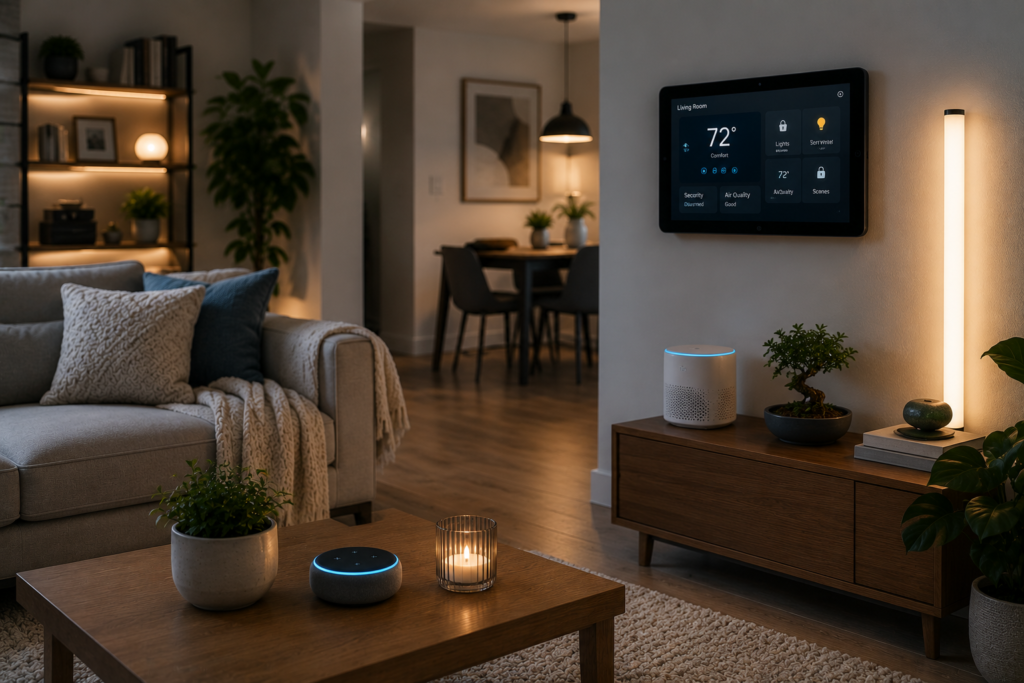
Homes used to revolve around loud technology.
Large televisions dominated living rooms. Appliances constantly beeped. Vacuum cleaners interrupted conversations. Notifications demanded attention. Devices felt separate from the home itself instead of naturally blending into it.
In 2026, that relationship is changing.
More households are moving toward what could be called quiet technology. These are products that improve daily life without constantly demanding attention. Instead of becoming the center of the room, they quietly reduce friction in the background.
That shift is changing how homes feel emotionally.
People increasingly want spaces that feel:
- Calm.
- Comfortable.
- Organized.
- Low stress.
- Easier to maintain.
And many modern products now support that goal in subtle ways.
How Quiet Technology Is Changing Modern Homes
| Older Technology Experience | Quiet Technology Approach |
|---|---|
| Loud interruptions | Background convenience |
| Constant manual effort | Automation |
| Cluttered gadgets | Cleaner integration |
| Reactive cleaning | Maintenance systems |
| Stressful routines | Lower friction routines |
| Visible tech overload | Minimal visible technology |
Technology Is Becoming Less Visible
One major shift is that technology no longer needs to dominate a room visually.
Modern households increasingly prefer:
- Hidden cables.
- Smaller devices.
- Cleaner surfaces.
- Minimalist setups.
- Integrated smart systems.
People still use technology constantly, but they increasingly want it to blend into the environment instead of overwhelming it.
This is especially noticeable with:
- Smart lighting.
- Robot vacuums.
- Smart thermostats.
- Air purifiers.
- Compact appliances.
- Wireless charging setups.
The technology remains useful without constantly drawing attention to itself.
Convenience Matters More Than Novelty Now
A few years ago, many smart products succeeded mainly because they felt futuristic.
Today, people care more about whether technology quietly improves routines long term.
The most successful products are usually the ones that:
- Save time consistently.
- Reduce small daily frustrations.
- Require less effort.
- Blend into routines naturally.
That is why products like robot vacuums, air purifiers, and smart lighting systems continue growing in popularity while some trendier gadgets quickly disappear.
This overlaps naturally with why convenience products become everyday habits and why certain everyday products quietly become essential over time.
People Increasingly Want Homes That Feel Calm
One of the biggest lifestyle shifts happening right now is emotional.
People increasingly want homes that feel calmer after spending so much of daily life surrounded by:
- Notifications.
- Screens.
- Work stress.
- Constant stimulation.
- Social media overload.
As a result, many households are intentionally creating spaces that feel softer and less mentally exhausting.
Quiet technology supports that goal because it reduces friction instead of adding more noise.
This is strongly connected to the growing interest in why so many people are quietly trying to make their homes feel like hotels.
The Kitchen Is Becoming Quieter Too
One overlooked part of this shift is happening inside kitchens.
Modern kitchens increasingly prioritize:
- Cleaner countertops.
- Smaller appliances.
- Faster routines.
- Less visible clutter.
- Easier maintenance.
People are moving away from kitchens packed with gadgets they rarely use. Instead, they increasingly prefer fewer products that quietly improve daily cooking routines without overwhelming the space.
This is one reason compact appliances, air fryers, coffee stations, and better storage systems continue becoming more popular.
The goal is not just efficiency. It is creating kitchens that feel calmer and easier to live in every day.
This overlaps naturally with small kitchen appliances that actually save space and what to avoid and why your kitchen feels cluttered because of appliances.
Robot Vacuums Changed The Idea Of Cleaning
Robot vacuums are one of the clearest examples of quiet technology.
They do not dramatically transform homes overnight. Instead, they slowly reduce how often people need to think about floor cleaning at all.
That subtle convenience changes routines over time.
Many households now expect:
- Floors to stay cleaner automatically.
- Maintenance cleaning to happen quietly.
- Less interruption from chores.
This is one reason articles like what makes a robot vacuum worth using and robot vacuums people say actually changed their cleaning routine connect naturally with broader home lifestyle trends.
Lighting Became Part Of The Mood Of The Home
Smart lighting systems also changed how homes feel emotionally.
Instead of relying on one harsh ceiling light, more people now use:
- Softer lighting.
- Layered lighting.
- Warm nighttime lighting.
- Automated schedules.
- Ambient lighting setups.
These changes sound small, but they dramatically affect how relaxing a home feels.
This connects naturally with best smart lighting systems for your home 2026 guide.
People Want Fewer Devices But Better Ones
Another noticeable trend is that households increasingly prefer fewer but more useful products.
People are becoming more selective about:
- Appliances.
- Smart gadgets.
- Cleaning tools.
- Kitchen products.
- Desk setups.
Instead of filling homes with random gadgets, many people now prioritize products that:
- Solve real problems.
- Reduce clutter.
- Improve routines consistently.
- Last longer.
This shift overlaps heavily with household products people wish they bought better and the home products people say were worth spending more on.
Quiet Technology Is Changing Evening Routines
Another subtle shift is happening during evening routines.
People increasingly want homes that help them slow down at night instead of overstimulating them further.
That includes:
- Warmer lighting.
- Lower noise levels.
- Cleaner spaces.
- Less visible clutter.
- More comfortable furniture layouts.
Quiet technology supports those routines naturally. Smart lighting dims automatically. Air purifiers run softly in the background. Robot vacuums finish cleaning before bedtime. Smart thermostats maintain comfortable temperatures without constant adjustment.
These details may seem small individually, but together they create homes that feel noticeably calmer by the end of the day.
That emotional comfort is becoming one of the biggest priorities in modern home design.
Quiet Technology Reduced Small Daily Frustrations
One reason quiet technology works so well is because it focuses on small annoyances that add up over time.
Examples include:
- Cleaner floors.
- Better lighting at night.
- Less visible clutter.
- Easier temperature control.
- Faster kitchen routines.
- Reduced maintenance effort.
None of these changes seem dramatic individually, but together they create homes that feel smoother and easier to live in every day.
That emotional difference matters more than many people expected.
Air Purifiers Quietly Changed How Homes Feel
Air purifiers are another example of quiet technology becoming part of modern homes.
People increasingly use them not only for allergies, but also because cleaner air makes rooms feel:
- Fresher.
- More comfortable.
- Less dusty.
- Easier to relax in.
Many people now view air quality as part of the overall feeling of the home rather than just a health feature.
This connects naturally with why more people are adding air purifiers to their homes and best air purifiers for bedrooms.
Technology Is Starting To Support Mental Comfort
One of the most interesting changes is that people increasingly evaluate technology emotionally instead of only technically.
A product may have impressive features, but if it:
- Creates clutter.
- Adds stress.
- Feels complicated.
- Interrupts routines.
people are less interested in keeping it long term.
That is why simpler products often become more successful over time. People increasingly value:
- Ease.
- Calmness.
- Quiet convenience.
- Low maintenance routines.
The emotional feeling of the home now matters almost as much as the technology itself.
This shift is closely connected to small home upgrades people end up appreciating every day.
Homes Are Becoming More Maintenance Friendly
Quiet technology also supports the growing desire for homes that feel easier to maintain.
That includes:
- Easier cleaning routines.
- Smaller daily resets.
- Better organization.
- Less visible clutter.
- Simpler storage systems.
People increasingly want homes that stay manageable without requiring exhausting effort every week.
This is very similar to the cleaning philosophy discussed in the household cleaning habits people quietly stopped doing in 2026.
The Best Technology Now Feels Invisible
One interesting pattern keeps appearing across modern households:
the best technology often becomes the least noticeable technology.
People stop thinking about:
- Robot vacuum schedules.
- Smart thermostats adjusting temperatures.
- Air purifiers running quietly.
- Automated lighting routines.
The products quietly become part of normal life.
That is usually a sign the technology succeeded.
Technology no longer needs to feel futuristic to feel valuable. In many homes, the most appreciated products are now the ones that reduce friction quietly enough that people barely think about them anymore.