
This article contains affiliate links. As an Amazon Associate, I earn from qualifying purchases at no extra cost to you.
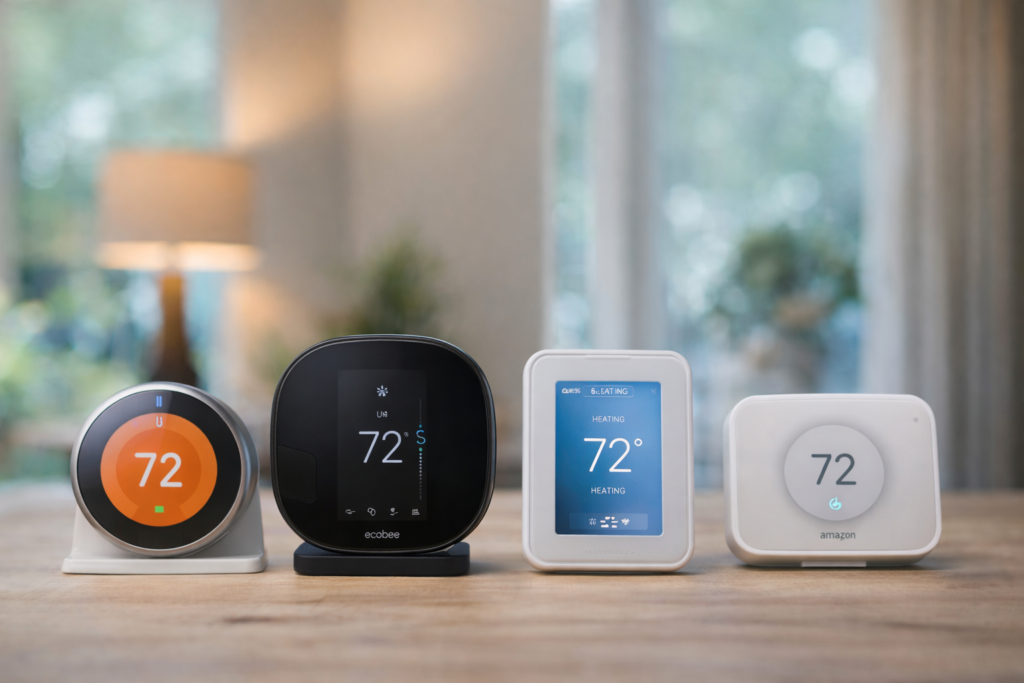
Smart thermostats are one of the few smart home devices that can actually reduce your monthly expenses.
That’s why they’re often marketed as a must-have upgrade.
But not all of them deliver real savings.
Some look impressive but don’t change your usage enough to make a difference. Others quietly optimize your energy consumption and end up paying for themselves over time.
The key is knowing which ones actually work and how to use them properly.
If you’re building a full system, smart thermostats work best when paired with devices like those in smart home devices that are actually worth buying, creating a more efficient and connected setup.
Why Most Smart Thermostats Don’t Save as Much as Expected
The biggest misconception is that installing one automatically lowers your bill.
That’s not how it works.
• They don’t reduce usage without behavior change
• They rely on correct setup and scheduling
• They need consistent usage patterns
• They can be overridden too often
This is why some users see little to no difference.
Smart thermostats only work when they’re allowed to manage your temperature consistently.
What Actually Makes a Smart Thermostat Worth It
To deliver real savings, a thermostat needs more than basic scheduling.
• Learning your habits automatically
• Adjusting temperature when you’re away
• Providing usage insights
• Maintaining consistent performance
Without these features, it becomes just a digital version of a manual thermostat.
This is also where integration matters. If you’re connecting devices across your home, this complete smart home buying guide helps ensure everything works together properly.
Quick Comparison (Best Smart Thermostats at a Glance)
| Product | Best For | Strength | Limitation |
|---|---|---|---|
| Google Nest Thermostat | Most homes | Learning features + ease of use | Limited manual control |
| ecobee Smart Thermostat | Energy optimization | Room sensors + automation | Higher price |
| Honeywell Home T9 | Flexibility | Strong scheduling options | App not as intuitive |
| Amazon Smart Thermostat | Budget option | Affordable + simple | Basic features |
Best Overall for Most Homes
Google Nest Thermostat with learning features and automatic scheduling is the most balanced option for most users.
It learns your habits over time and adjusts automatically, which removes the need for constant manual changes.
That’s what leads to real long-term savings.
Best for Maximum Energy Savings
ecobee Smart Thermostat with room sensors and advanced automation stands out when efficiency is the priority.
The ability to control temperature based on different rooms helps reduce unnecessary heating or cooling.
This is where noticeable savings start to happen.
Best for Flexible Control
Honeywell Home T9 Smart Thermostat with customizable scheduling and room sensors gives you more manual control.
It’s ideal for users who prefer setting their own routines instead of relying entirely on automation.
Best Budget Option
Amazon Smart Thermostat with simple controls and affordable pricing is a solid entry point.
It doesn’t have advanced features, but it covers the basics and still improves efficiency compared to manual systems.
How Smart Thermostats Actually Save Money
Savings come from reducing unnecessary heating and cooling.
• Lowering temperature when you’re not home
• Avoiding overuse during sleep hours
• Maintaining consistent efficiency
• Reducing manual adjustments
These small changes add up over time.
The key is consistency, not one-time adjustments.
How Much Money You Can Realistically Save
This is one of the most important questions, and the answer depends on how you use the device.
Smart thermostats typically reduce heating and cooling costs by optimizing when and how energy is used.
For homes with consistent schedules, the savings can become noticeable within a few months.
For homes with unpredictable routines, the impact may be smaller unless automation features are fully used.
The biggest savings usually come from reducing waste, not lowering comfort.
What Most People Do Wrong
This is where results fall apart.
• Overriding schedules constantly
• Setting unrealistic temperature ranges
• Ignoring automation features
• Not using energy reports
These habits cancel out any potential savings.
Best Places in Your Home to Maximize Savings
Where and how your thermostat is used matters more than most people think.
Some of the most effective ways to maximize savings include:
• Setting consistent sleep schedules for temperature control
• Allowing the system to adjust automatically when you leave home
• Using room-based adjustments when available
• Avoiding constant manual overrides
These small habits are what turn a smart thermostat into a real money-saving tool.
How Long It Takes to See Real Savings
One of the biggest misunderstandings with smart thermostats is how quickly they pay off.
Most people expect immediate results, but savings typically build over time rather than showing up instantly.
In the first month, the difference may feel small. This is because the system is still learning your habits and adjusting your schedule.
After a few months of consistent use, the impact becomes clearer as the thermostat reduces unnecessary heating and cooling more efficiently.
The key is consistency. The longer the system runs without constant manual overrides, the more optimized your energy usage becomes.
This is why the best results usually come from letting the thermostat handle adjustments automatically instead of trying to control it manually every day.
Smart Thermostat vs Traditional Thermostat
A traditional thermostat relies entirely on manual control.
A smart thermostat adapts and optimizes automatically.
That difference is what creates long-term efficiency.
But only if you let it do its job.
How Smart Thermostats Fit Into a Smart Home System
Smart thermostats become more powerful when connected to other devices.
For example:
• Adjusting temperature when doors are locked
• Syncing with occupancy detection
• Integrating with routines
This is where combining them with systems like those in best smart door locks for home security creates a smarter and more efficient environment.
Top Picks from this Article
Want the short version? These are the best smart thermostats based on efficiency, features, and everyday usability.
A sleek and easy-to-use thermostat that helps manage energy usage with smart scheduling and remote control via app.
View price on AmazonA feature-rich thermostat with room sensors, voice control, and advanced automation for better comfort and energy savings.
View price on AmazonAre Smart Thermostats Worth the Investment Long Term
The upfront cost can feel high, especially compared to traditional thermostats.
But over time, the ability to reduce unnecessary energy usage can offset that cost.
The key factor is consistency.
If the device is used properly and allowed to run automated schedules, it can deliver long-term value beyond just convenience.
If it’s constantly overridden or ignored, the return becomes much smaller.
When a Smart Thermostat Is Not Worth It
Not every home benefits equally.
• Homes with inconsistent occupancy
• Users who prefer manual control
• Poor insulation limiting efficiency gains
In these cases, the savings may not justify the cost.
Which Smart Thermostat Should You Choose
If you want the simplest and most effective option, Nest is the safest choice.
If maximizing savings is your priority, ecobee is the better option.
If you prefer manual control, Honeywell gives you more flexibility.
If you want a budget-friendly upgrade, Amazon is a good starting point.
The goal isn’t just to install a smart thermostat.
It’s to use it in a way that consistently reduces unnecessary energy usage.