
This article contains affiliate links. As an Amazon Associate, I earn from qualifying purchases at no extra cost to you.
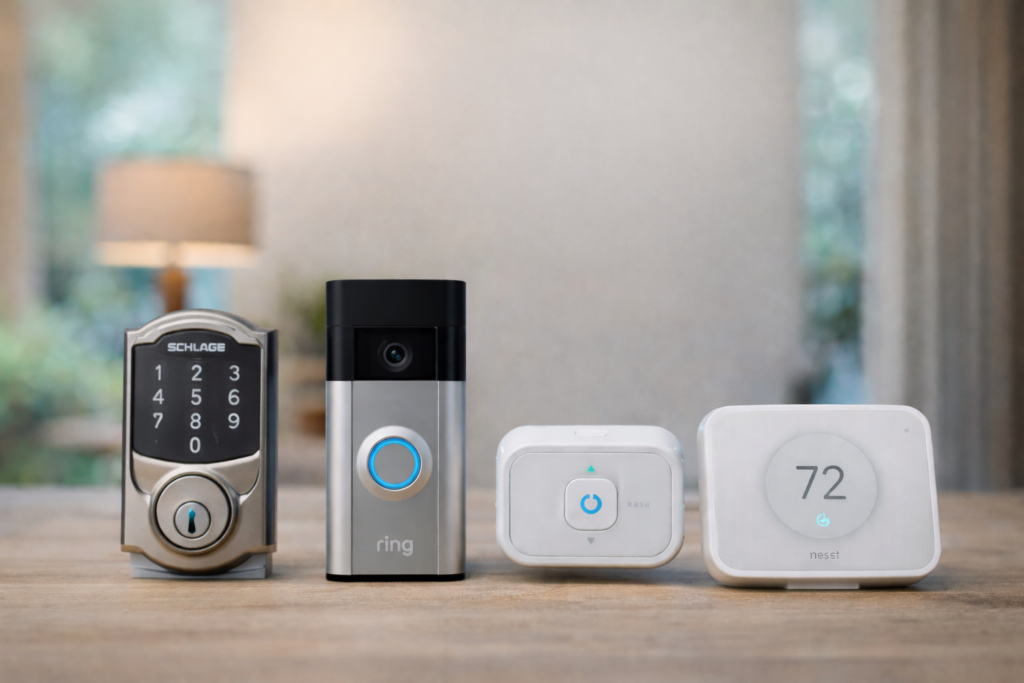
Smart home integration isn’t just about convenience anymore. For families, it’s about creating a safer, more efficient, and more controlled environment where daily routines become easier to manage.
Most people think of smart homes as a collection of gadgets. In reality, the biggest benefits come when those devices work together as a system.
That’s where integration changes everything.
Instead of managing individual devices, you create a connected environment that supports your daily life automatically. If you’re still building your setup, it helps to understand how everything connects in complete smart home buying guide.
Why Smart Home Integration Matters More for Families
For individuals, smart devices are helpful. For families, they become essential.
Managing multiple schedules, routines, and responsibilities creates complexity. Smart home integration reduces that complexity by automating repetitive tasks and improving visibility across your home.
• Parents can monitor and control access remotely
• Devices adjust automatically based on daily routines
• Energy usage becomes more predictable
• Security becomes easier to manage
This is where integration becomes more than convenience. It becomes a system that supports the entire household.
Quick Comparison of Smart Home Devices for Families
| Device | Primary Benefit | Best Use Case | Why It Matters for Families |
|---|---|---|---|
| Smart Door Locks | Security & access control | Entry points | Eliminates keys and improves safety |
| Video Doorbells | Monitoring & alerts | Front door | Real-time awareness of visitors |
| Smart Plugs | Automation & control | Daily appliances | Reduces manual tasks |
| Smart Thermostats | Energy savings | Whole home | Lowers costs over time |
This overview helps families focus on the devices that actually improve daily life instead of adding unnecessary complexity.
Improved Home Security and Peace of Mind
One of the biggest benefits for families is improved security.
Instead of relying on a single device, integration allows multiple systems to work together.
• Doors lock automatically at night
• Cameras and doorbells provide real-time alerts
• Access can be controlled remotely
A strong setup often includes smart door locks with keyless entry and remote access control combined with monitoring devices. If you’re choosing a lock, this guide on best smart door locks for home security helps you pick the right one.
Pairing that with video doorbells with HD video and real-time mobile alerts gives you full visibility at your front door. You can compare options in best video doorbells for apartments and houses.
This layered approach creates real peace of mind, especially for families with children.
Simplifying Daily Routines
Daily routines are where smart home integration makes the biggest difference.
Instead of manually managing everything, automation takes over repetitive tasks.
• Lights turn on and off automatically
• Devices shut down at night
• Morning routines can be triggered with a single command
This reduces small daily decisions that add up over time.
How Smart Home Integration Helps with Kids and Busy Schedules
Families with children benefit the most from smart home integration because routines are often unpredictable and constantly changing.
Instead of manually managing everything, parents can rely on automation to handle small but important tasks throughout the day.
For example, lights can turn on automatically when kids arrive home, doors can lock after everyone leaves, and notifications can alert parents when someone enters or exits the house.
This level of awareness and automation reduces the need for constant checking and worrying, especially in busy households where multiple schedules overlap.
Over time, these small automations create a smoother daily flow that helps families stay organized without adding extra effort.
Integration works best when devices support each other. That’s why tools like smart plugs with scheduling and automation features play a bigger role than most people expect. They allow you to control multiple devices without extra effort. Learn how to use them properly in smart plugs that actually save energy.
Better Energy Efficiency and Cost Control
For families, energy usage can be unpredictable.
Smart home integration helps stabilize and reduce that usage over time.
• Heating and cooling adjust automatically
• Devices turn off when not needed
• Usage patterns become more efficient
The biggest impact often comes from temperature control.
Using smart thermostats with automatic temperature control and energy-saving features allows your home to adapt without constant manual changes. If you’re considering one, this breakdown of best smart thermostats for saving money explains what actually works.
Over time, these adjustments can lead to noticeable savings without sacrificing comfort.
Centralized Control for the Entire Household
One of the most underrated benefits is centralized control.
Instead of managing devices individually, everything can be controlled from one app or system.
This makes it easier for families to:
• Monitor what’s happening in the home
• Adjust settings quickly
• Maintain consistency across devices
This is especially useful in larger households where multiple people interact with the same systems.
Choosing the Right Smart Home Ecosystem
One of the most important decisions when building a smart home is choosing the ecosystem that connects everything together.
Most devices work within platforms like Alexa, Google Home, or Apple HomeKit, and selecting one early helps avoid compatibility issues later.
A unified system allows devices to communicate more effectively, making automation smoother and more reliable.
Mixing too many ecosystems can lead to delays, limited functionality, or devices that don’t work together properly.
For families, simplicity is key. Choosing one ecosystem and building around it makes the entire system easier to manage for everyone in the household.
Reduced Stress Through Automation
A connected home reduces mental load.
Instead of remembering to:
• Lock doors
• Turn off lights
• Adjust temperature
The system handles it automatically.
This reduces small daily stress points that build up over time.
For families managing work, school, and home life, these small improvements have a noticeable impact.
How Smart Home Integration Improves Family Safety
Safety goes beyond locks and cameras.
Integration allows your home to respond to situations in real time.
• Alerts for unusual activity
• Automatic lighting for visibility
• Controlled access for children
When devices work together, the response becomes faster and more reliable.
This is where integrated systems outperform standalone devices.
Common Mistakes Families Make When Setting Up Smart Homes
Most issues come from overcomplicating the setup.
• Buying too many devices at once
• Ignoring compatibility
• Choosing features over usability
• Not setting up automation properly
The best setups are simple and intentional.
Start with core devices, then expand gradually.
How to Build a Smart Home System That Actually Works
The key to integration is starting with the right foundation.
Begin with devices that solve real problems.
Then connect them through automation and shared control.
For most families, a strong starting point includes:
• Security (locks and doorbells)
• Energy control (thermostats and plugs)
• Automation (lighting and routines)
This creates a balanced system that improves daily life without becoming overwhelming.
What Makes Smart Home Integration Worth It Long Term
The real value shows over time.
At first, the changes feel small. But as systems learn and adapt, the benefits become more noticeable.
• Less manual effort
• More consistent routines
• Better control over your environment
This is what separates a smart home from a connected system.
When Smart Home Integration May Not Be Necessary
Not every household needs full integration.
Smaller households or those with simple routines may not see the same level of benefit.
However, even a few integrated devices can improve convenience and efficiency.
The key is choosing what fits your lifestyle.
Why Families See the Biggest Benefit from Integration
Families benefit more because they have more moving parts.
More people, more routines, and more responsibilities create more opportunities for automation to help.
This is why integration tends to feel more valuable in family environments than in single-user setups.
Is Smart Home Integration Worth the Cost for Families
One of the biggest concerns for families is whether the investment is actually worth it.
While the upfront cost can feel high, the value comes from long-term convenience, improved security, and better control over daily routines.
Instead of looking at each device individually, it helps to see the system as a whole. When devices work together, they reduce effort, prevent small mistakes, and improve efficiency over time.
For many families, the biggest return is not just financial savings, but the reduction in daily stress and improved quality of life.
When used consistently, smart home integration becomes less of a luxury and more of a practical upgrade.
Smart Devices That Make The Biggest Difference
Smart home systems work best when you start with a few devices that solve real problems instead of trying to automate everything at once.
Lighting, security, and simple automation tools tend to have the biggest impact on convenience and energy savings.
If you’re not sure where to start, this guide on smart home devices that are actually worth buying breaks down practical options that are easy to set up and use:
https://www.everythingselling.com/smart-home-devices-that-are-actually-worth-buying/
Focus on small upgrades that improve daily routines rather than adding unnecessary complexity.
The Long-Term Value of a Connected Home
A smart home is not just about today.
Over time, it becomes a system that adapts to your needs.
It simplifies routines, improves efficiency, and creates a more comfortable living environment.
That’s where the real value comes from.
Top Picks from this Article
Want the short version? These are the best smart home security essentials based on reliability, convenience, and everyday use.
A reliable video doorbell with clear footage, motion alerts, and strong app integration for everyday home monitoring.
View price on AmazonA versatile smart lock that integrates with major platforms while letting you keep your existing deadbolt setup.
View price on Amazon