
This article contains affiliate links. As an Amazon Associate, I earn from qualifying purchases at no extra cost to you.
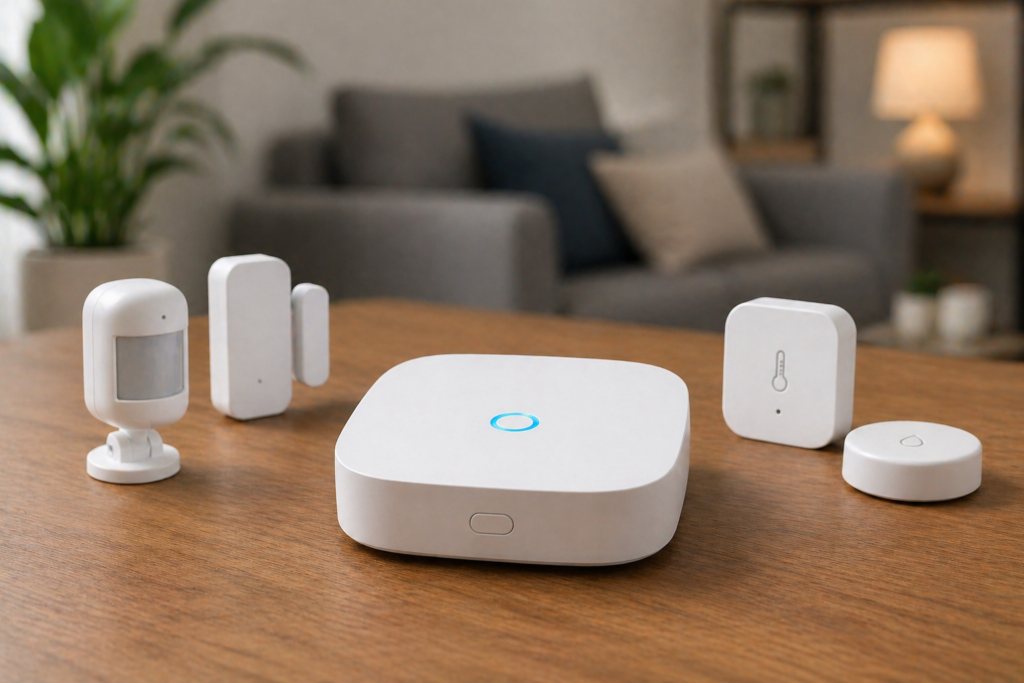
Smart home hubs sound important, but most people do not actually understand what they do.
Some setups work perfectly without one, while others completely depend on it.
That is where confusion starts.
Many people either buy a hub they do not need or avoid one when it would actually improve their setup.
The key is understanding when a hub adds value and when it is unnecessary.
What a Smart Home Hub Actually Does
A smart home hub acts as a central controller for your devices.
Instead of each device connecting separately through different apps, the hub brings everything together in one system.
It allows devices to communicate with each other, not just with you.
This is what enables true automation instead of simple remote control.
When You Do NOT Need a Smart Home Hub
Not every smart home setup requires a hub.
If you are using simple devices like smart plugs, lights, or basic sensors that already connect through Wi-Fi, a hub may not be necessary.
Many modern devices are designed to work independently.
If your setup is small and simple, adding a hub may not provide much benefit.
When a Smart Home Hub Becomes Necessary
A hub becomes important when your setup starts to grow.
If you are using multiple sensors, automation routines, or devices from different brands, a hub helps everything work together more smoothly.
It also improves reliability by reducing dependence on multiple apps and connections.
This becomes especially useful when building a system using devices like those covered in best smart home sensors for security and automation.
Top Picks From This Article
Want the short version? These are two smart hub options depending on how simple or advanced your setup needs to be.
A simple smart remote hub for controlling TVs, fans, and infrared devices from one app.
A stronger hub choice for connecting multiple smart devices and building a more complete system.
Smart Home Hub Comparison Table (Quick Overview)
| Hub Type | Best For | Best Use Case | Key Strength | Limitation |
|---|---|---|---|---|
| Wi-Fi Hub | Simple setups | Basic automation | Easy to use | Limited compatibility |
| Zigbee Hub | Expanding systems | Device integration | Reliable connection | Needs compatible devices |
| Z-Wave Hub | Advanced users | Full automation | Strong range | Higher cost |
| Multi-Protocol Hub | Mixed setups | All-in-one control | Maximum flexibility | More complex |
Best Hub for Simple Setups
If you are just starting, simplicity matters most.
A basic Wi-Fi smart home hub for beginners allows you to connect a few devices without adding complexity.
This works well for small apartments or minimal setups.
Best Hub for Expanding Smart Homes
As your system grows, compatibility becomes more important.
A multi-protocol smart home hub with Zigbee and Z-Wave support allows you to connect a wider range of devices.
This is ideal if you plan to expand over time.
Best Hub for Full Automation
For advanced users, control and flexibility are key.
A smart home hub designed for full automation control allows you to create complex routines and integrate multiple systems.
This is where smart homes move from convenience to true automation.
How Hubs Improve Reliability
One of the biggest advantages of a hub is stability.
Instead of each device relying on Wi-Fi, many hubs use dedicated communication protocols.
This reduces connection issues and improves overall performance.
It also ensures that your automation continues working even if your internet connection is unstable.
How Hubs Improve Automation
Without a hub, automation is limited.
With a hub, devices can interact with each other directly.
For example, a motion sensor can trigger lights, locks, and alarms at the same time.
This creates a more seamless and responsive system.
Common Mistakes When Choosing a Hub
Many people choose the wrong hub because they do not consider compatibility.
The most common mistakes include
• Buying a hub that does not support their devices
• Choosing a system that is too complex
• Overestimating how much automation they need
• Ignoring future expansion
Avoiding these mistakes makes a big difference.
How to Choose the Right Smart Home Hub
The best hub depends on your setup.
• Small setup – Wi-Fi hub
• Growing setup – Zigbee hub
• Advanced setup – multi-protocol hub
Choosing based on your needs prevents unnecessary complexity.
If you are building a full system, it also helps to understand how different devices work together, as explained in complete smart home buying guide devices tips and recommendations.
How Hubs Fit Into a Smart Home System
A hub is not always the starting point.
For many people, it becomes useful after adding multiple devices.
It acts as the foundation that connects everything together.
This is why some setups work fine without one at first but benefit from one later.
Are Smart Home Hubs Worth It Overall
For simple setups, the answer is often no.
For growing or complex systems, the answer is yes.
It depends on how far you want to take your smart home.
How to Future-Proof Your Smart Home Setup
One of the biggest advantages of choosing the right hub is future flexibility.
If you plan to add more devices over time, selecting a hub that supports multiple protocols ensures compatibility as your system grows.
This prevents you from needing to replace your setup later.
It also allows you to mix and match devices from different brands without limitations.
Why Some People Regret Buying a Hub
Not everyone benefits from a hub.
If your setup is too simple, a hub can feel unnecessary.
It adds cost and complexity without providing real value.
Understanding your needs before buying prevents this mistake.
When a Hub Makes the Biggest Difference
A hub provides the most value when automation becomes a priority.
If you want your home to respond automatically without manual control, a hub becomes a key part of the system.
It is what turns separate devices into a connected experience.
How Smart Home Hubs Compare to App-Based Control
Many smart devices rely on individual apps for control.
While this works for basic use, it becomes inefficient as your setup grows.
Switching between multiple apps slows down your experience and makes automation harder to manage.
A hub centralizes control, allowing you to manage everything from one place.
This simplifies your setup and improves usability.
If you are already using multiple devices, it is worth exploring broader setups like best smart home gadgets in 2026 innovative devices for every home.
How Smart Home Hubs Affect Device Compatibility
One of the biggest advantages of using a hub is expanded compatibility.
Different smart home devices often use different communication protocols, which means they cannot always connect directly to each other.
A hub bridges that gap.
This allows devices from different brands and ecosystems to work together seamlessly. Instead of being locked into one system, you gain flexibility in how you build your setup.
If you are planning to expand over time, this becomes one of the most valuable benefits of using a hub, especially when combined with broader ecosystem planning like benefits of smart home integration for families.
Why Small Automation Upgrades Have the Biggest Impact
You do not need a fully automated home to see results.
Small upgrades, like automatic lighting or leak detection, have immediate benefits.
These are the changes that improve convenience and prevent problems without requiring a complex setup.