
This article contains affiliate links. As an Amazon Associate, I earn from qualifying purchases at no extra cost to you.
What Most People Get Wrong About Smart Home Appliances
Most people buy smart home appliances backward. They see a cool gadget, imagine how convenient it might be, then realize later that it does not fit their routine, does not connect smoothly, or adds another app they barely use.
A good smart home setup should not feel complicated. It should remove small annoyances from your day. The best smart home appliances help with repeated tasks like turning lights off, managing temperature, checking the front door, controlling devices remotely, or making everyday routines less manual.
That is why the smartest approach is not buying the most advanced device first. It is choosing appliances that solve a real problem you already have.
Top Picks From This Article
Want the short version? These are two smart home picks that make the most sense for energy savings and home security.
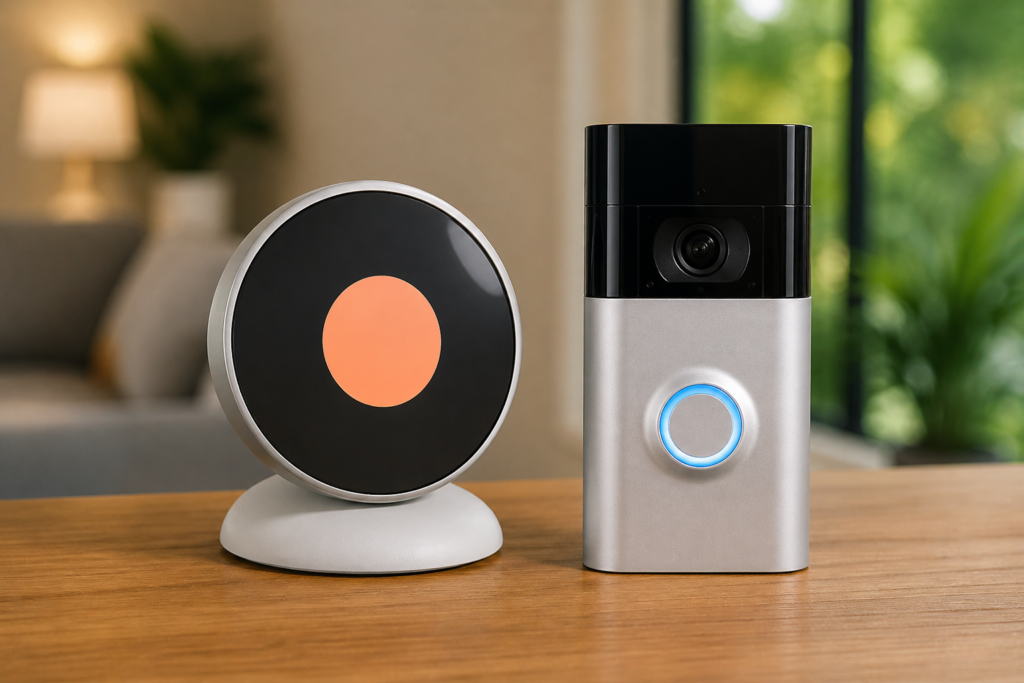
A practical smart thermostat for reducing wasted energy, managing temperature automatically, and making your home more efficient.
A useful choice for checking visitors, monitoring deliveries, and adding simple front-door security without building a full camera system.
Quick Comparison: Best Smart Home Appliance Types
| Smart Home Appliance | Best For | Why It Helps |
|---|---|---|
| Smart speaker or display | Beginners | Controls other devices from one place |
| Smart plug | Simple automation | Turns regular appliances into smart devices |
| Smart lighting | Daily convenience | Automates lights by schedule, voice, or app |
| Smart thermostat | Energy savings | Adjusts heating and cooling more efficiently |
| Video doorbell | Home security | Lets you see visitors and deliveries remotely |
| Smart lock | Keyless entry | Helps with access control and security |
| Smart sensors | Automation | Triggers lights, alerts, or routines |
This is the best way to think about smart home appliances. You are not buying random gadgets. You are building a setup where each device has a job.
Start With The Device That Controls Everything
If you are building a smart home from scratch, start with a smart speaker or smart display before anything else. This becomes the center of the setup.
A smart speaker lets you control lights, plugs, thermostats, cameras, and other devices without opening five different apps. It also makes routines easier. For example, one voice command can turn off lights, adjust the thermostat, and shut down connected appliances at night.
This is where many beginners make a mistake. They buy smart bulbs, plugs, and cameras first, then realize the setup feels scattered.
If you are unsure whether a hub matters, read smart home hubs explained do you actually need one.
Smart Plugs Are Still The Easiest Upgrade
Smart plugs are one of the most useful smart home appliances because they work with things you already own. You do not need to replace your lamp, fan, coffee maker, or basic appliance. You plug it into a smart plug and control it from your phone or voice assistant.
This is useful for simple daily problems. Maybe you forget to turn off a lamp. Maybe you want a fan to shut off automatically. Maybe you want your coffee setup powered before you walk into the kitchen.
A good smart plug is not exciting, but it is practical. That is why it is usually one of the first devices worth buying.
For everyday use, Kasa Smart Plug is a strong fit because it is simple, affordable, and useful for lamps, fans, and small appliances.
For a deeper look at this category, see smart plugs that actually save energy and which ones don’t.
Smart Lighting Makes Your Home Feel More Convenient Fast
Smart lighting is one of the easiest upgrades to feel immediately. It changes how your home behaves during normal routines.
You can schedule lights to turn on before you wake up, dim them at night, or turn everything off from bed. That sounds small, but it removes repeated friction from your day.
The key is not replacing every bulb in your home right away. Start with the rooms you use most. A living room, bedroom, hallway, or kitchen usually gives you the biggest daily benefit.
Smart lighting is also useful for safety. Lights can turn on automatically when you arrive home or when motion is detected.
If you want a more complete breakdown, read best smart lighting systems for your home 2026 guide.
Smart Thermostats Are Better For Long-Term Value
Some smart devices are mainly about convenience. Smart thermostats are different because they can also help reduce wasted energy.
A smart thermostat learns your schedule, adjusts temperature automatically, and helps avoid heating or cooling an empty home. This matters if you forget to change settings before leaving or if your home has inconsistent temperature habits.
This is not the first smart home appliance everyone needs. If you rent, move often, or rarely control your own thermostat, it may not be worth prioritizing. But if you own your home or plan to stay in the same place for a while, it can be one of the smarter long-term upgrades.
For most homeowners, Google Nest Thermostat is worth considering because it focuses on automation, energy savings, and simple control without making the setup feel overwhelming.
You can also compare options in best smart thermostats for saving money what actually works.
Video Doorbells Are The Most Practical Security Upgrade
A video doorbell is one of the most useful smart security appliances because it solves a clear problem. You can see who is at your door, check deliveries, and monitor activity without needing a full security system.
This is especially helpful for people who get frequent packages or live in apartments, townhomes, or houses with visible entry points.
The mistake is thinking you need cameras everywhere. Most people get more value from one well-placed video doorbell than from several cheap cameras that are hard to manage.
A good video doorbell should have clear video, reliable motion alerts, decent night vision, and an app that does not feel annoying to use.
For more options, read best video doorbells for apartments and houses clear video easy setup.
Smart Locks Are Useful When Access Is The Problem
Smart locks are not necessary for every home, but they are extremely useful when keys become inconvenient. If family members, guests, cleaners, dog walkers, or short-term visitors need access, a smart lock can make life easier.
Instead of hiding keys or making copies, you can unlock the door remotely or give temporary access codes.
The important thing is reliability. A smart lock should make your home easier to manage, not create anxiety about batteries, connection issues, or complicated setup.
This is one category where you should avoid the cheapest option. A weak smart lock is worse than no smart lock because it affects security and daily access.
If this is a priority, check best smart door locks for home security keyless safe reliable.
Smart Sensors Are Underrated But Very Useful
Smart sensors do not get as much attention as cameras or speakers, but they are one of the best ways to make a home feel truly automated.
Motion sensors can turn lights on when someone enters a hallway. Contact sensors can alert you when a door or window opens. Water leak sensors can warn you before a small leak becomes expensive damage.
This is where smart homes become more useful than flashy. Sensors are not about showing off technology. They are about preventing problems and reducing manual effort.
They work best once you already have a basic smart home setup. If you have a smart speaker, smart plugs, and smart lights, sensors can help those devices respond automatically.
For security and automation ideas, see best smart home sensors for security and automation.
Do Not Buy Devices That Create More Work
The worst smart home appliances are the ones that make your life more complicated. If a device needs constant app updates, disconnects often, requires confusing routines, or only works with one system, it may not be worth it.
Convenience should be the test.
A smart appliance should make at least one routine easier. If it does not save time, improve security, reduce energy waste, or remove a daily annoyance, skip it.
This is especially important with trendy gadgets. Some smart appliances look impressive online but do not add much in real life. You do not need a smart version of everything.
A smarter approach is to build around the appliances you already use daily, then upgrade only where the benefit is obvious.
Best Smart Home Setup For Beginners
A beginner setup should be simple and useful from day one.
The best starter setup is usually:
• Smart speaker or display
• Two smart plugs
• Smart bulbs for one main room
• Video doorbell if security matters
This gives you control, automation, and practical convenience without making the setup too complicated.
Once that feels natural, you can add a thermostat, smart lock, or sensors depending on your home.
The mistake is buying too many devices at once. That creates setup fatigue. Start small, make sure everything works, then expand.
If you want a broader guide before buying, read complete smart home buying guide devices tips and recommendations.
Best Smart Home Appliances By Need
The right appliance depends on the problem you are trying to solve.
If you want convenience, start with a smart speaker and smart plugs. If you want better lighting, start with smart bulbs in the rooms you use most. If you want security, start with a video doorbell before adding cameras or locks.
If energy savings matter most, a smart thermostat should move higher on your list. If you want automation, smart sensors are worth adding after your basic setup is already working.
This is why there is no single best smart home appliance for everyone. The best choice is the one that fits your daily routine.
For most homes, Ring Video Doorbell makes sense when security and package monitoring are priorities, while Philips Hue smart bulbs are better when comfort and lighting control matter more.
What To Skip For Now
Skip anything that feels like a novelty. Smart appliances are only worth buying when they solve a repeated problem.
For most people, smart fridges, overly expensive connected appliances, and niche gadgets are not the best starting point. They cost more, add complexity, and often do not improve daily life as much as simple automation devices.
This does not mean those products are useless. It just means they should come later, after your basic setup is working well.
A smart home should grow naturally. Start with control, then convenience, then security, then deeper automation.
That order prevents wasted money and keeps the system easy to manage.
The Best Smart Home Appliances Are The Ones You Actually Use
The best smart home appliances for 2026 are not always the flashiest ones. They are the devices that quietly make your home easier to live in.
A smart speaker helps control the setup. Smart plugs automate basic devices. Smart lighting improves daily comfort. A smart thermostat can reduce wasted energy. Video doorbells and smart locks improve security without making things complicated.
The right setup should feel useful within the first week. If it does not, you probably bought the wrong device or started with too much at once.
Build slowly, choose devices with a clear purpose, and avoid anything that adds more work than it removes. That is how smart home appliances actually become worth buying.